2026 Food Labeling Changes: Your Guide to Healthier Eating
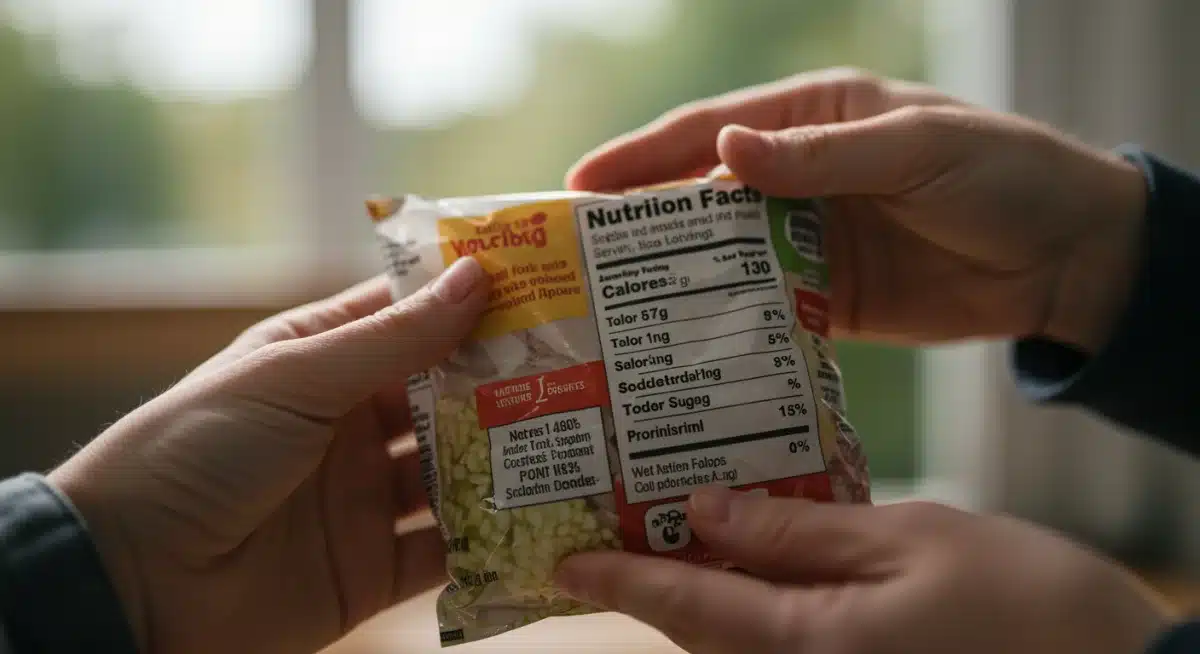
 Are you ready for a significant shift in how you understand the food you eat? The 2026 food labeling changes are on the horizon, promising a clearer, more impactful way to navigate your nutritional choices. These updates, mandated by the FDA, are not just minor tweaks; they represent a comprehensive effort to empower American consumers with the knowledge they need for healthier eating.
Understanding the impetus behind the 2026 food label updates
The journey towards the 2026 food labeling changes is rooted in evolving scientific understanding and a growing public health need. For decades, the nutrition facts label has been a cornerstone of consumer information, but dietary patterns and health concerns have changed dramatically.
The original label, introduced in the early 1990s, served its purpose well. However, current challenges like rising obesity rates, increased prevalence of diet-related diseases, and a more complex food supply necessitate a modern approach.
This overhaul isn’t a sudden decision; it’s the culmination of years of research, public commentary, and collaboration between health organizations, government agencies, and the food industry.
The goal is simple yet profound: to make critical nutritional information more accessible and understandable at a glance.
Consumers often struggle to interpret the current labels accurately, leading to confusion and potentially less healthy choices. The new design and content aim to cut through this complexity.
Ultimately, these updates reflect a commitment to public health. By providing clearer, more relevant information, the FDA hopes to guide consumers toward healthier eating habits, reduce diet-related illnesses, and foster a more transparent food environment.
It’s about giving individuals the tools they need to make empowered decisions about their dietary intake.
Key modifications: what’s new on the label?
The upcoming 2026 food labeling changes introduce several significant modifications that consumers need to be aware of.
These aren’t just cosmetic alterations; they fundamentally change how nutritional information is presented and how certain components are emphasized. Understanding these shifts is crucial for making informed choices.
Enlarged calorie count and serving sizes
One of the most noticeable changes will be the prominence of the calorie count. Calories will be displayed in a larger, bolder font, making them easier to spot immediately.
This reflects their critical role in weight management and overall energy balance. Alongside this, serving sizes are being updated to better reflect what people actually eat, rather than what they ‘should’ eat. This change aims to reduce confusion and make the label more realistic for consumers.
Calories: Larger, bolder font for immediate visibility.
Serving sizes: Adjusted to reflect typical consumption patterns.
Servings per container: Also more prominent, indicating the total number of servings.
These adjustments are designed to give consumers a more accurate picture of their intake. When serving sizes are more realistic, it becomes easier to calculate total calories and nutrients consumed from an entire package, rather than just a single, often underestimated, portion.
The addition of ‘added sugars’
Perhaps one of the most impactful changes is the mandatory inclusion of ‘added sugars’ on the label. This new line item differentiates naturally occurring sugars (like those in fruit or milk) from sugars added during processing.
Excessive intake of added sugars has been linked to numerous health issues, including obesity, type 2 diabetes, and heart disease. By explicitly stating the amount of added sugars, the FDA intends to highlight a component that often goes unnoticed but significantly contributes to caloric intake and health risks.
Clarity: Distinguishes natural vs. added sugars.
Health focus: Emphasizes a key dietary component linked to chronic diseases.
Daily value: A % Daily Value for added sugars will also be included, providing context.
This particular change is expected to have a substantial effect on consumer awareness and potentially drive manufacturers to reformulate products with lower added sugar content. It empowers individuals to quickly identify and limit their intake of these less desirable sugars.
In summary, the key modifications revolve around enhanced visibility for crucial information like calories and updated serving sizes, coupled with the groundbreaking inclusion of ‘added sugars.’ These changes are not arbitrary; they are strategic moves to provide a clearer, more relevant, and action-oriented nutrition label for the American public.
Decoding the new serving sizes and their impact
The revision of serving sizes under the 2026 food labeling changes is a critical update designed to bridge the gap between regulatory guidelines and real-world eating habits.
Historically, serving sizes were often based on arbitrary amounts or what was considered a ‘healthy’ portion, which frequently differed from what people actually consumed in a single sitting. This discrepancy often led to underestimation of calorie and nutrient intake.
The new serving sizes are now based on updated scientific data and national dietary intake surveys. This means that for many products, the indicated serving size will increase to reflect typical consumption.
For example, a bottle of soda that was previously considered two servings might now be labeled as a single serving, as most people drink the entire bottle at once. This seemingly simple change has profound implications for how consumers perceive and calculate their daily intake.
The impact is twofold: firstly, it provides a more accurate snapshot of the nutritional content per consumed portion, reducing the likelihood of accidental overconsumption.
Secondly, it forces consumers to confront the actual caloric and nutrient load of items they might have previously considered a single serving. This heightened awareness can be a powerful catalyst for healthier eating behaviors, as it eliminates some of the hidden nutritional surprises that current labels sometimes allow.
Understanding the ‘added sugars’ declaration
The introduction of a dedicated ‘added sugars’ line on the nutrition facts label is one of the most celebrated and impactful elements of the 2026 food labeling changes.
For years, consumers have struggled to differentiate between naturally occurring sugars, which are often accompanied by beneficial nutrients like fiber and vitamins, and sugars that are added during food processing.
Added sugars include ingredients like sucrose, glucose, fructose, corn syrup, honey, and concentrated fruit juices. While these provide energy, they often contribute ‘empty calories’ without significant nutritional value.
High intake of added sugars is strongly linked to an increased risk of obesity, type 2 diabetes, cardiovascular disease, and dental cavities. The current label groups all sugars together, making it difficult for consumers to identify products high in added sugars without scrutinizing the ingredients list.
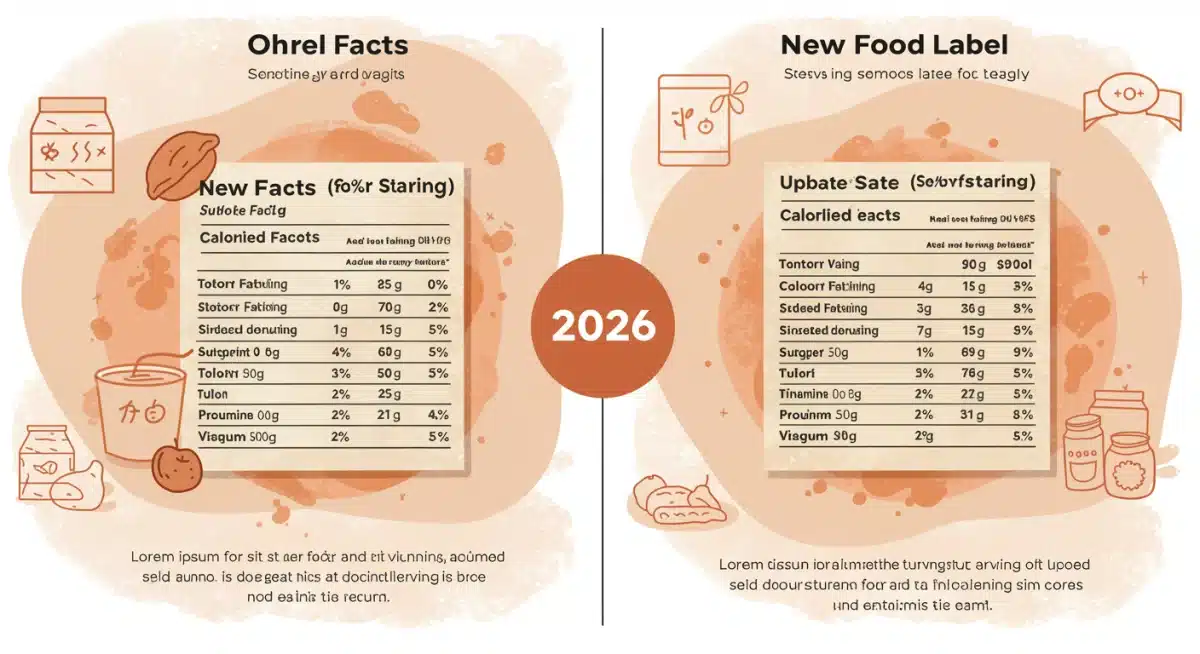
The new label explicitly states the grams of added sugars and also provides a % Daily Value (DV) for added sugars, based on a 2,000-calorie daily diet. The FDA recommends limiting intake of added sugars to less than 10% of total daily calories.
This %DV gives consumers a quick reference point to understand how a single serving contributes to their overall daily limit. For example, if a product has 20 grams of added sugars, and the %DV is 40%, it immediately signals that this serving provides a significant portion of the recommended daily limit.
This transparency empowers consumers to make more informed choices, especially when comparing similar products. It encourages food manufacturers to reduce the amount of added sugars in their formulations, as products with high added sugar content will now be more conspicuous to health-conscious buyers.
The ‘added sugars’ declaration is a crucial step towards addressing a major public health concern in the United States.
Navigating nutrient declarations: what to look for
Beyond calories and sugars, the 2026 food labeling changes also fine-tune the declaration of other essential nutrients. The goal is to highlight nutrients that Americans typically don’t get enough of, while also providing context for those that might be overconsumed. This nuanced approach helps consumers build a more balanced diet.
Updated daily values and mandatory nutrients
The Daily Values (DVs) for several nutrients have been updated to reflect current scientific recommendations.
These DVs serve as benchmarks to help consumers understand if a serving of food contributes a little or a lot to their daily nutritional needs. For instance, the DV for sodium has been lowered, aligning with recommendations to reduce sodium intake for cardiovascular health.
Conversely, DVs for nutrients like Vitamin D and potassium have been adjusted upwards, recognizing their importance and common deficiencies in the American diet.
Vitamin D: Now mandatory to list, as many Americans are deficient.
Potassium: Also mandatory, replacing Vitamin A and Vitamin C.
Iron and Calcium: Continue to be mandatory, highlighting their critical roles.
These changes mean that Vitamin A and Vitamin C, which were previously mandatory, are now optional, as most Americans consume adequate amounts. The focus has shifted to those nutrients that present a greater public health concern.
By making Vitamin D and potassium mandatory, consumers can more easily identify foods that contribute to these often-lacking micronutrients.
Understanding these updated DVs and the mandatory nutrient list allows consumers to quickly assess the nutritional value of a product beyond just its calorie count.
It encourages a more holistic view of diet, focusing on both limiting undesirable components and ensuring adequate intake of essential vitamins and minerals.
Practical tips for healthier eating with the new labels
The 2026 food labeling changes are designed to empower you, but knowing how to effectively use this new information is key. Integrating these changes into your daily routine can significantly improve your eating habits and overall health. It’s about becoming a savvy label reader and making conscious choices.
Focus on serving sizes and added sugars first
When you pick up a product, make it a habit to first look at the serving size and the total number of servings per container.
Then, immediately check the ‘added sugars’ line. This quick scan gives you a foundational understanding of the product’s impact.
If a product has a small serving size but you typically eat more, mentally adjust the calories and nutrients accordingly. High added sugars are often a red flag for less healthy options.
Quick scan: Serving size, servings per container, added sugars.
Mental math: Adjust total intake if you eat more than one serving.
Prioritize: Limit items with high added sugar percentages.
By prioritizing these two areas, you can quickly filter out products that might not align with your health goals. This doesn’t mean avoiding all added sugars, but rather becoming mindful of their presence and quantity in your diet.
Compare products and look for nutrient density
The new labels make it easier to compare similar products. If you’re choosing between two types of yogurt, for example, compare their added sugar content, protein, and calcium. Opt for options that offer more beneficial nutrients (like protein, fiber, Vitamin D, potassium) with lower amounts of added sugars, saturated fat, and sodium.

Think about nutrient density: how many nutrients are you getting per calorie? Foods rich in vitamins, minerals, and fiber, with lower calories and unhealthy fats, are generally more nutrient-dense. The updated labels provide the tools to make these comparisons more straightforward.
The 2026 food labeling changes are a powerful tool for promoting healthier eating. By understanding the new serving sizes, paying close attention to added sugars, and utilizing the updated nutrient declarations, you can confidently navigate the grocery aisles and make choices that support your well-being. It’s an opportunity to take greater control over your diet and embrace a more informed approach to nutrition.
Impact on food manufacturers and the industry
The upcoming 2026 food labeling changes represent more than just a regulatory update; they signify a significant challenge and opportunity for food manufacturers across the industry.
Compliance with these new regulations requires substantial investments in research, development, and packaging redesign. Companies must meticulously review their product formulations, update their nutrition databases, and ensure all labels accurately reflect the new requirements.
One of the primary impacts will be on product reformulation, especially concerning added sugars. With the explicit declaration of added sugars and their % Daily Value, consumers will be more aware of products high in these components.
This increased transparency is likely to drive demand for lower-sugar alternatives, pushing manufacturers to innovate and develop healthier versions of existing products or entirely new offerings. Companies that proactively adapt and reformulate will likely gain a competitive edge in a health-conscious market.
Furthermore, the changes in serving sizes will force manufacturers to rethink their packaging. For instance, a single-serving package that previously contained two ‘servings’ will now have to accurately reflect the entire package as one serving, leading to adjusted calorie and nutrient declarations.
This might also influence package design and portion control strategies. The shift requires extensive backend work, from supply chain adjustments to marketing strategies, as brands will need to communicate these changes effectively to consumers.
The industry will also face increased scrutiny from consumers and health advocacy groups, who will be monitoring compliance and product improvements. This environment fosters greater accountability and can accelerate the trend towards cleaner labels and more nutritious food options.
While the initial investment for manufacturers will be considerable, the long-term benefits could include enhanced brand trust, a healthier consumer base, and a more sustainable food ecosystem. The 2026 changes are set to reshape not just food labels, but the very products on our shelves.
| Key Change | Brief Description |
|---|---|
| Enlarged Calories | Calories now appear in a larger, bolder font for easier visibility. |
| Updated Serving Sizes | Serving sizes adjusted to reflect realistic consumption patterns. |
| Added Sugars Line | New mandatory declaration for sugars added during processing, with % Daily Value. |
| Mandatory Nutrients | Vitamin D and Potassium are now mandatory; Vitamin A and C are optional. |
Frequently asked questions about 2026 food labels
The labels are changing to reflect updated scientific information, particularly about diet and chronic diseases. The goal is to make it easier for consumers to make informed food choices for healthier eating and to address current public health concerns like obesity and diabetes.
The most significant change is the mandatory inclusion of ‘added sugars’ with its own % Daily Value. This helps consumers distinguish between naturally occurring sugars and those added during processing, making it easier to limit intake of unnecessary sugars.
New serving sizes are based on what people typically eat, not what they should. This means a single serving might be larger, leading to a more accurate representation of calories and nutrients consumed per actual portion, reducing accidental underestimation.
Vitamin D and potassium are now mandatory on the label because many Americans do not get enough of these nutrients. Vitamin A and Vitamin C are no longer required, as deficiencies are less common in the U.S. population.
Most manufacturers were required to update their labels by January 1, 2020, but smaller manufacturers had until January 1, 2021. However, some specific aspects and compliance dates might extend, meaning you will progressively see all changes fully implemented by 2026.
Conclusion
The 2026 food labeling changes are poised to revolutionize how Americans engage with their food choices. These comprehensive updates, from enlarged calorie counts and realistic serving sizes to the crucial ‘added sugars’ declaration and revised nutrient lists, are designed with one overarching goal: to empower consumers.
By fostering greater transparency and providing more relevant, easy-to-understand information, the FDA aims to equip individuals with the tools needed to navigate the complex food landscape and make informed decisions that support their health and well-being.
Embracing these changes and actively utilizing the new labels will be a significant step towards a healthier nation, reinforcing the idea that knowledge is indeed power when it comes to what we eat.