The Future of AI: What to Expect in the Next 5 Years

 The next five years will see artificial intelligence evolve significantly, moving towards more personalized, ethical, and deeply integrated applications across nearly every sector of daily life and industry, fundamentally reshaping human interaction with technology.
The landscape of technology is constantly shifting, and few forces are driving this change more profoundly than artificial intelligence.
Understanding the future of artificial intelligence and what to expect in the next five years is no longer limited to technology professionals or AI researchers—it has become essential for anyone navigating an increasingly digital, automated, and data-driven world.
Artificial intelligence is rapidly moving from the background into the center of everyday decision-making, shaping how we work, communicate, consume information, and manage our lives.
Exploring AI’s near future reveals a wave of innovation that will extend far beyond efficiency gains or convenience.
Over the next five years, AI is poised to redefine entire industries, transform job roles, and reshape daily routines through smarter automation, predictive intelligence, and deeply personalized experiences.
From how businesses operate and healthcare is delivered to how individuals learn, shop, and interact with technology, the impact of AI will be both profound and unavoidable.
By understanding where artificial intelligence is heading—and why—it becomes easier to adapt, make informed decisions, and leverage new opportunities as they emerge.
This forward-looking perspective empowers individuals and organizations alike to prepare for change, embrace innovation responsibly, and thrive in a future increasingly shaped by intelligent systems.
AI in Everyday Life: Personalized Experiences and Smart Environments
Within the next five years, artificial intelligence will become deeply embedded in the fabric of everyday life, extending far beyond today’s smart speakers and basic recommendation systems.
AI will evolve into an always-present, adaptive layer that quietly personalizes experiences, anticipates needs, and optimizes environments in real time.
This shift will fundamentally redefine how individuals interact with technology, their homes, workplaces, and even public spaces.
Rather than requiring constant input, AI systems will increasingly operate in the background—learning from behavior, preferences, and contextual signals to deliver seamless support.
From adjusting lighting and temperature automatically to suggesting healthier routines or smarter spending habits, AI in everyday life will prioritize convenience, efficiency, and personalization.
Smarter Homes and Adaptive Living Spaces
AI-powered smart homes will become more intuitive and responsive over the next phase of adoption. Instead of isolated smart devices, entire environments will function as connected ecosystems.
Intelligent climate control will learn household patterns to optimize comfort while reducing energy consumption.
Adaptive lighting systems will adjust based on time of day, mood, and activity, supporting productivity and well-being.
AI-driven home security will move beyond motion detection to predictive monitoring and real-time threat assessment.
These smart environments will not only enhance comfort but also contribute to sustainability by minimizing waste and improving energy efficiency.
Personalized Digital Experiences
Personalization will reach new levels as AI systems gain a deeper understanding of individual preferences and behaviors. In the next five years, AI will tailor digital experiences across entertainment, education, finance, and health.
Streaming platforms will deliver content that adapts dynamically to mood and viewing habits.
Digital assistants will evolve into proactive life organizers, managing schedules, reminders, and priorities.
AI-powered financial tools will offer personalized budgeting, saving, and investment recommendations.
This level of personalization will make technology feel less intrusive and more like a natural extension of daily life.
AI in Health, Wellness, and Daily Decision-Making
AI will also play a growing role in personal health and well-being. Wearables and health platforms will use AI to track patterns, detect anomalies, and offer personalized insights.
Preventive health alerts will identify risks before symptoms appear.
Mental wellness tools will adapt content and recommendations based on stress levels and behavioral cues.
Lifestyle optimization will guide sleep, nutrition, and activity choices in real time.
As AI becomes more trusted in these areas, individuals will gain greater control over their health through data-driven, personalized guidance.
Building Trust in Intelligent Environments
As AI becomes more embedded in everyday settings, trust, transparency, and data privacy will be critical. In the next era of AI adoption, users will expect greater visibility into how systems make decisions and how personal data is used.
Responsible design and ethical frameworks will be essential to ensure that smart environments empower users rather than overwhelm them.
Over the next five years, AI in everyday life will shift from novelty to necessity—quietly enhancing comfort, productivity, and well-being.
By creating personalized experiences and intelligent environments, artificial intelligence will help shape a future where technology works seamlessly in the background, allowing people to focus more on what truly matters.

Imagine homes that not only adjust temperature but also anticipate your mood, playing calming music or suggesting a recipe based on your dietary preferences and available ingredients.
This level of personalization will be driven by AI’s ability to learn individual habits and preferences over time, creating truly bespoke experiences.
Hyper-Personalized Content and Services
The media and entertainment industries are already leveraging AI for recommendations, but the next five years will see this taken to an entirely new level.
AI will curate not just what you watch or listen to, but also how content is presented, potentially even generating unique narratives or interactive experiences tailored to your engagement patterns.
Adaptive Learning Platforms: Educational tools powered by AI will adjust teaching methods and content in real-time, catering to individual learning speeds and styles.
Proactive Health Management: Wearable AI devices will offer predictive health insights, detecting potential issues before symptoms appear and providing personalized wellness plans.
Intelligent Home Assistants: These will evolve into true digital companions, managing complex schedules, optimizing energy consumption, and providing proactive support for daily tasks.
Smart cities will also see significant AI integration, with intelligent traffic management systems reducing congestion, AI-powered waste management optimizing collection routes, and predictive maintenance for public infrastructure minimizing disruptions. These advancements aim to create more livable and sustainable urban environments.
The challenge will be balancing personalization with privacy concerns. As AI collects more data about individuals to enhance experiences, robust ethical frameworks and data protection measures will become paramount. Consumers will demand greater transparency and control over their data.
In essence, AI in everyday life will shift from reactive assistance to proactive anticipation, creating seamless and highly individualized experiences that adapt to our evolving needs and preferences, making our environments smarter and more responsive.
Transforming Industries: Healthcare, Finance, and Manufacturing
The impact of AI on industries will be profound and widespread over the next five years, fundamentally reshaping operational efficiencies, innovation pipelines, and competitive landscapes. Sectors like healthcare, finance, and manufacturing are poised for radical transformation, driven by AI’s analytical and automation capabilities.
In healthcare, AI is moving beyond diagnostics to revolutionize drug discovery, personalized treatment plans, and even surgical precision. The ability of AI to analyze vast medical datasets, including genomics and patient histories, can identify patterns and correlations that human researchers might miss, accelerating breakthroughs.
AI’s Role in Healthcare Innovation
The next half-decade will witness AI becoming an indispensable tool in clinical settings and medical research. Its capacity to process and interpret complex biological data will lead to more effective treatments and preventative measures.
Accelerated Drug Discovery: AI algorithms will significantly cut down the time and cost associated with identifying new drug candidates and understanding their interactions.
Precision Medicine: Tailored treatments based on an individual’s genetic makeup, lifestyle, and environment will become more commonplace, driven by AI’s analytical power.
Robotic-Assisted Surgery: AI will enhance the precision and autonomy of surgical robots, leading to less invasive procedures and faster patient recovery times.
The financial sector will leverage AI for enhanced fraud detection, algorithmic trading, and personalized financial advice. AI’s ability to analyze market trends and consumer behavior in real-time will provide unprecedented insights, leading to more informed decisions and optimized strategies.
Manufacturing will experience a surge in AI-driven automation and optimization. Smart factories, powered by AI, will monitor production lines, predict maintenance needs, and optimize supply chains, leading to increased efficiency, reduced waste, and higher quality products. Predictive maintenance, driven by AI, will minimize downtime and extend the lifespan of machinery.
These industrial transformations are not without challenges, including workforce retraining and ethical considerations regarding job displacement. However, the overall trend points towards AI augmenting human capabilities, creating new roles, and driving unprecedented levels of productivity and innovation across these critical sectors.
Ethical AI and Regulation: Navigating the Moral Maze
As artificial intelligence becomes more powerful and pervasive, the discussions around ethical AI and robust regulation will intensify, becoming a critical area of focus over the next five years.
Ensuring AI systems are fair, transparent, and accountable is paramount to fostering public trust and preventing unintended societal harm.
The current landscape sees varying approaches to AI ethics globally, but a more unified framework is expected to emerge, driven by international collaboration and the increasing urgency to address issues like bias, privacy, and autonomous decision-making.
Developing AI responsibly is no longer an optional add-on but a fundamental requirement for its sustainable growth.
Key Ethical Considerations and Regulatory Trends
The next five years will involve a concerted effort from governments, industry, and academia to establish guidelines and regulations that ensure AI serves humanity positively. This will involve addressing several complex ethical dilemmas.
Bias and Fairness: Developing techniques to identify and mitigate biases in AI algorithms, ensuring equitable outcomes for all demographic groups, will be a top priority.
Transparency and Explainability: Regulations will likely mandate greater transparency in how AI systems make decisions, moving towards more explainable AI models.
Data Privacy and Security: Stricter regulations regarding how AI systems collect, store, and use personal data will be implemented, reinforcing user control and data protection.
The concept of ‘AI auditing’ will also gain traction, where independent bodies assess AI systems for fairness, robustness, and compliance with ethical guidelines. This external oversight will be crucial for building consumer confidence and holding developers accountable.
Furthermore, the discussion around the autonomous nature of AI will evolve, particularly in critical applications like autonomous vehicles and military systems.
Clear legal and ethical boundaries will need to be established to define responsibility and accountability in cases of AI error or malfunction.
Navigating the moral maze of AI will require a multidisciplinary approach, involving not just technologists but also ethicists, lawyers, sociologists, and policymakers.
The goal is to harness AI’s immense potential while safeguarding human values and rights, ensuring a future where AI is a force for good.
The Workforce Revolution: AI, Automation, and New Skill Sets
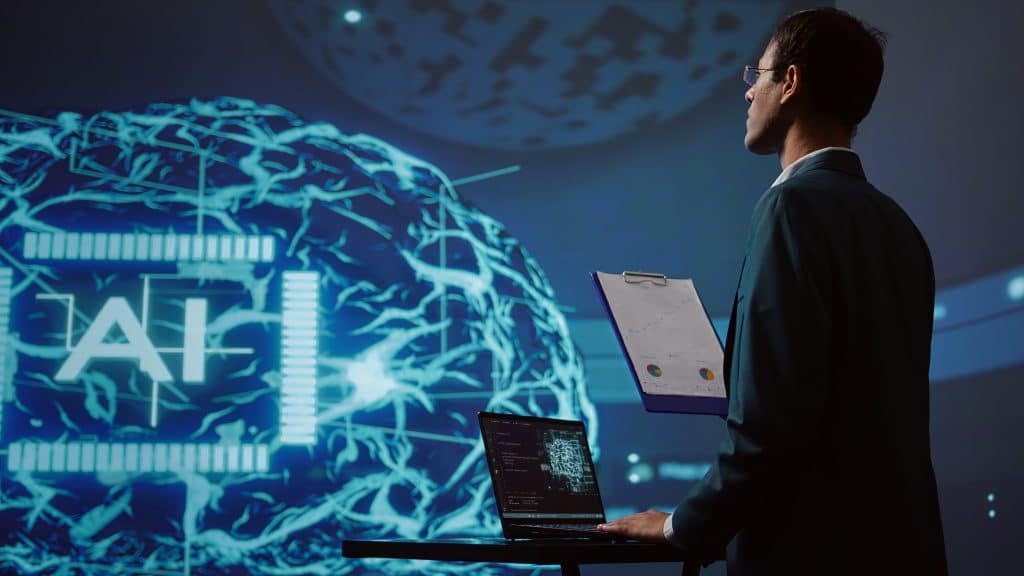
The advent of AI and increasing automation will undeniably catalyze a significant workforce revolution over the next five years.
While concerns about job displacement are valid, the primary impact will be a transformation of job roles, demanding new skill sets and fostering a symbiotic relationship between human workers and AI systems.
Many routine and repetitive tasks will be increasingly automated, freeing up human workers to focus on more complex, creative, and strategic endeavors.
This shift will necessitate a substantial investment in upskilling and reskilling initiatives across various industries to prepare the workforce for the jobs of tomorrow.
Adapting to an AI-Augmented Workforce
The future workforce will be characterized by human-AI collaboration, where AI acts as a powerful tool that augments human capabilities rather than simply replacing them. This will require individuals to develop new competencies to effectively interact with and manage AI systems.
Critical Thinking and Problem-Solving: As AI handles data processing, humans will need to focus on interpreting results, asking the right questions, and solving complex, unstructured problems.
Creativity and Innovation: AI can assist with idea generation, but human creativity will remain essential for developing novel solutions and driving innovation.
Emotional Intelligence and Collaboration: Roles requiring empathy, interpersonal skills, and effective team collaboration will become even more valuable in an AI-augmented environment.
Educational institutions and corporate training programs will need to adapt rapidly, integrating AI literacy, data science fundamentals, and human-AI interaction principles into their curricula. Lifelong learning will become not just an advantage but a necessity for career longevity.
Government policies will also play a crucial role in managing this transition, providing support for displaced workers, fostering inclusive growth, and investing in public education that prepares citizens for the AI-driven economy.
The goal is to ensure that the benefits of AI are broadly shared across society.
Ultimately, the workforce revolution driven by AI is an opportunity to redefine human work, focusing on higher-value activities that leverage our unique cognitive and emotional strengths.
It’s a call to adapt, learn, and embrace a future where humans and AI collaborate to achieve unprecedented levels of productivity and innovation.
The Road Ahead: Challenges and Opportunities in AI Development
As we look toward the next five years of artificial intelligence development, it becomes clear that the road ahead is defined by both complex challenges and unprecedented opportunities.
How governments, businesses, and researchers respond during this next phase will shape not only the future of AI itself, but also its broader impact on society, economies, and human progress.
Successfully navigating this evolving landscape will require thoughtful decision-making, responsible innovation, and global collaboration. The choices made today will determine whether AI becomes a tool that amplifies inequality—or a force that drives inclusive growth and shared prosperity.
One of the most pressing challenges in the next stage of AI development is the rapidly growing demand for computational power and energy.
Training large-scale AI models requires vast infrastructure, raising serious concerns around environmental sustainability, rising costs, and unequal access to advanced AI capabilities.
Without strategic intervention, these resource demands could limit innovation and concentrate power among a small number of organizations.
Overcoming Obstacles and Unlocking AI’s Potential
Addressing these challenges will require innovation across multiple fronts, including hardware efficiency, smarter algorithms, and policy-driven safeguards. At the same time, fully realizing AI’s promise depends on long-term investment, interdisciplinary cooperation, and responsible governance.
Resource Optimization
The next wave of AI progress will depend heavily on improving energy efficiency. Advances in low-power AI chips, optimized model architectures, and emerging technologies such as quantum computing could significantly reduce environmental impact while expanding access to high-performance AI systems.
Data Governance and Ethical Frameworks
As AI systems become more deeply embedded in daily life, establishing strong data governance frameworks will be critical in the next era. Transparent policies for data collection, sharing, and security are essential to prevent misuse, protect privacy, and build public trust in AI-driven solutions.
Closing the Talent Gap
A global shortage of skilled AI professionals remains a major barrier to sustainable growth. In the next phase of AI development, expanding education, reskilling programs, and cross-disciplinary training will be vital to ensure that innovation is not constrained by limited human capital.
Expanding Opportunities in the Next Era of AI
Despite these challenges, the opportunities ahead are even more compelling. Over the next five years, AI has the potential to address some of the world’s most urgent challenges—from climate change mitigation and disease prevention to economic resilience and improved quality of life.
AI-powered systems can accelerate scientific discovery at unprecedented speed, unlocking breakthroughs in medicine, materials science, energy, and beyond. These advances may reshape entire industries and open pathways to solutions that were previously out of reach.
Equally important is the ongoing democratization of AI. As tools and platforms become more accessible, the next generation of innovators—including small businesses, startups, and individual creators—will be empowered to apply AI to their unique problems.
Open-source initiatives and collaborative ecosystems will play a central role in ensuring that AI innovation remains inclusive and widely distributed.
Shaping a Responsible AI Future
The road ahead for AI development over the next five years is one of continuous experimentation, ethical reflection, and strategic cooperation.
By proactively addressing constraints while thoughtfully embracing opportunity, we can ensure that artificial intelligence evolves into a transformative force—one that supports global progress, economic opportunity, and human flourishing in the years to come.
| Key Aspect | Expected Development in 5 Years |
|---|---|
| AI Personalization | Deeply integrated into daily life, offering hyper-personalized experiences in homes, healthcare, and content. |
| Ethical Frameworks | Stricter regulations and unified guidelines for bias, transparency, and data privacy will emerge globally. |
| Workforce Transformation | Emphasis on human-AI collaboration, requiring new skills in critical thinking, creativity, and emotional intelligence. |
| Industrial Impact | AI will revolutionize healthcare (drug discovery, precision medicine), finance (fraud, trading), and manufacturing (automation, optimization). |
Frequently Asked Questions About the Future of AI
Will AI take over all human jobs in the next five years?
No, it is highly unlikely that AI will replace all human jobs in the next five years. Instead, artificial intelligence is expected to transform the nature of work, automating repetitive and time-consuming tasks while enhancing human productivity.
This shift will lead to the creation of new roles and increase demand for uniquely human skills such as creativity, critical thinking, emotional intelligence, and strategic decision-making—resulting in a more collaborative human-AI workforce.
How will AI impact personal privacy in the near future?
As AI systems become more personalized, data usage and privacy concerns will continue to grow. In the next phase of AI development, stricter regulations, ethical standards, and transparency requirements are expected to emerge globally.
Individuals will likely gain greater control over how their data is collected and used. At the same time, privacy-preserving technologies such as federated learning and encrypted data processing will play a key role in reducing privacy risks while maintaining AI performance.
What are the biggest ethical challenges for AI in the coming years?
The next major ethical challenges facing AI include minimizing algorithmic bias, ensuring fairness across diverse populations, and improving transparency in AI-driven decision-making.
Accountability will also become increasingly important, particularly for autonomous systems used in healthcare, finance, and public services. Ensuring equal access to AI benefits—rather than concentrating power among a few organizations—will be a critical focus for policymakers and developers alike.
Will AI become sentient or conscious in the next five years?
Based on current scientific understanding, AI is not expected to achieve sentience or consciousness in the next five years.
While AI technologies are advancing rapidly in areas such as language processing, image recognition, and decision support, they remain tools driven by data and algorithms.
True self-awareness and subjective experience remain far beyond current technological capabilities and are considered a long-term research challenge.
How will AI improve healthcare in the next five years?
Over the next five years, AI will play a transformative role in healthcare by accelerating drug discovery, improving diagnostic accuracy, and enabling highly personalized treatment plans.
AI-assisted robotics will enhance surgical precision, leading to less invasive procedures and faster recovery times. Additionally, predictive analytics powered by AI will support early disease detection and proactive health management, helping healthcare systems shift from reactive to preventive care models.
Conclusion
The next five years will mark a truly transformative chapter in the evolution of artificial intelligence. From highly personalized everyday experiences to groundbreaking advancements across healthcare, finance, education, and manufacturing, AI is poised to fundamentally reshape how we interact with technology and the world around us.
While ethical responsibility, data privacy, and workforce adaptation will remain critical challenges in the next phase of AI adoption, the potential for innovation and positive societal impact is unprecedented. Businesses, governments, and individuals who proactively adapt will be best positioned to thrive.
By prioritizing responsible development, continuous learning, and human-centered design, we can ensure that the next generation of AI technologies drives efficiency, insight, and long-term value—creating a future that is not only smarter, but more inclusive and beneficial for everyone.