Future of Streaming: New Platforms & Features in 2026
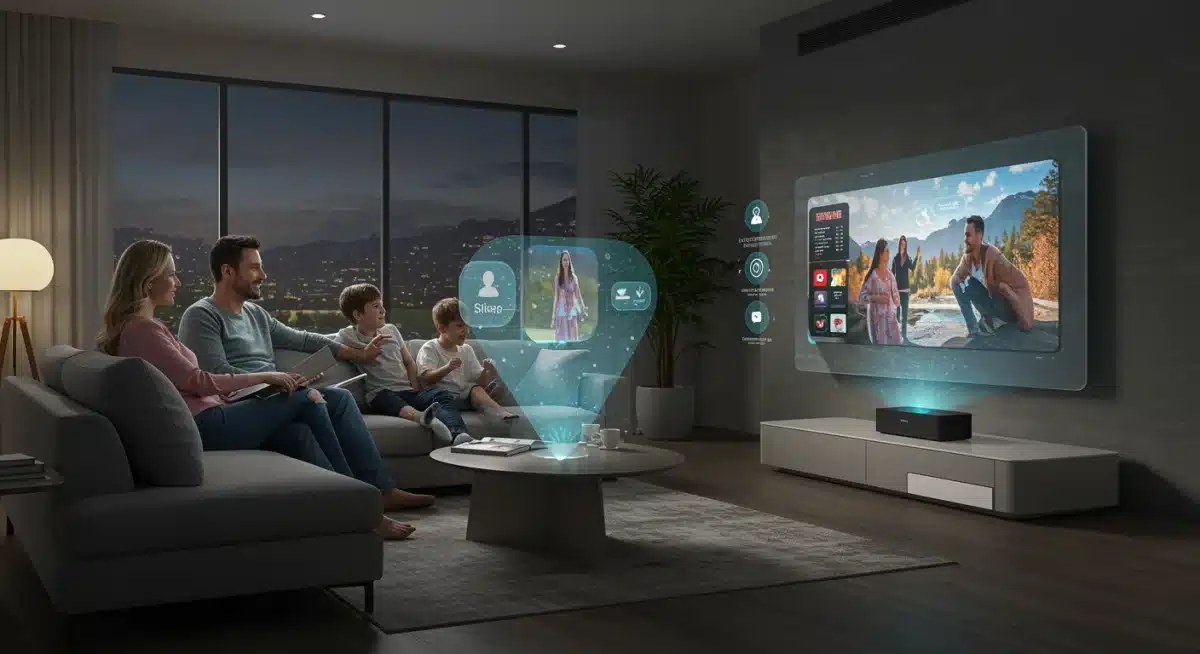
 The world of digital entertainment is in constant motion, and by 2026, the landscape of streaming services will have undergone another profound evolution.
We’re not just talking about more content; we’re anticipating a complete reimagining of how we discover, consume, and interact with our favorite shows, movies, and live events.
The future streaming platforms will push boundaries, integrating advanced technologies to deliver unparalleled user experiences.
This article delves into the exciting innovations and emerging trends set to define streaming in the coming years, offering a glimpse into what American audiences can expect from their screens.
The rise of hyper-personalization and AI curation
As content libraries expand exponentially, the challenge for streaming platforms shifts from simply offering vast choices to intelligently guiding users through them.
By 2026, hyper-personalization, driven by sophisticated AI, will be a cornerstone of the streaming experience. This goes far beyond basic recommendations, delving deep into individual viewing habits, emotional responses, and even contextual factors like time of day or mood.
Imagine a streaming service that understands not just what genres you like, but also the specific narrative structures, character archetypes, or directorial styles you favor.
AI algorithms will analyze your watch history, pause points, re-watches, and even how long you hover over certain thumbnails, creating an incredibly detailed viewer profile. This data will then be used to curate content that feels almost tailor-made for you, reducing decision fatigue and increasing engagement.
Advanced recommendation engines
Next-generation recommendation engines will leverage machine learning to predict not just what you might like, but what you didn’t even know you wanted.
These systems will analyze millions of data points, identifying subtle patterns and correlations that human curators could never spot. They will also learn from your interactions, refining their suggestions in real-time.
Predictive viewing: Platforms might suggest the next episode before you even finish the current one, based on your typical viewing pace.
Emotional tagging: AI will categorize content by emotional impact, recommending shows that align with your current mood or desired emotional experience.
Contextual curation: Recommendations could change based on device, location, or even external data like local weather or trending social topics.
Dynamic content presentation
Personalization will also extend to how content is presented. Instead of static thumbnails, platforms might offer dynamic trailers or short clips customized to highlight elements most likely to appeal to you.
For example, if you frequently watch action films, the trailer might emphasize high-octane sequences, while for a drama enthusiast, it might focus on character development. This dynamic presentation aims to capture attention instantly and provide a more relevant preview of the content.
In essence, the future of streaming will be less about generic catalogs and more about individualized pathways through content, making every viewer’s experience uniquely their own. This shift promises to make content discovery more intuitive and enjoyable, ensuring that users always find something compelling to watch.
Interactive narratives and immersive experiences
The line between passive viewing and active participation is set to blur significantly by 2026. Interactive narratives, once a niche experiment, will become a more common feature, offering viewers agency within the story.
Beyond mere ‘choose your own adventure’ formats, these experiences will integrate advanced technologies to create truly immersive worlds.
Imagine not just watching a story unfold, but actively influencing its direction, or even stepping into the narrative itself.
This evolution is driven by advancements in gaming technology, virtual reality (VR), and augmented reality (AR), which are increasingly converging with traditional streaming. Content creators will have new tools to tell stories that are not only compelling but also deeply engaging on a personal level.
Branching storylines and viewer choices
More sophisticated branching narratives will emerge, where viewer decisions have meaningful and lasting impacts on the plot. These won’t be simple A/B choices, but complex decision trees that lead to multiple endings or significantly altered character arcs.
Platforms will need robust technology to manage these intricate narrative paths, remembering viewer choices across sessions.
Real-time influence: Viewers might vote on plot points during live streams, collectively shaping the story.
Character interaction: Some narratives could allow direct interaction with characters, influencing their responses or relationships.
Personalized endings: The story’s conclusion might be uniquely tailored based on a cumulative history of viewer decisions.
Virtual and augmented reality integration
VR and AR will play a crucial role in creating truly immersive streaming experiences. Viewers might be able to ‘step into’ a movie scene, exploring it from different angles, or attend a virtual concert with friends from across the globe.
AR overlays could provide additional information about characters, locations, or even allow viewers to interact with digital elements within their physical environment.
The goal is to move beyond the flat screen, transforming viewing into an active, multi-sensory engagement. This could involve 360-degree content, spatial audio, and haptic feedback, making the distinction between watching and experiencing almost indistinguishable.
Such innovations promise to revolutionize how we perceive and enjoy digital content, offering levels of immersion previously only dreamed of.
The fractured content landscape: aggregation and super-bundles
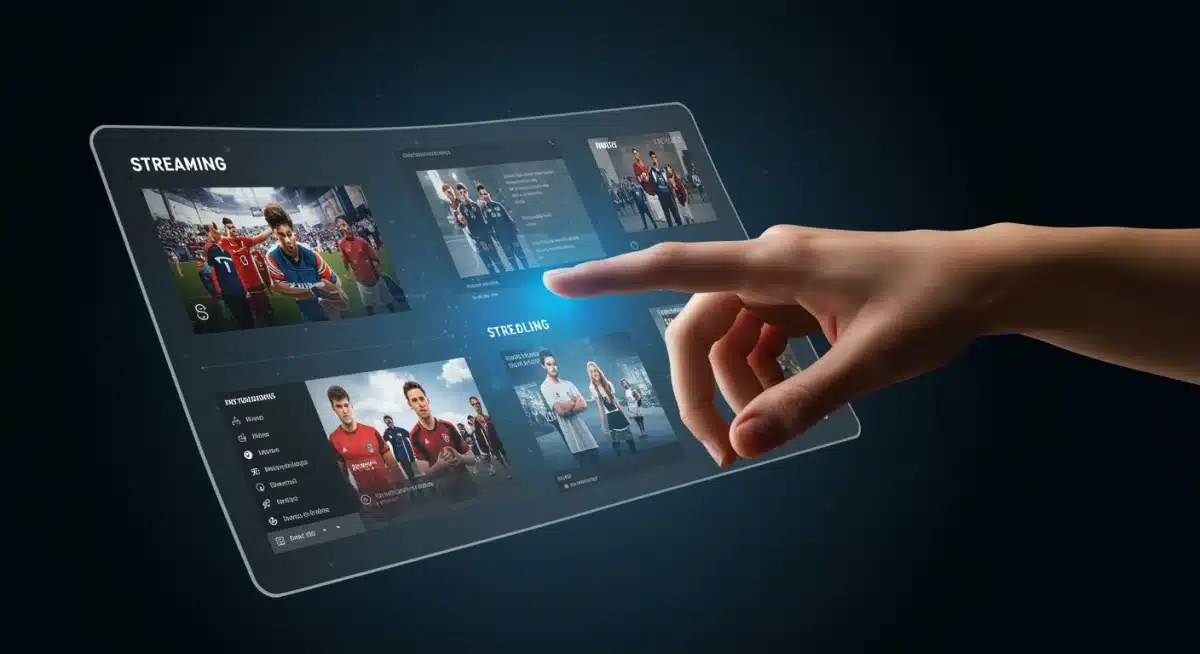
The proliferation of streaming services has led to a fragmented content landscape, often requiring consumers to subscribe to multiple platforms to access all their desired shows.
By 2026, this pain point will drive the development of more advanced aggregation solutions and super-bundles, aiming to simplify content discovery and subscription management.
Instead of juggling half a dozen apps, viewers will seek consolidated access points that provide a unified experience.
This trend is already beginning with features like universal search, but it will evolve into more sophisticated systems that integrate content, billing, and personalization across various providers. The goal is to offer the convenience of a single portal while preserving the diverse content offerings of individual services.
Universal content hubs
New platforms will emerge that act as universal content hubs, allowing users to browse, search, and watch content from all their subscribed services within a single interface.
These hubs will not only aggregate content but also provide unified watchlists, personalized recommendations across services, and streamlined billing options, effectively creating a ‘meta-streaming’ experience.
Cross-platform search: Instantly find where a movie or show is available across all your subscriptions.
Unified watchlists: Manage all your ‘to-watch’ content in one place, regardless of the originating service.
Centralized billing: Simplify payments by bundling multiple streaming subscriptions into a single monthly bill.
Super-bundles and tiered access
Content providers will increasingly collaborate to offer super-bundles, allowing consumers to subscribe to multiple services at a discounted rate. These bundles might be curated around specific genres (e.g., a ‘sports bundle’ or a ‘family entertainment bundle’) or demographic interests.
Tiered access models will also become more prevalent, allowing users to pay for specific channels or content packs rather than entire libraries, offering greater flexibility and cost control.
This shift towards aggregation and flexible bundling aims to alleviate subscription fatigue and provide a more seamless, cost-effective way for consumers to access the vast array of content available.
The challenge for these aggregators will be to maintain a neutral and user-centric approach, avoiding favoritism towards particular content providers.
Live events and interactive broadcasting
Live streaming has already proven its immense popularity, from sporting events to concerts and news. By 2026, live events on streaming platforms will become even more interactive and engaging, offering features that go beyond traditional broadcast television.
This evolution will be driven by low-latency streaming technologies and a desire for shared, community-driven experiences.
Imagine not just watching a live game, but influencing camera angles, engaging in real-time polls, or chatting with friends and strangers within a shared virtual space. These interactive elements will transform passive viewing into an active social event, fostering a stronger sense of community around shared interests. Content creators and broadcasters will leverage these tools to build more dynamic and participatory experiences.
Enhanced fan engagement tools
Platforms will integrate advanced fan engagement tools directly into live streams. This could include real-time statistics overlays that viewers can customize, interactive polls that influence commentators’ discussions, or even direct Q&A sessions with performers or athletes.
The goal is to make viewers feel more connected to the event and its participants, blurring the lines between audience and participant.
Multi-angle viewing: Option to switch between different camera feeds during a live event.
Real-time commentary options: Choose between official commentators, fan-generated commentary, or even mute commentary entirely.
Integrated social feeds: See live tweets, fan reactions, or chat with friends directly within the streaming interface.
Virtual live experiences
The metaverse will begin to significantly impact live streaming, especially for events like concerts and conferences.
Viewers will be able to attend virtual versions of these events, represented by avatars, interacting with others and even the performers in a shared digital space. These virtual experiences will offer unique perspectives and opportunities for engagement that are impossible in the physical world.
This includes personalized viewing areas, exclusive virtual merchandise, and unique interactive elements like virtual stage takeovers or audience participation segments.
The fusion of live streaming with virtual environments promises to create a new frontier for event consumption, making them accessible to a global audience with unprecedented levels of interaction.
The era of user-generated content and creator economy
While major studios and networks currently dominate the streaming landscape, by 2026, user-generated content (UGC) and the creator economy will command a more prominent position.
Platforms will increasingly invest in tools and infrastructure to empower independent creators, fostering a diverse ecosystem of content that appeals to niche audiences.
This shift is a natural progression from the success of platforms like YouTube and TikTok, but it will be elevated within dedicated streaming services.
These platforms will offer sophisticated monetization models, streamlined production tools, and robust distribution channels, allowing creators to produce high-quality content and build sustainable careers. The democratization of content creation will lead to a broader range of voices and perspectives, catering to highly specific tastes.

Creator-centric platforms
New streaming platforms will emerge that are specifically designed to support independent creators, offering features like built-in editing suites, direct audience monetization options (subscriptions, tips, merchandise sales), and analytics tools.
These platforms will provide a more professional and dedicated environment for creators compared to general-purpose social media sites.
Subscription tiers: Creators can offer exclusive content or early access to subscribers.
Interactive livestreams: Tools for creators to host live Q&A, behind-the-scenes, or collaborative sessions with their audience.
Community building features: Integrated forums, fan clubs, and direct messaging to foster a loyal audience.
Niche content and community focus
The creator economy will thrive on niche content, catering to highly specific interests that mainstream platforms often overlook.
From specialized documentaries to unique educational series, these creators will build dedicated communities around their passions. Streaming services will recognize the value of these communities, providing tools for engagement and fostering a sense of belonging among viewers.
This focus on niche content and community will lead to a more diverse and vibrant streaming ecosystem, where quality and authenticity often outweigh massive production budgets.
It will also offer viewers a greater variety of content that truly resonates with their individual interests, moving away from a one-size-fits-all approach to entertainment.
Accessibility and global reach advancements
As streaming continues its global expansion, accessibility will become an even greater priority by 2026. Platforms will invest significantly in features that ensure content is enjoyable and understandable for everyone, regardless of language, hearing, or visual impairments.
This commitment to inclusivity will not only broaden audience reach but also enhance the overall user experience for all.
Technological advancements in AI-driven translation, sophisticated captioning, and descriptive audio will make content more universally accessible.
Furthermore, the infrastructure for delivering high-quality streaming to remote and underserved areas will continue to improve, breaking down geographical barriers to entertainment. The goal is to create a truly global and inclusive streaming experience.
AI-powered translation and localization
Real-time, AI-powered translation will become standard, offering accurate dubbing and subtitles in multiple languages.
This technology will not only translate dialogue but also adapt cultural nuances, making foreign content feel more native to local audiences. This will open up content libraries to a much wider global viewership, fostering cultural exchange through entertainment.
Dynamic subtitles: Subtitles that adapt to reading speed or highlight key phrases.
Personalized dubbing: Options to choose different voice actors or tones for dubbed content.
Cultural context overlays: Optional pop-ups explaining cultural references or historical backgrounds.
Enhanced accessibility features
Accessibility features will go beyond basic captions. Advanced descriptive audio services will provide detailed narration for visually impaired users, describing on-screen actions, expressions, and visual cues. Platforms will also offer customizable playback speeds, font sizes, and color contrasts to cater to a wider range of needs. Eye-tracking and voice control interfaces will become more common, offering alternative navigation methods for users with mobility challenges.
These enhancements are not just about compliance; they are about creating a richer, more inclusive viewing experience that acknowledges the diverse needs of the global audience. By investing in these features, streaming platforms will demonstrate a commitment to making entertainment truly universal and accessible to all.
Technological backbone: 5G, edge computing, and blockchain
The ambitious features and immersive experiences projected for 2026 will not be possible without a robust technological backbone.
Key advancements in connectivity, data processing, and security will underpin the next generation of streaming. 5G, edge computing, and blockchain technology are set to play pivotal roles in delivering seamless, high-quality, and secure content to consumers worldwide.
These technologies address critical challenges such as latency, bandwidth, and content piracy, enabling the smooth delivery of interactive and high-fidelity media.
Their integration will allow for more complex applications, greater personalization, and enhanced security measures, ensuring that the future of streaming is not only innovative but also reliable and trustworthy.
5G and low-latency streaming
The widespread adoption of 5G networks will revolutionize mobile streaming, offering ultra-fast speeds and incredibly low latency.
This will enable seamless 4K and 8K streaming on the go, as well as highly responsive interactive content and real-time multiplayer viewing experiences without buffering or delays. 5G’s capacity will also support the increasing demand for high-bandwidth VR/AR streaming.
Mobile VR/AR streaming: High-quality immersive content accessible on mobile devices.
Real-time interactive events: Participate in live polls and games without lag.
Consistent quality: Maintain high-resolution streaming even in crowded areas.
Edge computing for faster content delivery
Edge computing will bring content servers closer to the end-user, significantly reducing the distance data needs to travel. This results in faster load times, reduced latency, and a more responsive user experience, especially crucial for interactive elements and live streams. By processing data closer to the source, edge computing also enhances security and reduces the strain on central data centers.
Blockchain technology will address issues of content piracy and intellectual property rights. By providing an immutable and transparent ledger of content ownership and distribution, blockchain can help creators protect their work and ensure fair compensation.
It could also facilitate new monetization models, such as tokenized content ownership or micropayments for specific scenes or features, creating a more equitable ecosystem for creators and distributors alike.
| Key Feature | Brief Description |
|---|---|
| Hyper-Personalization | AI-driven content curation based on deep viewer profiles and contextual data. |
| Interactive Narratives | Viewers influencing storylines and immersive experiences via VR/AR. |
| Content Aggregation | Universal hubs and super-bundles for simplified multi-service access. |
| Creator Economy Growth | Platforms empowering independent creators with advanced tools and monetization. |
Frequently asked questions about the future of streaming
AI will revolutionize streaming by offering deep hyper-personalization, curating content based on your unique viewing habits, emotional responses, and even contextual factors like mood. This will lead to more relevant recommendations and dynamic content presentations, reducing decision fatigue and enhancing discovery.
While content fragmentation is a current challenge, 2026 is expected to bring more aggregation solutions. Universal content hubs and super-bundles will allow you to access content from multiple services through a single interface, simplifying billing and discovery, aiming to reduce subscription fatigue.
VR will enable truly immersive streaming, allowing viewers to ‘step into’ movie scenes, attend virtual concerts, or explore digital environments. This technology will blur the line between watching and experiencing, enhancing interactive narratives and live events with 360-degree content and spatial audio.
Live events will become highly interactive, offering features like customizable camera angles, real-time polls, and integrated social feeds. The metaverse will also host virtual live experiences, allowing avatars to attend concerts or conferences, fostering a stronger sense of community and participation.
Yes, the creator economy is set to grow significantly. New platforms will empower independent creators with advanced production tools, flexible monetization models, and robust distribution, fostering a diverse range of niche content and building dedicated communities around specific interests, moving beyond mainstream offerings.
Conclusion
The journey towards 2026 promises a streaming landscape that is far more dynamic, personalized, and interactive than anything we’ve experienced before. From hyper-personalized AI curation and immersive VR narratives to consolidated content hubs and a thriving creator economy, the future of streaming will redefine digital entertainment.
These advancements, powered by robust technologies like 5G and edge computing, will not only offer unparalleled convenience and choice but also foster deeper engagement and a more inclusive viewing experience for audiences across America and beyond.
As platforms continue to innovate, viewers can look forward to a truly revolutionary era of content consumption, where every screen opens a door to a uniquely tailored and endlessly captivating world.