Unclaimed Money Alert: Check Your Funds for 2026
 Have you ever wondered if there’s money out there with your name on it, just waiting to be claimed? The truth is, it’s more common than you might think. This unclaimed money 2026 alert is your definitive guide to uncovering forgotten assets and recovering what’s rightfully yours, potentially adding a significant boost to your financial well-being.
Understanding the Phenomenon of Unclaimed Money
Unclaimed money, also known as unclaimed property or abandoned property, refers to accounts and assets held by financial institutions or companies that have had no activity or contact with their owners for a specified period, typically one to five years.
When this happens, state laws require these entities to turn the funds over to the state’s unclaimed property program. These programs then hold the funds indefinitely until the rightful owners or their heirs come forward to claim them.
The sheer volume of unclaimed money across the United States is staggering, often totaling billions of dollars. This isn’t just about small, forgotten sums; it can include significant amounts from various sources, making it a crucial area for individuals to investigate.
Many people are completely unaware that they might be entitled to these funds, which is why regular checks are so important.
Common sources of unclaimed funds
Forgotten bank accounts (checking, savings, CDs)
Uncashed payroll checks or customer refunds
Life insurance policy proceeds
Utility security deposits
Understanding where these funds originate is the first step in knowing where to look. Each state maintains its own database, and while national search engines exist, starting with your current and previous states of residence is often the most effective approach.
The process is designed to be straightforward, empowering citizens to reclaim their assets without unnecessary hurdles.
Ultimately, the concept of unclaimed money serves as a vital consumer protection measure. It prevents businesses from indefinitely holding onto funds that belong to private citizens, ensuring that wealth eventually returns to its rightful owners. Regular vigilance can prevent your hard-earned money from becoming part of these vast, forgotten pools.
Navigating State Unclaimed Property Databases for 2026
The primary method for searching for unclaimed money is through state unclaimed property websites. Every state in the U.S. operates its own program, and these programs are typically managed by the state treasurer’s office or a similar department.
These online databases are usually free to search and relatively user-friendly, allowing you to enter your name and sometimes previous addresses to see if any funds are associated with you.
It’s important to remember that if you’ve lived in multiple states, you should check each state’s database. Funds typically remain in the state where the last known address of the owner was located. Therefore, a comprehensive search involves looking beyond your current residence.
Many states also offer search options for businesses, so if you’ve ever owned a company, it’s worth checking for any forgotten assets there too.
Tips for effective searching
Search under all names you’ve ever used (maiden name, previous married names, nicknames).
Include variations of your name (e.g., ‘John Smith’ and ‘J. Smith’).
Check for family members, both living and deceased, as you might be an heir to their unclaimed property.
Use past addresses, including those from college or temporary residences.
While the process is generally secure, always be wary of third-party services that charge a fee to find your money. Most state programs allow you to search and claim directly for free.
If you encounter difficulties or have questions, the state’s unclaimed property division typically provides contact information for assistance. The goal is to make the retrieval of your funds as accessible as possible, eliminating unnecessary costs or complications.
By diligently searching these state databases, you significantly increase your chances of discovering and reclaiming any unclaimed money that might be rightfully yours in 2026. This proactive approach can yield surprising and welcome financial returns.
The National Association of Unclaimed Property Administrators (NAUPA)
While individual state websites are crucial, the National Association of Unclaimed Property Administrators (NAUPA) offers a valuable consolidated resource: MissingMoney.com. This website allows you to search multiple state databases at once, simplifying the process, especially if you’ve lived in several different states. MissingMoney.com is endorsed by NAUPA and is a legitimate, free service.
It’s important to understand that MissingMoney.com doesn’t cover every single state, as participation is voluntary.
Therefore, even if you use this national search tool, it’s still a good practice to check individual state websites, particularly for states not included in the MissingMoney.com database. This dual approach ensures the most comprehensive search possible for your unclaimed money 2026.
Why use a national search tool?
Saves time by searching multiple states simultaneously.
Provides a convenient starting point for your search.
Endorsed by official state unclaimed property administrators.
When using MissingMoney.com, you’ll typically enter your last name, first name, and sometimes your city. The system then queries participating state databases and presents any matches.
If a match is found, the website will usually direct you to the specific state’s unclaimed property website to initiate the claim process. This streamlines the initial discovery phase, making it easier to identify potential funds.
Always verify the legitimacy of any website claiming to help you find unclaimed money. Official government sites and NAUPA-endorsed platforms like MissingMoney.com are your safest bets.
Avoid entering personal information on unverified sites that promise quick returns for a fee. The security of your personal data should always be a top priority when dealing with financial matters.
Common Sources of Unclaimed Funds: A Closer Look
Unclaimed money doesn’t just appear out of thin air; it originates from a wide variety of financial transactions and accounts that lose contact with their owners.
Understanding these common sources can help you pinpoint where your forgotten funds might be lurking. This knowledge can also guide you in preventative measures to ensure your assets don’t become unclaimed in the future.
Beyond the typical bank accounts and uncashed checks, many other types of assets can end up in state unclaimed property coffers.
These can include less obvious sources that individuals might easily overlook, making a thorough search even more critical. The diversity of these sources highlights why a comprehensive check for unclaimed money 2026 is so essential for everyone.
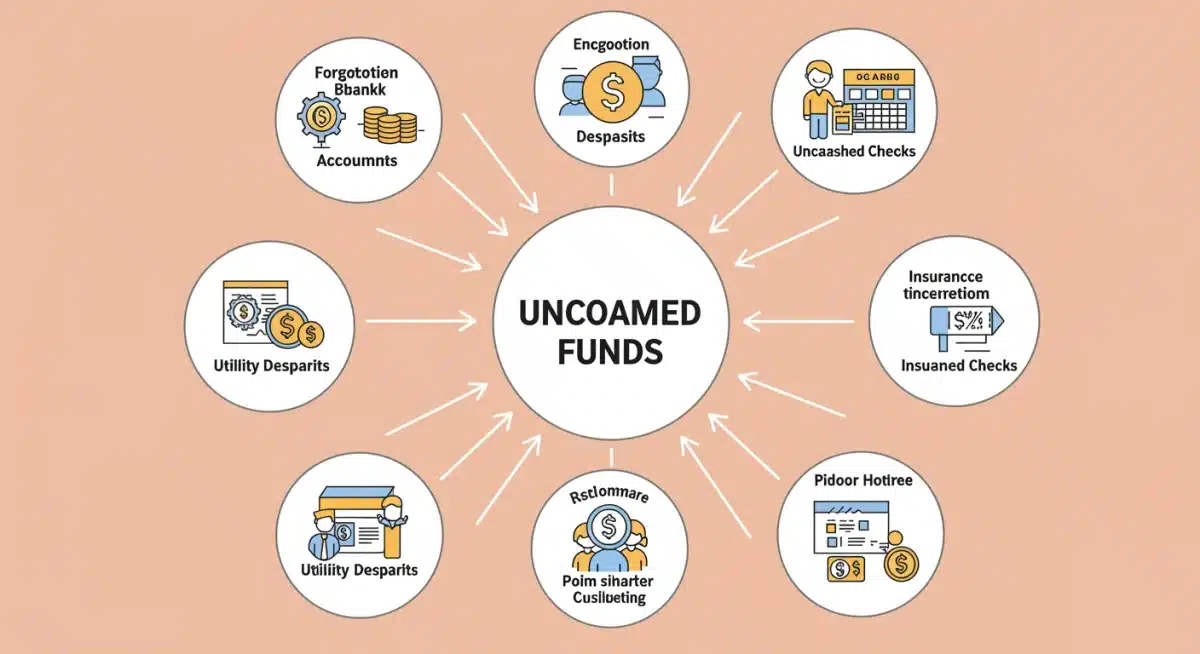
Detailed list of common sources
Bank Accounts: Savings, checking, or CD accounts with no activity for an extended period.
Stocks and Dividends: Uncashed dividend checks, stock certificates, or mutual fund shares.
Insurance Benefits: Life insurance policy benefits, annuities, or uncashed insurance checks.
Utility Deposits: Refunds for security deposits made to utility companies (electric, gas, water, cable) that were never returned.
Payroll and Vendor Checks: Uncashed paychecks, commissions, or checks issued to suppliers or vendors.
Court Deposits: Funds held by courts, such as bail bonds, restitution, or escrow accounts.
Safe Deposit Box Contents: Contents of safe deposit boxes that were abandoned.
Many people forget about small deposits made years ago or checks that were lost in the mail. Over time, these small amounts can accumulate, or larger sums from life insurance policies or forgotten stock holdings can become significant.
Regularly reviewing your financial statements and keeping track of all your accounts can help prevent your assets from becoming unclaimed property.
It is important to educate yourself and your family members about these potential sources. Encouraging heirs to check for unclaimed property after a loved one’s passing is also a crucial step, as many unclaimed funds belong to deceased individuals whose beneficiaries are unaware of their existence.
The Claim Process: What to Expect When You Find Unclaimed Money
Once you’ve successfully located unclaimed money associated with your name, the next step is to initiate the claim process.
While the exact steps can vary slightly from state to state, there’s a general framework you can expect. Most states require you to submit a claim form, often available directly from their unclaimed property website, along with documentation to prove your identity and your right to the funds.
The claim process is designed to prevent fraudulent claims, so expect to provide clear and verifiable proof.
This often involves submitting copies of government-issued identification, proof of address, and sometimes documents that link you to the original owner if you are claiming on behalf of a deceased individual or as an heir. Be prepared for a waiting period, as states need time to process and verify claims.
Required documentation typically includes:
Photo identification (driver’s license, state ID)
Proof of Social Security number
Proof of current and past addresses
Documents linking you to the property (e.g., old bank statements, death certificates, wills)
Some claims, particularly those involving larger sums or complex ownership structures, may require additional documentation or a more extensive verification process.
Patience is key during this period. While it can be exciting to discover forgotten funds, the administrative process can take several weeks or even months to complete, depending on the state’s workload and the complexity of your claim.
If you encounter any issues or have questions during the claim process, do not hesitate to contact the state’s unclaimed property division.
They are there to assist you and can provide specific guidance tailored to your situation. Remember, the goal is to successfully return the funds to their rightful owner, and state officials are generally very helpful in facilitating this.
Preventing Your Money from Becoming Unclaimed Property
While finding and reclaiming unclaimed money is a welcome surprise, preventing your assets from becoming unclaimed in the first place is even better.
Proactive financial management and diligent record-keeping are your best defenses against losing track of your funds. Taking a few simple steps now can save you the hassle of searching and claiming later, ensuring your money always stays within your reach.
The key to prevention lies in maintaining up-to-date records and regular communication with financial institutions.
Life changes, such as moving, getting married, or changing jobs, are common reasons why contact is lost between individuals and their assets. Being mindful of these transitions and updating your information promptly can make all the difference in safeguarding your financial future.
Best practices for preventing unclaimed money:
Keep records updated: Always inform your banks, investment firms, and insurance companies of any changes to your address, name, or contact information.
Regularly review statements: Check all financial statements (bank, investment, utility) for accuracy and activity. If you stop receiving statements, investigate immediately.
Consolidate accounts: Avoid opening numerous small accounts that are easy to forget. Consolidate funds where possible.
Maintain a financial inventory: Keep a detailed list of all your financial accounts, policies, and investments, including account numbers and contact information.
Communicate with beneficiaries: Inform your beneficiaries about your assets and where to find your financial records, especially for life insurance policies or retirement accounts.
Even if you’re meticulous, it’s a good habit to conduct a quick search for your own name on state unclaimed property websites every year or two.
This acts as a preventative check, catching any funds that might have slipped through the cracks due to administrative errors or unforeseen circumstances. It’s a small investment of time that can offer significant peace of mind.
By adopting these preventative measures, you empower yourself to retain control over your assets and minimize the chances of your money ever becoming part of the vast pool of unclaimed property. Staying organized and informed is the ultimate strategy for financial security.
The Future of Unclaimed Money: 2026 and Beyond
As we look towards 2026 and beyond, the landscape of unclaimed money continues to evolve. Technology plays an increasingly significant role in both the reporting and recovery of these funds.
States are continually improving their online databases, making them more user-friendly and accessible. The goal is to make it as easy as possible for citizens to reunite with their rightful property, leveraging digital tools to bridge the gap between forgotten assets and their owners.
Furthermore, financial institutions are also becoming more proactive in trying to contact account holders before their assets are deemed abandoned. This includes more frequent email notifications, text alerts, and automated calls, all designed to prevent accounts from going dormant. However, despite these efforts, the volume of unclaimed money remains substantial, underscoring the ongoing need for individual vigilance.
Emerging trends and considerations:
Enhanced digital search tools: Expect more integrated and intuitive online platforms for searching across multiple states.
Increased public awareness campaigns: States are likely to continue and expand efforts to educate the public about unclaimed property.
Focus on cybersecurity: As more financial transactions move online, ensuring the security of personal data during the claim process will be paramount.
Broader definition of property: The types of assets considered ‘unclaimed’ may expand to include newer digital assets or forms of wealth.
The continued growth of the digital economy and the increasing complexity of financial products mean that new forms of unclaimed property may emerge.
Staying informed about these developments will be crucial for both individuals and regulators. For instance, what happens to forgotten cryptocurrency wallets or digital loyalty points? These are questions that states and federal agencies are beginning to address.
Ultimately, the responsibility for checking for and claiming unclaimed money rests with the individual.
While governments and financial institutions strive to facilitate the process, a proactive stance on your part is the most effective way to ensure that your financial assets remain within your control, not forgotten in a state treasury. Make checking for your unclaimed money 2026 a routine financial habit.
| Key Point | Brief Description |
|---|---|
| What is Unclaimed Money? | Funds or assets held by states after institutions lose contact with owners for a specified period. |
| How to Search | Check individual state unclaimed property websites and MissingMoney.com, searching all names and addresses. |
| Claim Process | Submit claim forms with proof of identity and ownership; expect verification and processing times. |
| Prevention Tips | Keep contact info updated, review statements, consolidate accounts, and maintain a financial inventory. |
Frequently Asked Questions About Unclaimed Money
Common types include forgotten bank accounts, uncashed payroll or dividend checks, utility deposits, insurance policy proceeds, and even the contents of safe deposit boxes. These assets are turned over to the state if there’s no activity or contact with the owner for a set period, typically between one to five years.
No, searching for and claiming unclaimed money through official state government websites or NAUPA-endorsed sites like MissingMoney.com is entirely free. Be wary of third-party services that charge a fee, as you can typically perform these actions yourself without any cost.
The processing time varies by state and the complexity of the claim. It can range from a few weeks to several months. States need time to verify your identity and your rightful ownership of the funds to prevent fraud. Patience is important during this verification period.
Yes, you can and should search for unclaimed money belonging to deceased family members. If you are an heir or executor, you may be able to claim these funds. You will typically need to provide a death certificate and documentation proving your legal relationship or right to the estate.
To prevent your money from becoming unclaimed, always keep your contact information updated with financial institutions, regularly review all account statements, and consider consolidating smaller accounts.
Maintaining a detailed financial inventory and informing beneficiaries about your assets also helps ensure your funds remain accessible.
Conclusion
The journey to discover and reclaim your unclaimed money 2026 is a worthwhile endeavor that can lead to unexpected financial benefits. With billions of dollars held in state treasuries across the nation, a proactive search using official state databases and trusted national resources like MissingMoney.
com is an essential step for every individual. While the process requires diligence and some documentation, the satisfaction of recovering what’s rightfully yours is immense.
Furthermore, by adopting sound financial practices, you can prevent your assets from becoming forgotten in the future, ensuring greater control over your financial well-being for years to come. Make it a regular habit to check for unclaimed funds; your efforts could literally pay off.