AI Assistants: What to Expect in the Next 12 Months

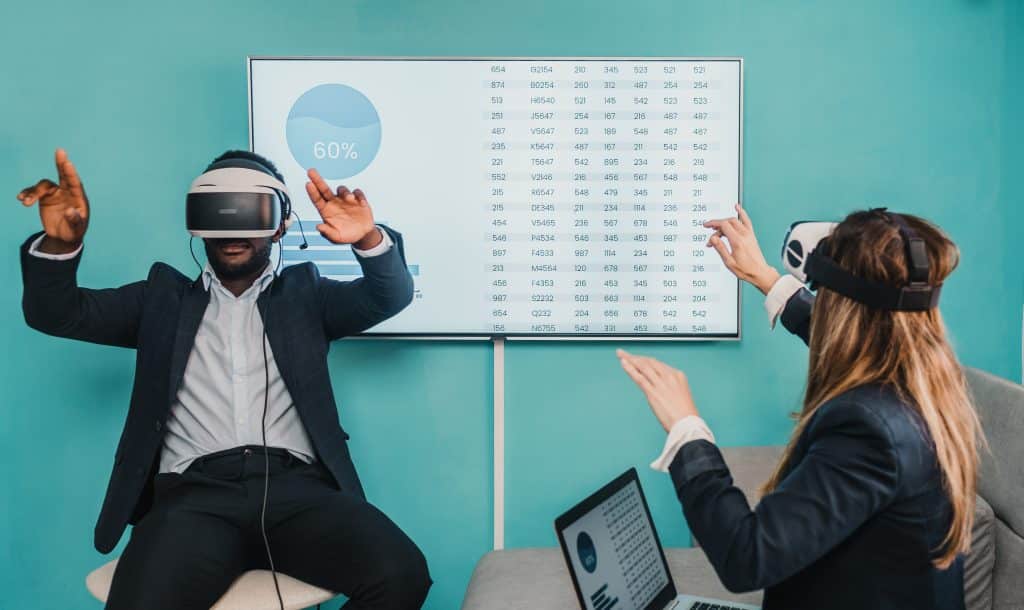 Have you ever wondered what the next year holds for the digital companions we’ve come to rely on? The Future of AI Assistants: What to Expect in the Next 12 Months is poised to redefine our interactions with technology, moving beyond simple commands to truly intelligent partnerships. Get ready to dive into the exciting developments that will shape our digital lives very soon.
Enhanced personalization and contextual understanding
In the coming year, AI assistants are set to become far more than mere responders to commands; they will evolve into highly personalized entities capable of understanding nuanced contexts.
This shift means a more intuitive and less frustrating user experience, as these assistants learn to anticipate needs rather than just reacting to explicit instructions. Imagine an AI that truly gets you, not just your words, but your preferences, habits, and even your mood.
The core of this enhancement lies in advanced machine learning algorithms that process vast amounts of user data, always with a strong emphasis on privacy and ethical data handling. These systems will analyze past interactions, location data, calendar entries, and even biometric inputs to build a comprehensive profile of the user.
This profile, however, will be dynamic, adapting as your routines and preferences change, ensuring the assistant remains relevant and helpful over time. The goal is to move from a generic AI experience to one that feels tailor-made for each individual, offering suggestions and support that are genuinely useful.
Predictive assistance and proactive recommendations
Anticipating needs: AI assistants will learn daily routines and predict upcoming tasks or needs, such as ordering groceries when supplies are low.
Contextual suggestions: Based on location and time, they might suggest nearby restaurants or remind you of an upcoming appointment.
Personalized content: Recommendations for music, movies, or news will be finely tuned to individual tastes, going beyond simple genre matching.
Health and wellness prompts: Integration with health trackers could lead to proactive suggestions for exercise or hydration based on personal goals.
This leap in personalization will not only make our lives easier but also more efficient. By minimizing the friction of digital interaction, AI assistants will free up mental bandwidth, allowing us to focus on more important tasks.
The technology will be designed to integrate seamlessly into our existing digital ecosystems, acting as a central hub for various smart devices and applications, further enhancing its contextual awareness.
Consider an assistant that knows when you’re driving and automatically adjusts your home thermostat before you arrive, or one that proactively schedules a service appointment for your car based on its mileage. These are not distant dreams but imminent realities.
The evolution of contextual understanding will also extend to multi-turn conversations. Current AI assistants often struggle to maintain context across several exchanges, leading to repetitive clarifications.
The next 12 months will see significant improvements here, allowing for more natural and fluid dialogue. This means you can have a more human-like conversation with your AI, where it remembers previous statements and uses that information to inform subsequent responses, making interactions feel less like a series of isolated commands and more like an actual conversation with an informed entity.
Advancements in emotional intelligence and natural language processing
The next frontier for AI assistants lies in their ability to not only understand what we say but also how we feel. Emotional intelligence, once exclusive to human interaction, is rapidly becoming a key focus in AI development.
This involves sophisticated natural language processing (NLP) models that can detect subtleties in tone, word choice, and even speech patterns to infer emotional states. Imagine an AI assistant that recognizes frustration in your voice and offers a calming solution, or one that senses your excitement and responds with enthusiasm.
This capacity for emotional understanding will profoundly change the way we interact with technology. Instead of a purely utilitarian exchange, interactions could become more empathetic and supportive.
For instance, if an AI assistant detects stress, it might suggest a guided meditation, play soothing music, or offer to reschedule non-urgent tasks. This isn’t about replacing human connection but augmenting it, providing a layer of digital support that is both intelligent and caring.
The ethical implications of such technology are significant, with developers carefully considering how to implement these features responsibly to avoid manipulation or over-reliance.
Key developments in emotional AI
Voice tone analysis: AI will be able to identify emotions like happiness, sadness, anger, or confusion from vocal inflections.
Sentiment analysis: Advanced algorithms will interpret the emotional intent behind written and spoken words, understanding sarcasm or irony.
Adaptive responses: Assistants will tailor their responses based on detected emotions, offering comfort or encouragement as appropriate.
Empathy in design: User interfaces and assistant personalities will be designed to reflect a greater degree of empathy, making interactions feel more human.
The progress in natural language processing (NLP) will be foundational to these advancements. Current NLP models are already impressive, but the next 12 months will bring even more refined understanding of complex sentence structures, idioms, and cultural nuances.
This means fewer misunderstandings and more accurate responses, even in challenging linguistic contexts. Cross-lingual capabilities will also see significant improvement, allowing for seamless communication across different languages, breaking down communication barriers in an increasingly globalized world.
NLP enhancements will ensure that emotional intelligence is built upon a solid foundation of accurate linguistic interpretation.
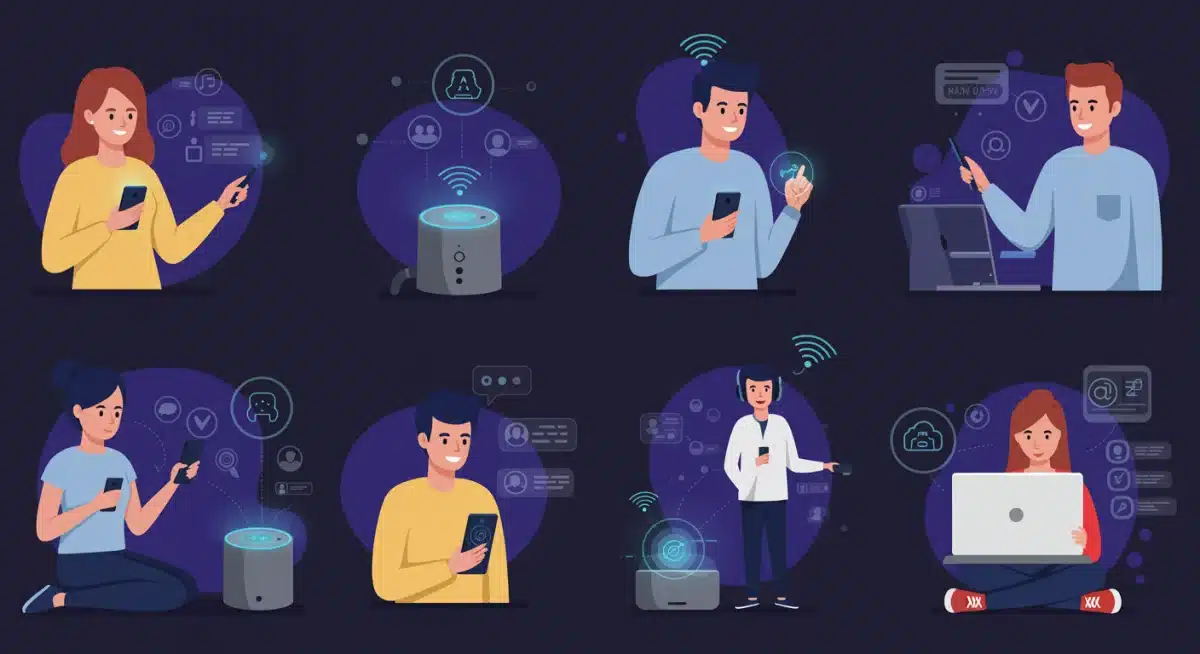
Moreover, the integration of emotional intelligence will extend beyond reactive responses. Proactive emotional support could become a reality, with AI assistants identifying patterns in user behavior that might indicate declining well-being and offering subtle, helpful interventions.
This could range from suggesting a break during a long workday to recommending a pleasant activity based on past preferences during times of low mood. Such capabilities highlight the transformative potential of emotionally intelligent AI, moving beyond simple task completion to genuine personal support.
Seamless integration across devices and platforms
The vision for AI assistants in the next year involves a future where they are not confined to a single device but are ubiquitous, seamlessly flowing across all your digital touchpoints. This means your assistant will know you whether you’re speaking to your smart speaker at home, typing on your laptop at work, or interacting with your smartwatch on the go.
The goal is to create a unified and consistent experience, where your preferences and ongoing tasks are carried over from one device to another without any manual intervention.
This level of integration requires robust cloud infrastructure and sophisticated synchronization protocols. Developers are working to ensure that the AI’s understanding of your context, your ongoing conversations, and your personalized settings are instantly accessible from any compatible device.
This eliminates the frustrating experience of having to repeat information or re-establish context when switching between devices. For example, if you start a task on your phone, you should be able to pick it up effortlessly on your smart display or even in your car’s infotainment system. This interconnectedness will elevate the convenience factor of AI assistants to new heights, making them truly indispensable.
The unified digital ecosystem
Cross-device continuity: Start a task on one device and seamlessly continue it on another, with the AI maintaining context.
Platform agnostic: AI assistants will work across different operating systems and hardware manufacturers, fostering greater interoperability.
Centralized profile management: A single user profile will store all preferences, habits, and data, accessible from any integrated device.
Enhanced security: Robust security measures will be implemented to protect personal data as it flows across multiple devices and platforms.
The implications of this seamless integration are far-reaching. For professionals, it means an AI assistant that can manage your calendar, emails, and project updates across your phone, tablet, and desktop, ensuring you’re always on top of your responsibilities.
For home users, it translates to an AI that controls your smart home devices, manages your entertainment, and helps with daily tasks, all from a centralized, intelligent hub that adapts to your location and activity. This pervasive presence will make AI assistants feel less like a tool and more like an extension of your own capabilities, always available and always informed.
Furthermore, the move towards open standards and interoperability will play a crucial role in achieving this seamless experience. Tech companies are increasingly recognizing the value of collaboration to create a more cohesive digital landscape.
This means that even if you use devices from different brands, your AI assistant should be able to connect and manage them effectively. The focus is on creating an ecosystem where technology works together harmoniously, rather than in isolation, ultimately benefiting the end-user with a truly unified and intelligent experience.
The rise of multimodal AI interfaces
Gone are the days when AI assistants solely relied on voice commands. The next 12 months will usher in a new era of multimodal interfaces, where users can interact with their AI through a combination of voice, touch, gesture, and even gaze.
This diversified input method will not only make AI assistants more accessible to a wider range of users but also significantly enhance the richness and efficiency of interactions. Imagine demonstrating a task with a gesture while simultaneously vocalizing a command, and your AI assistant understands both inputs to complete the request.
This advancement is driven by breakthroughs in computer vision, haptic feedback technologies, and advanced sensor integration. AI systems will be able to interpret visual cues, such as pointing at an object, alongside spoken requests, leading to a more natural and intuitive interaction paradigm.
For example, you might point at a smart light bulb and say, “Turn this off,” and the AI will correctly identify the target and execute the command. This blending of input modalities mirrors how humans naturally communicate, using a combination of verbal and non-verbal cues, making AI interactions feel less artificial.
Innovations in multimodal interaction
Voice and gesture: Combining spoken commands with hand gestures for more precise control over smart devices.
Eye-tracking integration: Using gaze to select items or navigate interfaces, particularly beneficial for accessibility.
Haptic feedback: Providing tactile responses to confirm commands or guide users through interfaces without visual cues.
Contextual visual understanding: AI assistants interpreting visual information from cameras to understand the user’s environment and intentions.
The development of multimodal AI interfaces is particularly exciting for accessibility, offering new ways for individuals with various physical limitations to interact with technology. For someone with speech impediments, gesture and touch could provide alternative communication channels.
Similarly, for those with visual impairments, voice and haptic feedback can create a rich, navigable interface. This inclusive design philosophy ensures that the benefits of advanced AI are available to everyone, fostering a more equitable technological landscape. The focus is on creating interfaces that adapt to the user, rather than forcing the user to adapt to the interface.
Beyond accessibility, multimodal interfaces will also boost efficiency. Imagine a scenario where you’re cooking, and your hands are messy. You can use voice commands for general tasks, but a quick head nod or a glance could confirm a selection without needing to touch a screen.
This flexibility in interaction methods means AI assistants can be effectively utilized in a wider range of environments and situations, making them more versatile and truly integrated into our daily lives. The future promises a world where interacting with technology feels as natural and effortless as interacting with another person.
Enhanced security and privacy protocols
As AI assistants become more deeply embedded in our personal and professional lives, the importance of robust security and privacy protocols cannot be overstated. The next 12 months will see significant advancements in how these systems protect user data, ensuring that the convenience of AI does not come at the expense of security
. With ever-increasing cyber threats, developers are prioritizing the implementation of cutting-edge encryption, decentralized data processing, and transparent data handling practices to build user trust.
One key area of focus will be on edge AI, where more processing occurs directly on the device rather than relying solely on cloud servers. This reduces the amount of sensitive data transmitted over networks, thereby minimizing potential vulnerabilities.
While cloud processing will still be essential for complex tasks, a hybrid approach will offer a stronger defense against data breaches. Furthermore, advancements in federated learning will allow AI models to learn from user data on devices without that data ever leaving the device, preserving privacy while still improving AI performance. This balance between utility and privacy is critical for widespread adoption.
Innovations in AI privacy and security
On-device processing (Edge AI): Minimizing data transfer to the cloud for sensitive information.
Federated learning: Training AI models on decentralized data without compromising individual privacy.
Advanced encryption: Implementing state-of-the-art encryption for all data, both in transit and at rest.
Transparent data policies: Clear and easily understandable policies on how user data is collected, used, and stored.
User control over personal data will also be significantly enhanced. Expect more granular privacy settings, allowing users to precisely dictate what information their AI assistant can access and how it can be used.
This empowers individuals to make informed decisions about their data, fostering a sense of control and reducing privacy concerns. Opt-in rather than opt-out approaches for data sharing will likely become the norm, putting the user firmly in charge of their digital footprint. This shift towards greater user autonomy is a direct response to growing public awareness and demand for data privacy.
Beyond technical measures, ethical guidelines and regulatory frameworks will continue to evolve, providing a legal and moral compass for AI development. Companies are investing heavily in AI ethics teams to ensure that their products are not only secure but also fair and unbiased.
The development of privacy-preserving AI techniques, such as differential privacy and homomorphic encryption, will also gain traction, allowing for data analysis and model training without exposing raw personal information.
These combined efforts aim to create an AI ecosystem where innovation and privacy can coexist harmoniously, building a foundation of trust for the next generation of AI assistants.
Specialized AI assistants for niche markets
While general-purpose AI assistants continue to evolve, the next 12 months will witness a significant proliferation of specialized AI assistants tailored for niche markets and specific industries. These assistants will leverage deep domain knowledge and highly curated datasets to provide expert-level support in areas where generic AI might fall short.
From healthcare to finance, and from education to specialized technical fields, these focused AI tools promise to revolutionize efficiency and accuracy within their respective domains.
In healthcare, for instance, specialized AI assistants could help doctors with diagnostics, manage patient records, or even assist in surgical planning by providing real-time data and insights. In finance, they might offer personalized investment advice, automate complex trading strategies, or assist with compliance and risk assessment.
The key differentiator for these specialized assistants is their profound understanding of industry-specific terminology, regulations, and best practices, making them invaluable assets to professionals. This move towards specialization reflects a maturity in AI development, recognizing that a one-size-fits-all approach is not always the most effective.
Emerging specialized AI applications
Medical AI assistants: Aiding doctors in diagnosis, treatment planning, and patient record management.
Financial AI advisors: Offering personalized investment strategies, market analysis, and fraud detection.
Educational AI tutors: Providing customized learning experiences, grading assistance, and student progress tracking.
Legal AI tools: Assisting lawyers with case research, document review, and contract analysis.
The development of these niche AI assistants often involves collaboration between AI researchers and industry experts. This interdisciplinary approach ensures that the AI models are trained on highly relevant and accurate data, leading to more reliable and trustworthy outcomes.
Furthermore, these specialized assistants are often designed to integrate seamlessly into existing industry-specific software and workflows, minimizing disruption and maximizing adoption. The focus is on enhancing human expertise rather than replacing it, empowering professionals with intelligent tools that amplify their capabilities.
This trend also opens up new opportunities for startups and established companies to innovate within untapped markets. By focusing on particular pain points within an industry, developers can create highly effective and valuable AI solutions that address specific needs.
The next year will surely bring forth a wave of innovative specialized AI assistants that redefine how work is done in various sectors, leading to increased productivity, improved decision-making, and ultimately, better services and products for consumers. The future of AI is not just about broader intelligence, but also deeper, more focused expertise.
Ethical AI and responsible development
As AI assistants grow more sophisticated and pervasive, the conversation around ethical AI and responsible development becomes increasingly critical.
next 12 months will see a heightened focus on ensuring that these powerful technologies are designed, deployed, and governed in a manner that upholds human values, fairness, and transparency.
This involves addressing complex issues such as algorithmic bias, data privacy, accountability, and the societal impact of AI on employment and human interaction.
One major area of concern is algorithmic bias, where AI systems can inadvertently perpetuate or even amplify societal biases present in their training data.
Developers are actively working on techniques to identify and mitigate these biases, employing diverse datasets, fairness metrics, and explainable AI (XAI) tools that allow for greater transparency into how AI makes decisions.
The goal is to create AI assistants that are fair and equitable in their interactions and recommendations, avoiding discriminatory outcomes. This commitment to fairness is not just an ethical imperative but also a foundation for public trust and widespread adoption.
Pillars of responsible AI development
Bias mitigation: Developing methods to identify and eliminate algorithmic biases in training data and models.
Transparency and explainability (XAI): Creating AI systems whose decision-making processes are understandable and auditable.
Accountability frameworks: Establishing clear lines of responsibility for AI system outcomes and errors.
Human oversight: Ensuring that human judgment remains central, especially in critical decision-making processes involving AI.
The discussion around accountability is also paramount. Who is responsible when an AI assistant makes an error or causes harm? The next year will see further development of legal and ethical frameworks to address these questions, ensuring that there are clear mechanisms for redress and oversight.
This includes establishing guidelines for AI developers, deployers, and users, fostering a shared responsibility for the ethical use of AI. The aim is to move beyond abstract discussions to concrete policies that govern the real-world application of AI technology.
Furthermore, the impact of AI assistants on human employment and societal structures will continue to be a significant topic. While AI can automate mundane tasks, freeing up humans for more creative and complex work, there is also concern about potential job displacement.
Responsible development involves proactively addressing these challenges through education, retraining programs, and policies that support a smooth transition for the workforce.
Ultimately, the future of AI assistants depends not just on technological prowess, but on our collective commitment to ensuring they serve humanity responsibly and ethically, creating a future that is beneficial for all.
| Key Aspect | What to Expect in 12 Months |
|---|---|
| Personalization | Highly contextual and proactive assistance based on learned user habits and preferences. |
| Emotional Intelligence | Enhanced ability to detect and respond to user emotions, leading to more empathetic interactions. |
| Device Integration | Seamless continuity of tasks and context across multiple devices and platforms. |
| Ethical AI | Stronger focus on bias mitigation, transparency, and accountability in AI development. |
Frequently asked questions about AI assistants
AI assistants will leverage advanced machine learning to analyze user habits, preferences, and contextual data more deeply. This will enable them to offer proactive suggestions and anticipate needs, making interactions feel highly tailored and intuitive, moving beyond basic command responses to genuine predictive assistance.
In the next 12 months, advancements in natural language processing and voice tone analysis will significantly improve AI’s ability to infer emotional states. While not true human emotion, they will adapt responses based on detected sentiment, aiming for more empathetic and supportive interactions to enhance user experience.
It means your AI assistant will maintain context and preferences across all your smart devices, from your phone to your car. You can start a task on one device and continue it on another without repeating information, creating a unified and highly convenient digital experience throughout your day.
Developers are focusing on edge AI for on-device processing, federated learning for decentralized data training, and advanced encryption. Users will also gain more granular control over their data through transparent policies and enhanced privacy settings, prioritizing security in AI development.
Yes, the next year will see a rise in specialized AI assistants tailored for niche markets like healthcare, finance, and education. These assistants will offer deep domain expertise and integrate into industry-specific workflows, providing highly accurate and efficient support for professionals in various fields.
Conclusion
The landscape of AI assistants is on the cusp of a profound transformation, promising a future where our digital companions are not just tools but intelligent, empathetic partners.
The next 12 months will redefine our expectations, moving towards highly personalized, emotionally intelligent, and seamlessly integrated AI experiences.
As these technologies evolve, the focus on ethical development and robust privacy protocols will remain paramount, ensuring that the advancements serve humanity responsibly. Get ready for a more intuitive, efficient, and truly intelligent digital future.