Install a Rain Barrel: Save Water & Money in Your Garden
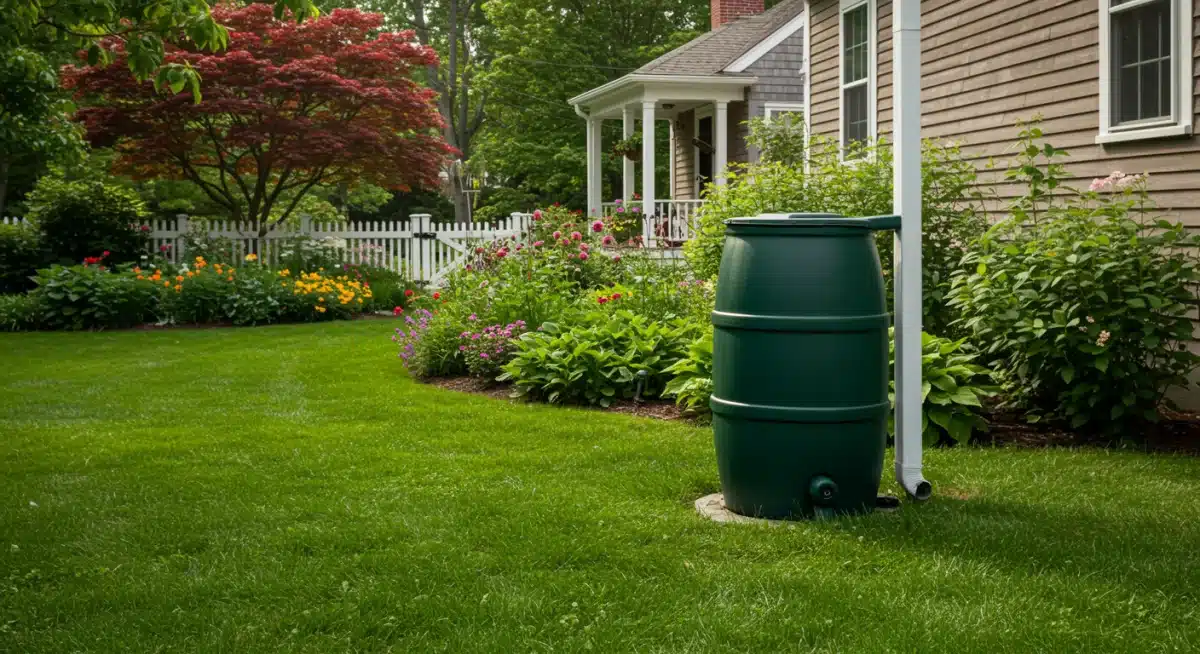
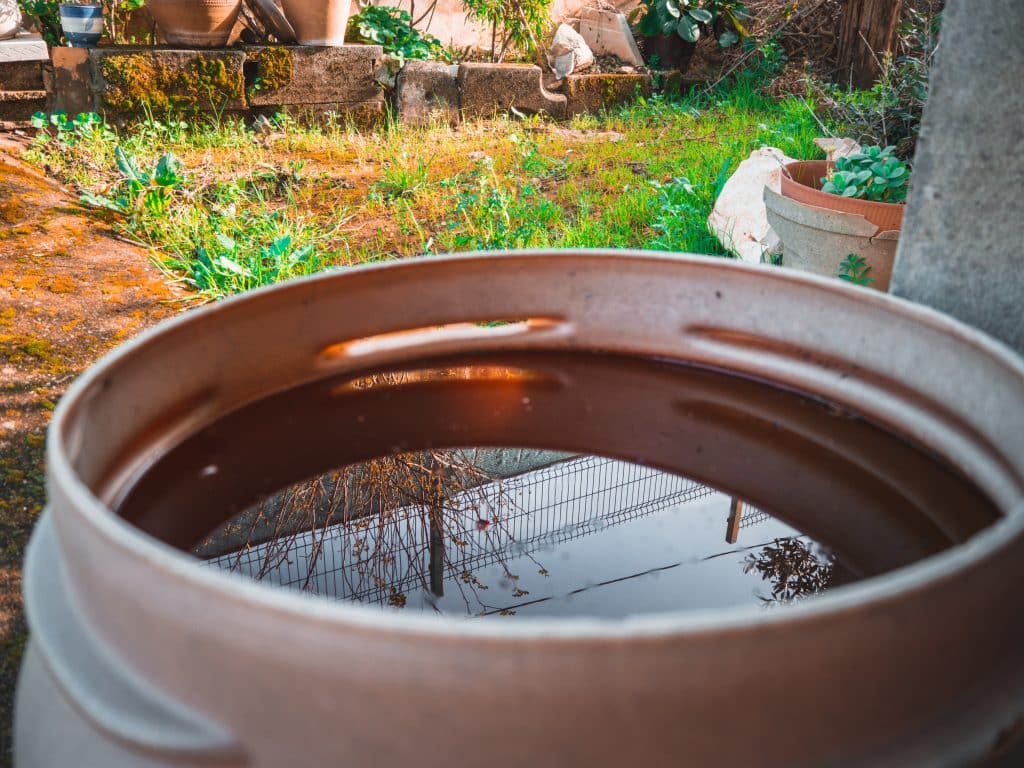 Are you looking for a simple yet impactful way to make your home more sustainable and reduce your household expenses? To install a rain barrel and collect water for your garden, saving up to 30% on water bills is a practical solution that offers numerous environmental and financial benefits.
This guide will walk you through everything you need to know about setting up your own rainwater harvesting system, turning precipitation into a valuable resource for your landscape.
Understanding the Benefits of Rainwater Harvesting
Rainwater harvesting, particularly through the use of rain barrels, is more than just a trend; it’s a wise environmental and economic choice for homeowners across the United States.
By capturing rainfall, you’re not only conserving a precious natural resource but also taking a significant step towards reducing your environmental footprint and cutting down on utility costs.
The advantages extend beyond mere savings. Rainwater is naturally soft and free of chlorine, fluoride, and other chemicals often found in municipal water supplies.
This makes it ideal for plants, as these chemicals can be detrimental to soil microbiology and plant health over time. Using rainwater can lead to healthier, more vibrant gardens, as plants thrive on its purity.
Ecological Impact and Water Conservation
Every drop of water collected in a rain barrel means one less drop drawn from municipal sources or groundwater. This directly contributes to the conservation of local water supplies, which is especially critical in areas prone to drought or with increasing population demands.
Reducing demand on public water systems can also lessen the strain on infrastructure and energy needed for water treatment and distribution.
Reduces stormwater runoff, preventing erosion and pollution of local waterways.
Replenishes groundwater supplies naturally.
Decreases energy consumption associated with water treatment and pumping.
Supports local ecosystems by maintaining natural water cycles.
Furthermore, managing stormwater runoff is a major concern for many communities. Rain barrels help mitigate this by diverting water that would otherwise flow into storm drains, carrying pollutants like pesticides, fertilizers, and oil into rivers and lakes.
This simple act of collecting water can have a profound positive impact on water quality in your neighborhood and beyond.
Choosing the Right Rain Barrel for Your Home
Selecting the perfect rain barrel involves considering several factors, including size, material, design, and cost.
The market offers a wide array of options, from basic plastic models to decorative, high-capacity units. Your choice will largely depend on your specific needs, aesthetic preferences, and budget.
Capacity is often the first consideration. Standard rain barrels typically hold 50 to 80 gallons, which is sufficient for many residential gardens.
However, if you have a larger garden, a significant roof area, or live in a region with heavy rainfall, you might consider linking multiple barrels or investing in a larger system. Remember, a single downspout can collect hundreds of gallons of water during a heavy rain event.
Materials and Durability
Rain barrels are commonly made from various materials, each with its pros and cons. Plastic barrels, often recycled food-grade containers, are lightweight, affordable, and durable.
They are resistant to rust and rot, making them a popular choice. More aesthetically pleasing options include wooden barrels, often made from repurposed whiskey or wine barrels, and decorative ceramic or stone-look barrels that blend seamlessly into garden landscapes.
Plastic: Most common, affordable, lightweight, and resistant to environmental wear.
Wood: Offers a rustic aesthetic, but requires more maintenance to prevent rot and leaks.
Ceramic/Stone-look: Decorative, heavy, and typically more expensive, but highly durable.
When evaluating materials, also consider features like UV resistance to prevent degradation from sunlight, and the presence of a tight-fitting lid to keep out debris and insects. A durable spigot and an overflow port are also crucial for efficient and safe operation.
Step-by-Step Guide to Rain Barrel Installation
Installing a rain barrel is a straightforward DIY project that most homeowners can accomplish in an afternoon. While the specific steps might vary slightly depending on your chosen barrel and existing gutter system, the general process remains consistent. Planning is key to a successful installation.
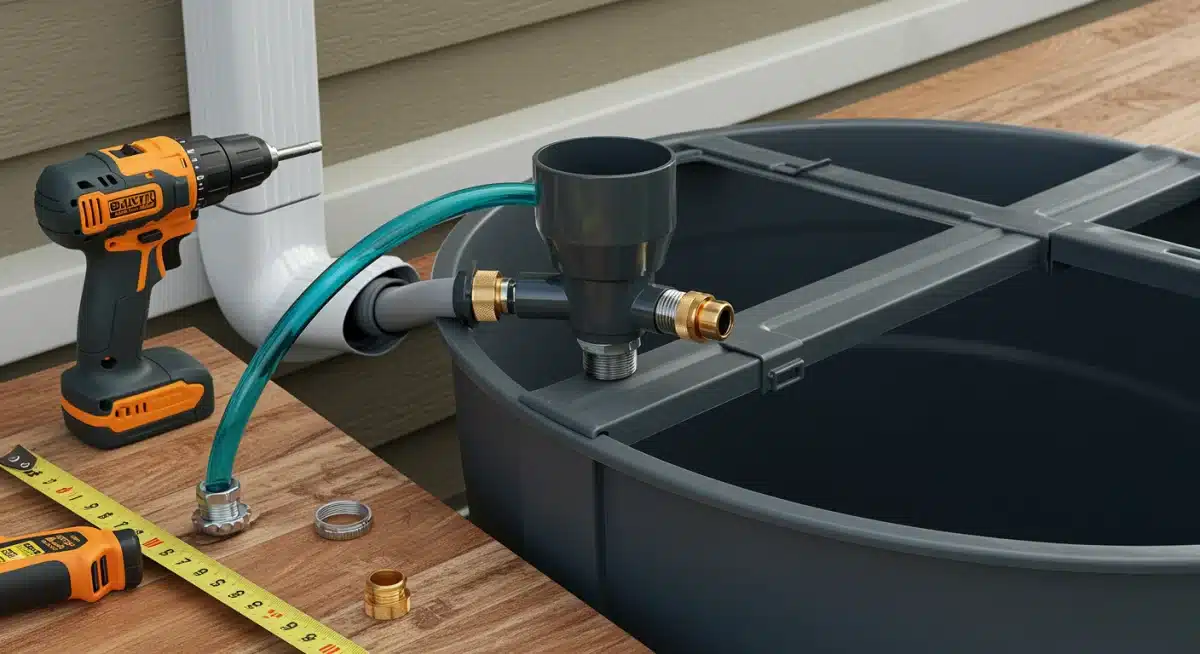
Before you begin, gather all necessary tools and materials. You’ll typically need a rain barrel, a downspout diverter kit, a hacksaw or tin snips, a drill, a measuring tape, level, and possibly a concrete paver or sturdy base.
Ensure your chosen location is firm and level to support the weight of a full barrel, which can be hundreds of pounds.
Preparing Your Downspout and Location
The first step is to identify the ideal downspout. Choose one that is close to your garden or the area you intend to water, and ensure it’s on a stable, level surface. The ground where the barrel will sit needs to be compacted or have a sturdy foundation like concrete pavers to prevent tipping once the barrel is full.
Measure the height of your rain barrel.
Mark the downspout at the appropriate height for your diverter.
Cut the downspout carefully with a hacksaw or tin snips.
Smooth any sharp edges after cutting.
After cutting the downspout, install the diverter according to the manufacturer’s instructions. This device will channel water from the downspout into your rain barrel while allowing excess water to continue down the original downspout path once the barrel is full. This prevents overflow near your home’s foundation, which could lead to water damage.
Connecting and Securing Your Rain Barrel System
Once the downspout is prepared and the diverter is in place, connecting the rain barrel is the next critical step.
This involves attaching the hose from the diverter to the barrel, ensuring a watertight seal, and setting up an overflow mechanism to handle excess water during heavy rains. Proper connection and securing are vital for both efficiency and safety.
Most diverter kits come with a flexible hose that connects to an inlet port on your rain barrel. Ensure this connection is snug and leak-free.
Some barrels may require you to drill a hole for the inlet, in which case use a drill bit specifically designed for the barrel material and apply sealant around the connection point for added security.
Overflow Management and Stability
An often-overlooked but crucial aspect of rain barrel installation is the overflow system. Without it, a full barrel will simply spill water onto your foundation or garden, potentially causing erosion or damage.
Most rain barrels have an overflow port near the top, to which you can attach a hose to direct excess water away from your home’s foundation, perhaps to another part of your garden or a secondary rain barrel.
Connect an overflow hose to the designated port on the barrel.
Direct the overflow hose at least 6-10 feet away from your home’s foundation.
Consider linking multiple barrels with a connector kit for increased capacity.
Ensure the barrel is stable and cannot be easily knocked over, especially if children or pets are present.
For added stability, especially in windy areas or where the barrel might be accidentally bumped, consider securing it to a nearby wall or fence using straps or brackets. A full rain barrel is incredibly heavy, and tipping can cause injury or damage. Always prioritize safety during and after installation.
Maintenance and Winterization for Longevity
To ensure your rain barrel system remains efficient and lasts for many years, regular maintenance is essential.
This includes routine cleaning, checking for leaks, and proper winterization in colder climates. Neglecting these tasks can lead to reduced performance, damage to the barrel, or even mosquito breeding.
Throughout the year, periodically check the barrel for debris, leaves, or sediment that might accumulate. A screen over the inlet port can significantly reduce the amount of debris entering the barrel, but occasional cleaning of the barrel’s interior may still be necessary.
Use a mild soap and water solution, then rinse thoroughly. Also, inspect all connections and the spigot for any signs of leaks and address them promptly.
Preparing for Freezing Temperatures
In regions where temperatures drop below freezing, winterization is critical to prevent your rain barrel from cracking. Water expands when it freezes, and a full or even partially full barrel can burst, rendering it unusable. The process is relatively simple but must be done before the first hard freeze.
Completely drain the rain barrel.
Disconnect the diverter hose and store it indoors.
Clean the interior of the barrel thoroughly.
Turn the barrel upside down or store it in a shed or garage.
Ensure the downspout diverter is set to its winter position, allowing water to flow normally down the downspout.
By following these winterization steps, you protect your investment and ensure your rain barrel is ready to collect precious rainwater again come spring. This proactive approach guarantees longevity and continued water savings for your garden.
Maximizing Your Water Savings and Garden Health
Once you install a rain barrel, the real benefits come from how effectively you use the water you collect. Smart water management not only stretches every gallon but also promotes healthier plants and noticeable savings on your water bill.
Treat your rain barrel as an active part of your gardening routine—not just a passive storage container.
Rainwater is ideal for almost every type of plant. After you install a rain harvesting system, you’ll be supplying your garden with naturally soft water that’s free from chlorine, fluoride, and salts commonly found in treated tap water.
This purity helps plants absorb nutrients more efficiently, leading to stronger root systems, greener leaves, and improved flowering or crop yields.
Timing matters. Use the water you collect soon after rainfall to keep it fresh and oxygen-rich. Early morning or late afternoon watering—once you install a rain barrel—reduces evaporation and ensures moisture penetrates deeply into the soil. This encourages roots to grow downward, making plants more drought-resistant over time.
How you distribute the water also impacts results. Many homeowners who install rain barrels choose to elevate them slightly, allowing gravity to provide enough pressure for hoses or drip irrigation systems.
This setup delivers water slowly and directly to plant roots, minimizing waste and runoff while maximizing efficiency.
Beyond garden beds, the system you install can support other water-saving uses. Collected rainwater is perfect for hand-watering seedlings, topping off birdbaths, rinsing gardening tools, washing outdoor furniture, or maintaining ponds and water features. These small substitutions add up quickly, further reducing your dependence on municipal water.
Finally, monitor your garden’s response. After you install and consistently use rainwater, you may notice healthier soil structure, fewer signs of plant stress, and reduced fertilizer needs.
By combining mindful watering habits with the system you install, you transform rainwater harvesting into a powerful tool for both sustainable gardening and long-term cost savings.
Efficient Watering Techniques
To truly maximize your savings, integrate your rain barrel into an efficient watering strategy. Instead of simply watering every day, observe your plants and soil moisture levels. Water deeply and less frequently to encourage deeper root growth.
Consider using a soaker hose or drip irrigation system connected to your rain barrel for even more targeted and efficient delivery of water.
Water in the early morning or late evening to minimize evaporation.
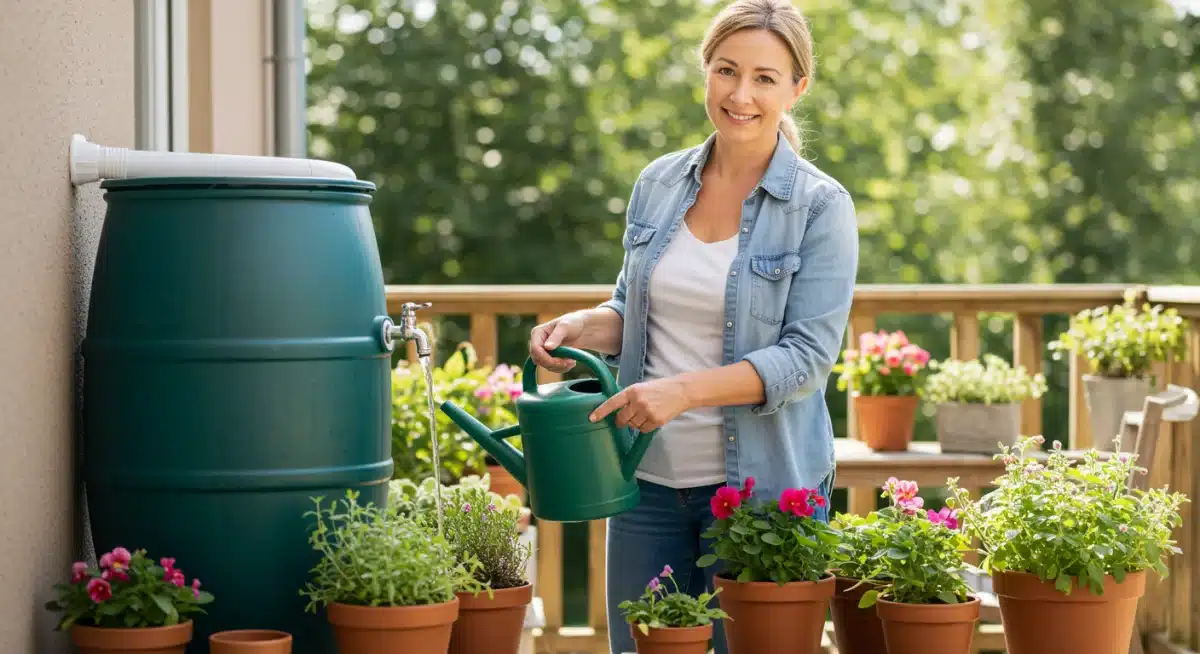
Use a watering can directly from the spigot for precise application.
Install a soaker hose system to deliver water directly to plant roots.
Monitor soil moisture to avoid overwatering, which can harm plants.
By combining your rain barrel with smart watering practices, you not only conserve more water but also foster a healthier, more resilient garden.
The investment in a rain barrel pays dividends in both environmental stewardship and tangible reductions in your monthly water expenses, demonstrating a clear path to sustainable living for any American household.
| Key Aspect | Brief Description |
|---|---|
| Water Savings | Reduces water bills by up to 30% for garden irrigation. |
| Garden Health | Rainwater is chemical-free, promoting healthier plant growth. |
| Environmental Impact | Minimizes stormwater runoff and conserves municipal water. |
| Easy Installation | DIY-friendly project with simple tools and materials. |
Frequently Asked Questions About Rain Barrels
Is it legal to install a rain barrel in my state?
In most U.S. states, it is completely legal—and often encouraged—to install rain barrels as part of water conservation efforts.
Many local governments even offer rebates or incentives for homeowners who install water-saving systems. That said, regulations can vary by municipality, especially regarding system size or water usage.
Before you install your setup, it’s wise to check with your local water authority or city website to ensure compliance and take advantage of any available programs.
How much water can I collect after I install a rain barrel?
Once you install a standard 50-gallon rain barrel, you may be surprised at how quickly it fills. Just one inch of rainfall on a 1,000-square-foot roof can generate roughly 600+ gallons of water.
Even if only a portion of your roof feeds the barrel, a moderate rainstorm can provide enough water for days—or even weeks—of garden irrigation.
Can I install a system that makes rainwater safe to drink? ▼
While you can install advanced filtration and purification systems, basic rain barrels are not designed for potable water.
Rainwater collected from rooftops may contain debris, bacteria, and environmental pollutants. For most households, it’s best to use the collected water for non-drinking purposes such as watering plants, washing outdoor tools, or cleaning patios.
How do I install a rain barrel without attracting mosquitoes?
When you install a rain barrel correctly, mosquito prevention is simple. Choose a model with a tight-sealing lid and ensure every opening is protected with a fine mesh screen.
This blocks insects while still allowing water to flow in. Adding mosquito dunks—safe for pets and plants—provides extra protection by stopping larvae from developing.
What is the best location to install a rain barrel?
The ideal place to install your rain barrel is directly beneath a downspout that channels consistent runoff. Select a flat, stable surface such as concrete blocks or pavers to safely support the heavy weight of a full barrel.
Elevating the barrel slightly can also improve water pressure for hoses or watering cans. Finally, make sure the overflow valve directs excess water away from your home’s foundation to prevent moisture issues.
Do I need to maintain the system after I install it?
Yes—regular maintenance ensures the system you install continues operating efficiently. Periodically clean out leaves and sediment, check the screen for clogs, and inspect connections for leaks.
In colder climates, many homeowners choose to drain and disconnect the barrel before winter to prevent cracking from freezing temperatures.
Will installing a rain barrel really reduce my water bill?
After you install a rain barrel, the savings can become noticeable—especially during peak watering seasons.
Using harvested rainwater for landscaping reduces reliance on treated municipal water, which can lower outdoor water costs by up to 30%. Over time, this simple upgrade supports both your budget and long-term sustainability goals.
Conclusion
Choosing to install a rain barrel is a practical and eco-conscious step for homeowners who want to conserve water while reducing household expenses.
This simple upgrade supports sustainable living by capturing rainwater that would otherwise go to waste, turning it into a reliable resource for maintaining a thriving garden.
When you install a rain barrel, you not only lower your dependence on municipal water but also help manage stormwater runoff, which can reduce soil erosion and protect local waterways.
The installation process is typically quick and beginner-friendly, yet the long-term advantages are significant—ranging from healthier plants to noticeable savings on your water bill.
With proper placement and minimal maintenance, a system you install today can deliver consistent benefits for years to come.
By transforming rainfall into a free, reusable supply, you contribute to a greener landscape, strengthen your home’s sustainability, and may even cut outdoor water costs by up to 30%. It’s a small investment that creates lasting value for both your property and the environment.
.