Negotiate Medical Bills: Reduce Healthcare Costs by Up to 40%

 Facing a mountain of medical bills can feel overwhelming, but did you know you have the power to negotiate medical bills and potentially reduce your healthcare costs by up to 40%? This guide will equip you with the knowledge and strategies needed to navigate the complex world of medical billing and advocate for yourself effectively.
Understanding the Landscape of Medical Billing
The American healthcare system is notoriously complex, and medical billing often feels like a labyrinth designed to confuse rather than clarify. Many patients simply pay what they’re told, unaware that those charges are frequently negotiable. This section aims to demystify the process and highlight why negotiation is not only possible but often necessary.
Hospitals and healthcare providers often have different pricing structures for insured versus uninsured patients, and even within insured categories, negotiated rates vary widely. The initial bill you receive is rarely the final word on what you owe, particularly if you are prepared to question and challenge it. Understanding this fundamental truth is the first step toward significant savings.
The opacity of healthcare pricing
One of the biggest challenges in medical billing is the lack of price transparency. It’s often impossible to know the true cost of a procedure or service until after it’s rendered, leaving patients vulnerable to inflated charges. This opacity creates opportunities for negotiation because providers often have significant leeway in what they ultimately accept as payment.
Chargemaster prices: These are the highest prices, rarely paid by anyone, and serve as a starting point for negotiation.
Insurance negotiated rates: Your insurer pays a discounted rate, but you might still owe a substantial co-pay, deductible, or co-insurance.
Uninsured patient rates: Often charged the chargemaster price, these patients have the most to gain from negotiation.
By recognizing that the system is built with flexibility, you empower yourself to push back against exorbitant costs. Many hospitals even have policies in place to assist patients who demonstrate financial need or are uninsured, but these programs are rarely advertised proactively. It’s up to you to inquire and apply.
Preparing for Negotiation: Gathering Your Documents
Successful negotiation is built on a foundation of thorough preparation. Before you even pick up the phone or draft an email, you need to gather all relevant documents. This ensures you have a clear picture of what you’re being charged for, by whom, and why.
Without proper documentation, your negotiation efforts will be based on assumptions, which can weaken your position. Think of yourself as an investigator; every piece of paper tells a part of the story. The more complete your story, the stronger your case for a reduced bill.
Key documents to collect
Start by requesting an itemized bill from your healthcare provider. This is crucial as it breaks down every single charge, from medications and supplies to facility fees and physician services. Do not settle for a summary bill; it won’t give you the detail you need to identify discrepancies.
Itemized bill: Details every service, medication, and supply with corresponding charges.
Explanation of Benefits (EOB): Sent by your insurance company, it shows what they covered and what you owe.
Medical records: Verify that services billed were actually performed and documented.
Any correspondence: Keep track of all letters, emails, and notes from phone calls with providers and insurers.
Compare your itemized bill with your EOB to identify any discrepancies. Sometimes, your insurance company might have been billed for services they didn’t approve, or you might find duplicate charges. Cross-referencing these documents is a critical step in identifying potential errors that can serve as leverage in your negotiation.
Strategies for Effective Medical Bill Negotiation
Once you’ve prepared your documents, it’s time to engage. Negotiating medical bills requires a strategic approach, combining assertiveness with a willingness to collaborate. Remember, the goal is not to avoid payment entirely, but to ensure you’re paying a fair and accurate amount.
Approaching the negotiation with a calm and organized demeanor can significantly improve your chances of success. Healthcare providers, particularly their billing departments, are often more receptive to patients who present a clear case rather than those who are purely emotional or aggressive.
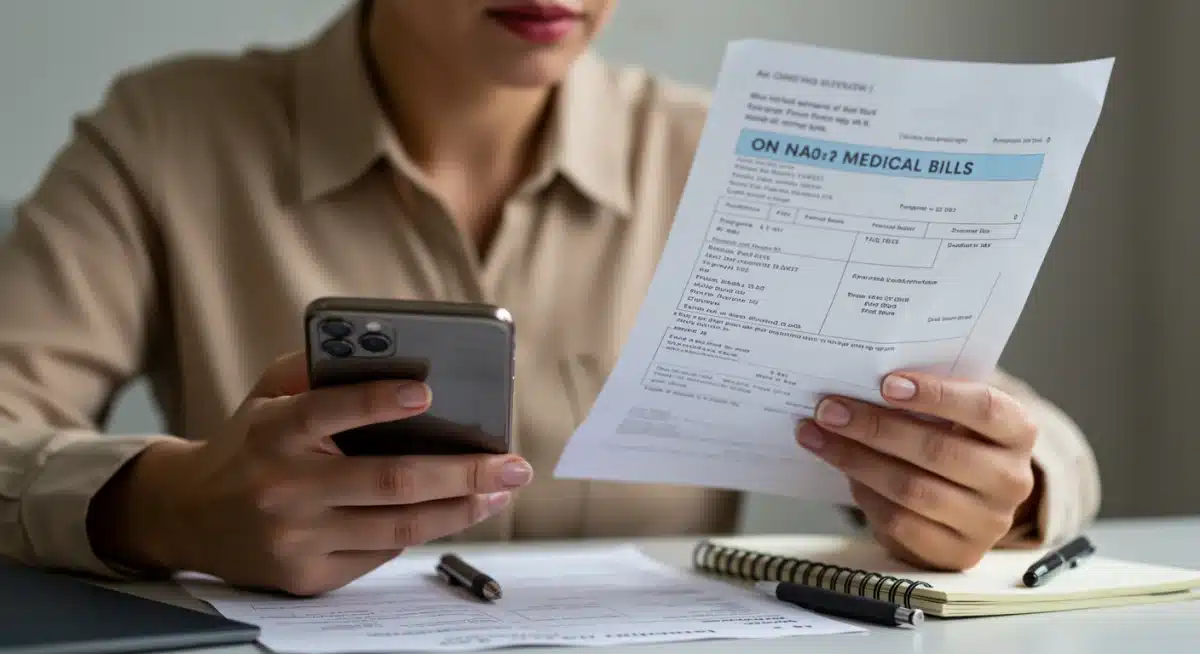
Identifying and addressing billing errors
Billing errors are surprisingly common. These can range from incorrect codes and duplicate charges to services you never received. Scrutinizing your itemized bill for these mistakes is often the easiest way to reduce your overall cost.
Upcoding: Being charged for a more expensive service than what you received.
Duplicate charges: Being billed twice for the same service or item.
Canceled tests/procedures: Charged for services that were ordered but never performed.
Incorrect patient information: Leading to claims being denied or processed incorrectly.
If you find an error, document it clearly and prepare to explain it to the billing department. Having specific details, such as dates, service codes, and names of providers, will make your case much stronger. Don’t be afraid to ask for clarification on any charge you don’t understand.
Negotiating as an uninsured patient
If you’re uninsured, you often face the highest charges, but paradoxically, you also have the most leverage to negotiate. Hospitals are frequently willing to offer significant discounts to uninsured patients, sometimes matching the rates they accept from insurance companies.
Start by asking for the discounted rate offered to insured patients. Explain your financial situation and inquire about any financial assistance programs the hospital may have. Many facilities have charity care policies or hardship programs that can drastically reduce your bill. Be prepared to provide financial documentation to support your claim.
Leveraging Your Insurance and Third-Party Assistance
Even with insurance, you might find yourself with substantial out-of-pocket costs. Your insurance company is a partner in this process, and understanding your policy can provide additional negotiation opportunities. Don’t assume your insurer has paid all they will or that their initial decision is final.
Sometimes, simply understanding the nuances of your policy and how it applies to specific charges can unlock pathways to lower costs. It’s also important to remember that insurance companies have an incentive to reduce their payouts, so they may be willing to help you challenge certain charges from providers.
Working with your insurance company
Review your Explanation of Benefits (EOB) thoroughly. If you see a service denied or not covered as you expected, contact your insurer. There might be an appeal process you can initiate. Often, a simple phone call can clarify misunderstandings or lead to a re-evaluation of a claim.
Appeal denied claims: If a service was denied, work with your doctor to provide additional documentation to your insurer.
Understand your deductible and out-of-pocket maximum: Knowing these limits helps you plan and understand your maximum exposure.
Inquire about in-network vs. out-of-network: Ensure all providers involved in your care were in-network to avoid surprise bills.
If you receive a bill for an out-of-network provider during an in-network visit (a surprise bill), new federal protections under the No Surprises Act may apply. Research these protections and cite them when negotiating. This act prevents balance billing for emergency services and certain non-emergency services provided by out-of-network providers at in-network facilities.
Seeking help from patient advocates
If the negotiation process feels too daunting, consider enlisting the help of a professional medical billing advocate. These experts specialize in reviewing bills, identifying errors, and negotiating with providers on your behalf. They often work on a contingency basis, taking a percentage of the savings they achieve for you.
While there’s a cost involved, a good advocate can save you significant time, stress, and money, often securing reductions that would be difficult for an individual to achieve alone. They understand the billing codes, the appeal processes, and the common negotiation tactics used by hospitals, making them invaluable allies.
What to Say and How to Say It: Communication Tactics
Effective communication is at the heart of successful medical bill negotiation. Your tone, approach, and persistence can make a significant difference in the outcome. Remember, you’re dealing with people, and a respectful yet firm approach is usually most effective.
Begin every conversation by being polite but clear about your intent to review and potentially dispute charges. Always ask for the name and direct contact information of the person you’re speaking with, and keep detailed notes of every interaction, including dates, times, and what was discussed.
Key phrases and questions to use
When speaking with a billing department, arm yourself with specific questions and phrases that convey your informed position. Avoid emotional outbursts and stick to the facts. Frame your request as a mutual desire to resolve the bill fairly.
“Could you please provide an itemized bill for these services?”
“I’ve noticed a discrepancy between my EOB and this bill. Can you help me understand why?”
“Are there any discounts available for prompt payment or financial hardship?”
“What is the lowest amount you are willing to accept as full payment?”
“What financial assistance programs does the hospital offer?”
It’s also beneficial to clearly state that you are willing to pay a fair amount, but you need to ensure the charges are accurate and reasonable. Sometimes, offering to pay a portion of the bill immediately in exchange for a significant discount can be a powerful negotiation tool. Hospitals often prefer a lower, guaranteed payment over a potentially long and drawn-out collection process.

Advanced Negotiation Tactics and When to Escalate
Sometimes, initial attempts at negotiation may not yield the desired results. In such cases, it’s important to know when and how to escalate your efforts. There are additional avenues you can explore to push for a fair resolution, ensuring you don’t overpay for healthcare services.
Do not be discouraged by initial resistance. Billing departments handle many inquiries, and sometimes it takes multiple attempts or reaching a higher authority to get a favorable outcome. Persistence, coupled with a well-documented case, is your greatest asset.
Considering a Payment Plan
If a significant reduction isn’t immediately possible, it’s important to explore medical payment plan options. Many hospitals and medical providers offer interest-free payment plans that allow you to spread your balance over several months without accumulating extra fees. This can make large medical bills far more manageable, even when the total isn’t reduced.
Requesting a payment plan also shows your willingness to resolve your medical debt, which can sometimes open the door to future discounts or help prevent the account from being sent to collections. Always ensure the terms are clearly documented in writing—including the total medical amount owed, the monthly payment, interest (if any), and the duration of the agreement.
When to escalate the issue
If you’ve exhausted your options with the billing department, consider escalating the issue. This might involve contacting the hospital’s patient advocacy office, the hospital administrator, or even your state’s Department of Health or Attorney General’s office, especially if you suspect fraudulent billing practices.
Patient advocacy office: Many hospitals have a dedicated office to help patients resolve issues.
Hospital administration: A letter or call to a higher-level administrator can sometimes prompt a review.
State regulatory bodies: For unresolved disputes or suspected misconduct, state agencies can intervene.
Credit reporting agencies: If a bill goes to collections unfairly, you can dispute it on your credit report.
Remember to keep detailed records of all your communication and attempts at negotiation. This documentation will be invaluable if you need to escalate your case to external authorities.
The more evidence you have to support your position, the stronger your argument will be for a fair resolution.
Protecting Yourself Against Future High Medical Bills
Beyond negotiating existing bills, proactive measures can help you avoid or significantly reduce future healthcare costs.
A little foresight and planning can go a long way in navigating the complex and often expensive American healthcare system.
Being an informed consumer of healthcare services is perhaps the most powerful tool you have. Don’t wait until a bill arrives to start thinking about costs.
Incorporate cost considerations into your healthcare decisions from the outset, whenever possible.
Proactive cost-saving measures
Before undergoing any non-emergency procedure or test, ask for a cost estimate. Many providers can give you a ballpark figure, and some states require them to provide good faith estimates. Compare prices among different facilities if you have the option.
Get pre-approvals: Ensure your insurance will cover a procedure before it happens.
Choose in-network providers: Always verify that all providers, including anesthesiologists and lab services, are in your insurance network.
Utilize generics: Ask your doctor about generic alternatives for prescribed medications.
Maintain good health: Preventative care and a healthy lifestyle can reduce the need for expensive treatments.
Also, consider reviewing your insurance policy annually during open enrollment. Evaluate if your current plan still meets your needs and budget.
Sometimes, switching to a different plan with a lower deductible or better coverage for specific services can save you thousands in the long run.
Being an active participant in your healthcare decisions is key to managing costs effectively.
| Key Negotiation Point | Brief Description |
|---|---|
| Itemized Bill Review | Scrutinize every charge for errors, duplicates, or unreceived services. |
| Contact Billing Department | Initiate polite but firm communication, inquire about discounts and financial aid. |
| Leverage Insurance EOB | Compare EOB with bill, appeal denied claims, understand network status. |
| Seek Advocate Help | Consider professional medical billing advocates for complex cases or significant bills. |
Frequently Asked Questions About Medical Bill Negotiation
Can I really negotiate medical bills, even if I have insurance? ▼
Yes, absolutely. Even with insurance, medical bills can include high deductibles, co-pays, or charges for services not fully covered.
Many providers are open to negotiating the medical balance—especially if you spot billing errors or can demonstrate financial hardship.
Remember: your insurance company’s EOB is a reference point, not necessarily the final amount you must pay.
What should I do first when I receive a large medical bill? ▼
Your first step is to request an itemized medical bill from the provider. Do not make any payments until you’ve reviewed every charge in detail.
Compare it with your Explanation of Benefits (EOB) to check for discrepancies or questionable entries. This careful review is the foundation of successful medical bill negotiation.
What are common mistakes to look for on an itemized medical bill? ▼
Errors on medical bills are surprisingly common. Look for:
-
Duplicate charges
-
Incorrect or inflated procedure codes (upcoding)
-
Charges for medications or services you didn’t receive
-
Pricing far above typical rates
-
Incorrect dates of service
These mistakes can significantly inflate your medical bill and give you strong grounds for negotiation.
How can I negotiate if I’m uninsured? ▼
Uninsured patients often have more negotiation power than they realize. Request the discounted medical rates typically offered to insured patients, explain your financial situation, and ask about financial assistance or charity care programs.
Many providers are willing to offer substantial reductions—and sometimes match insurance-negotiated rates—especially if you’re able to pay a portion upfront.
When should I consider getting a medical billing advocate? ▼
A medical billing advocate can be invaluable if your bill is large, the negotiation process feels overwhelming, or your efforts haven’t produced results.
Advocates understand billing codes, appeals, and negotiation strategies, often securing deeper savings than individuals can achieve alone. Most work on a contingency basis, taking a percentage of the medical savings they secure for you.
Conclusion
Successfully navigating the complex world of medical billing and negotiation is not just possible, but often essential for managing healthcare costs in America.
By understanding the system, meticulously preparing your documents, and employing strategic communication, you can significantly reduce your financial burden.
Remember, the initial bill is rarely the final price, and advocating for yourself can lead to substantial savings, empowering you to take control of your financial health in the face of rising medical expenses.