DIY Cleaning Products: Save 50% on Household Cleaners
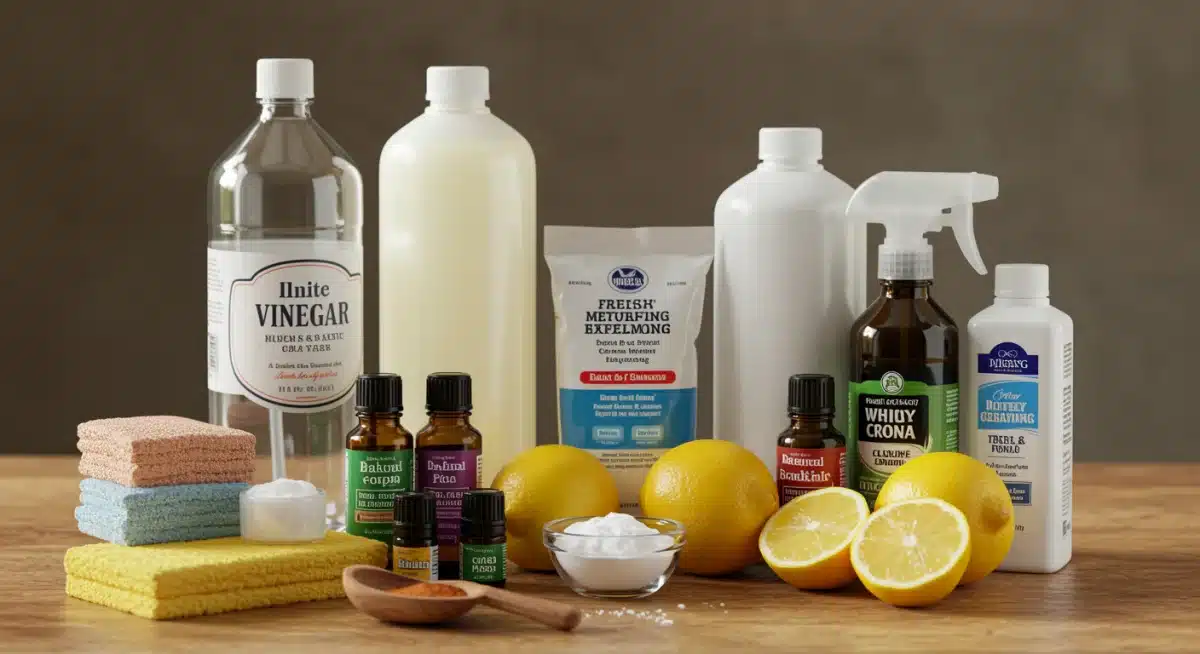
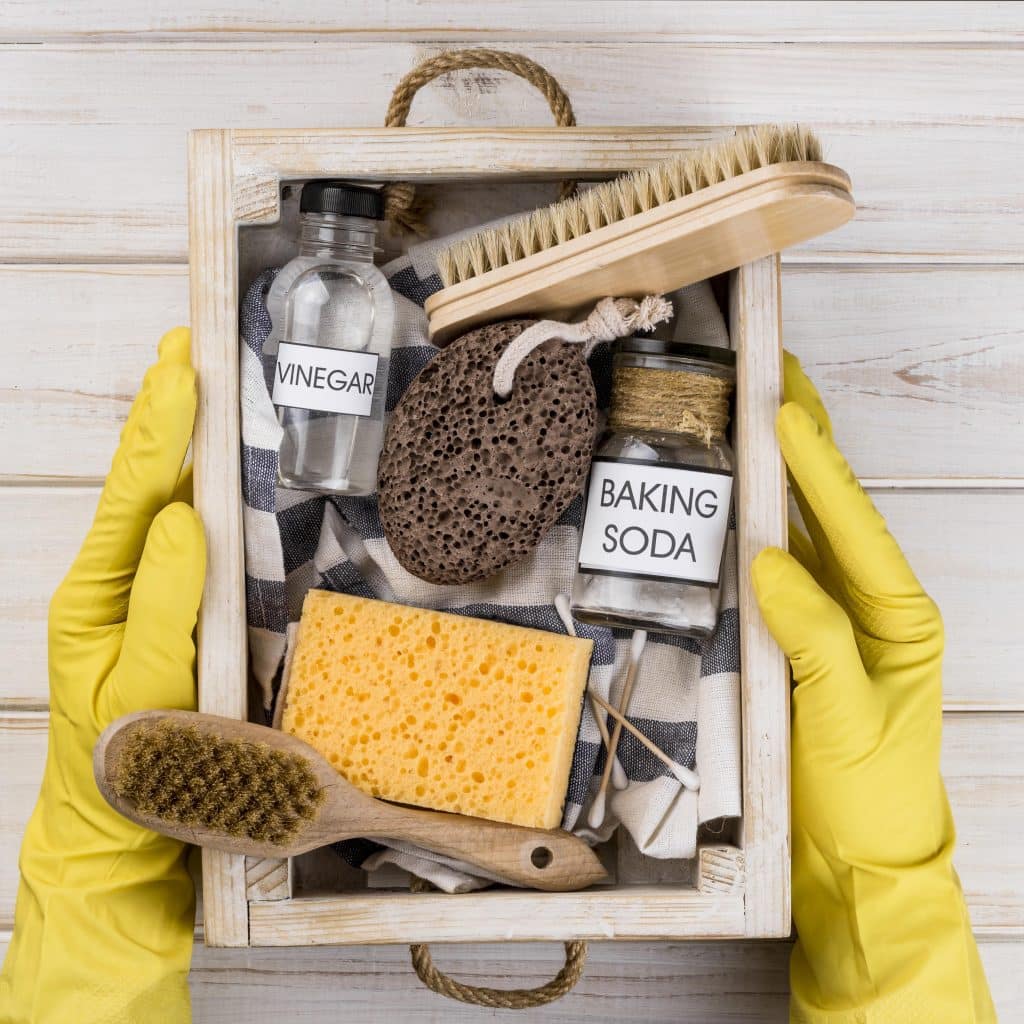 Are you ready to transform your cleaning routine, save a significant amount of money, and create a healthier home environment? Learning to make your own cleaning products is not only incredibly satisfying but also offers a practical way to cut down on household expenses, potentially saving you up to 50% on commercial cleaners.
This guide will walk you through simple, effective, and eco-friendly DIY recipes that will revolutionize the way you clean.
The economic and ecological benefits of DIY cleaning products
Choosing to make your own cleaning products extends beyond mere cost savings; it’s a commitment to a more sustainable lifestyle and a healthier home.
The commercial cleaning industry often relies on harsh chemicals that can be detrimental to both the environment and human health. By formulating your own solutions, you gain full control over the ingredients, ensuring they are safe, non-toxic, and effective.
The financial advantages are immediate and substantial. A bottle of store-bought all-purpose cleaner can cost several dollars, while the raw materials for a homemade version—like vinegar, baking soda, and essential oils—are inexpensive and readily available.
This translates to significant savings over time, especially when you consider the multitude of cleaning products used throughout a typical home.
Reducing your carbon footprint
One of the often-overlooked benefits of DIY cleaning is its positive environmental impact. Commercial products often come in single-use plastic containers, contributing to landfills and ocean pollution. When you make your own, you can reuse spray bottles and containers, drastically reducing your plastic waste.
Minimize plastic waste by reusing bottles.
Lessen exposure to harmful chemicals in waterways.
Support sustainable practices by choosing natural ingredients.
Improving indoor air quality
Many commercial cleaners release volatile organic compounds (VOCs) into the air, which can irritate respiratory systems and contribute to indoor air pollution.
By using natural ingredients like vinegar, baking soda, and essential oils, you avoid these potential health hazards, leading to a fresher and safer home environment for your family and pets.
The shift to homemade cleaning solutions is a powerful step towards responsible consumerism. It empowers you to make informed choices that benefit your wallet, your health, and the planet.
This initial investment in knowledge and basic supplies will pay dividends for years to come, solidifying your home as a sanctuary of cleanliness and well-being.
Essential ingredients for your DIY cleaning toolkit
Before diving into specific recipes, it’s crucial to understand the foundational ingredients that will form the backbone of your DIY cleaning arsenal.
These items are typically inexpensive, widely available, and remarkably versatile, allowing you to tackle a myriad of cleaning tasks with just a few core components. Stocking up on these essentials will ensure you’re always prepared to whip up a fresh batch of cleaner whenever needed.
The beauty of these ingredients lies in their simplicity and effectiveness. They have been used for generations for their natural cleaning, disinfecting, and deodorizing properties, proving their worth long before the advent of complex chemical formulations.
Understanding their individual strengths will help you combine them strategically for optimal results.
The power of white vinegar
White vinegar is arguably the MVP of natural cleaning. Its acetic acid content makes it excellent for dissolving mineral deposits, grease, and grime. It’s also a natural disinfectant and deodorizer, making it ideal for a wide range of surfaces.
Cuts through grease and soap scum.
Eliminates odors effectively.
Safe for most surfaces, though avoid natural stone.
Baking soda: The gentle abrasive
Sodium bicarbonate, or baking soda, is another powerhouse. Its mild abrasive quality makes it perfect for scrubbing without scratching, while its alkaline nature helps neutralize odors and break down tough stains. It’s safe for virtually every surface and a fantastic booster for other cleaning agents.
Another staple is lemon juice. The citric acid in lemon juice acts as a natural bleach, cuts through grease, and leaves a fresh, clean scent. It’s particularly useful for brightening surfaces and removing stubborn stains, making it a great addition to your cleaning recipes.
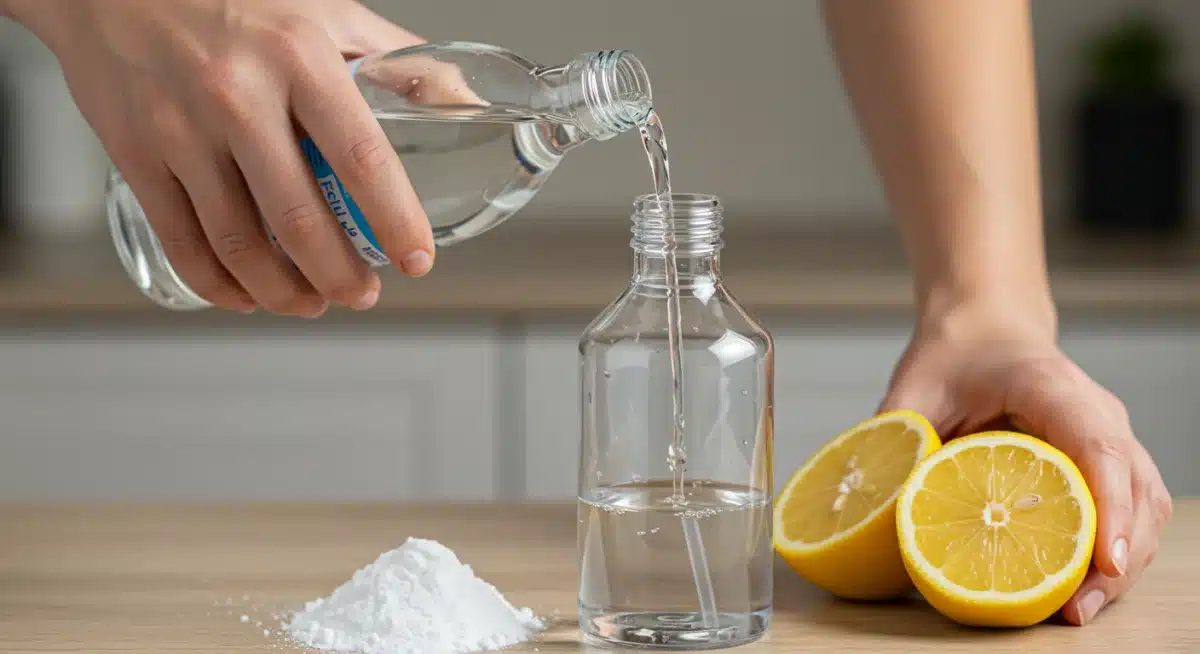
Beyond these, consider adding essential oils like tea tree, lavender, or lemon for their antibacterial properties and pleasant aromas. A good quality Castile soap, derived from vegetable oils, can also serve as a gentle yet effective base for many liquid cleaners, providing lather and cleaning power without harsh chemicals.
By investing in these basic, multi-purpose ingredients, you’ll be well on your way to creating a comprehensive and customized cleaning kit that meets all your household needs. This foundational understanding allows for endless combinations and adaptations, ensuring your cleaning solutions are always fresh, potent, and perfectly suited for the task at hand.
All-purpose cleaner: Your daily go-to solution
An all-purpose cleaner is the workhorse of any cleaning regimen, and making your own ensures you have a safe, effective, and economical option for daily tidying.
This simple recipe can tackle spills, wipe down counters, and refresh surfaces throughout your home, replacing multiple specialized products with one versatile solution. Its ease of preparation means you can always have a fresh batch on hand, ready for any mess.
The beauty of this particular DIY cleaning product lies in its simplicity. With just a few common household items, you can create a powerful cleaner that rivals its commercial counterparts without the added cost or chemical exposure.
This makes it an ideal starting point for anyone looking to transition to a more natural cleaning routine.
Simple all-purpose spray recipe
This recipe is incredibly straightforward and effective for most non-porous surfaces. It’s perfect for kitchen counters, bathroom vanities, and general wipe-downs.
Ingredients:
1 cup white vinegar
1 cup distilled water
10-15 drops of essential oil (lemon, tea tree, or lavender work well)
Instructions:
Combine all ingredients in a clean spray bottle.
Shake gently before each use to mix the essential oils.
Spray directly onto surfaces and wipe clean with a microfiber cloth.
For tougher jobs, you can slightly increase the vinegar concentration or add a teaspoon of liquid Castile soap to the mixture.
Remember to label your bottle clearly to avoid confusion with other household products. This basic recipe serves as an excellent foundation, allowing for customization based on your scent preferences and specific cleaning needs.
Always test your all-purpose cleaner on an inconspicuous area first, especially on delicate or unfamiliar surfaces, to ensure compatibility.
While vinegar is generally safe, it’s best to avoid it on natural stone (like granite or marble) as its acidity can etch the surface. For these materials, a diluted solution of Castile soap and water is a gentler alternative. This versatile cleaner proves that effective cleaning doesn’t require a cabinet full of expensive, chemical-laden bottles.
Bathroom brilliance: Tackling soap scum and grime
The bathroom is often the most challenging area to clean, with soap scum, hard water stains, and mildew being common adversaries.
Fortunately, natural ingredients are incredibly effective at restoring sparkle and hygiene without the harsh fumes associated with many commercial bathroom cleaners. Creating your own bathroom solutions means a safer breathing environment and gleaming surfaces.
The key to successful bathroom cleaning with DIY products lies in understanding the specific challenges posed by this environment.
Hard water minerals and organic residues like soap scum require powerful yet safe agents to dissolve and lift them. Our homemade recipes are designed to meet these demands head-on, leveraging the natural acidity and abrasive power of common ingredients.
Homemade tub and tile scrub
This scrub is excellent for dissolving soap scum, hard water deposits, and general grime on tubs, tiles, and sinks. It provides a gentle abrasive action without scratching surfaces.
Ingredients:
1/2 cup baking soda
1/4 cup liquid Castile soap
10-15 drops of tea tree or peppermint essential oil (for antibacterial properties)
Water (as needed to form a paste)
]Instructions:
In a bowl, mix baking soda and Castile soap.
Add water gradually, stirring until a thick paste forms.
Apply the paste to surfaces with a sponge or brush.
Let it sit for 5-10 minutes for tough stains, then scrub and rinse thoroughly.
For stubborn grout lines, a paste made from baking soda and hydrogen peroxide can work wonders. Apply it to the grout, let it sit for a few minutes, then scrub with a brush and rinse. Always remember to ventilate your bathroom well when cleaning, even with natural products, to ensure fresh air circulation.
Another effective solution for general bathroom disinfection and deodorizing is a simple spray made of equal parts white vinegar and water, with a few drops of essential oil. This mixture is excellent for wiping down toilets, sinks, and frequently touched surfaces.
By regularly using these DIY solutions, you can maintain a sparkling clean and fresh-smelling bathroom without resorting to harsh chemicals.
Kitchen clean-up: Degreasing and deodorizing naturally
The kitchen, being the heart of the home, often accumulates grease, food spills, and lingering odors. Commercial kitchen cleaners can be laden with harsh chemicals, which is particularly concerning in an area where food is prepared.
Making your own kitchen cleaning solutions allows for effective degreasing and deodorizing using food-safe, natural ingredients, ensuring a hygienic space without chemical residues.
Addressing kitchen messes requires cleaners that can cut through grease, disinfect surfaces, and neutralize food odors.
The combination of acidic and alkaline ingredients, along with the natural power of essential oils, proves to be incredibly effective. These DIY methods not only clean but also leave a fresh, inviting aroma, transforming your cooking and dining area.
Homemade kitchen degreaser spray
This powerful spray effectively cuts through grease on stovetops, countertops, and backsplashes, leaving surfaces sparkling clean and residue-free.
Ingredients:
1 cup hot water
1/2 cup white vinegar
1/4 cup liquid Castile soap
10 drops lemon essential oil
Instructions:
Combine hot water, vinegar, and Castile soap in a spray bottle.
Add lemon essential oil and shake gently to mix.
Spray onto greasy surfaces, let sit for a few minutes, then wipe with a damp cloth.
For a natural oven cleaner, mix baking soda with a little water to form a thick paste. Spread it all over the inside of your oven, avoiding heating elements.
Let it sit overnight, then scrape off the paste with a spatula, wiping away residue with a damp cloth. This method safely removes baked-on grease and grime without toxic fumes.
To keep your drains fresh and clear, pour 1/2 cup of baking soda down the drain, followed by 1/2 cup of white vinegar. Let it fizz for 15-20 minutes, then flush with hot water.
This not only deodorizes but also helps break down minor clogs. With these simple, natural solutions, your kitchen can remain a clean, safe, and pleasant space for all your culinary adventures.
Floor care: Natural solutions for sparkling surfaces
Maintaining clean floors is essential for a tidy home, but many commercial floor cleaners contain strong chemicals that can leave residues or emit fumes. Opting for homemade floor cleaning solutions ensures a safe environment for children and pets, while still achieving a brilliant shine.
These natural recipes are gentle on various floor types yet tough on dirt and grime, making your floor care routine both effective and eco-friendly.
Different floor materials require specific care, and our DIY solutions are versatile enough to adapt. Whether you have hardwood, tile, or laminate, there’s a natural cleaner that can restore its luster without causing damage.
The goal is to clean thoroughly, disinfect, and leave behind a fresh scent, all while avoiding harsh synthetic ingredients.
Hardwood floor cleaner
This gentle cleaner is perfect for hardwood floors, cleaning without stripping their finish or leaving streaks. It removes dirt and grime, restoring their natural beauty.
Ingredients:
1 gallon warm water
1/2 cup white vinegar
1/4 cup liquid Castile soap
10-15 drops of essential oil (optional, cedarwood or orange for wood)
Instructions:
Mix all ingredients in a bucket.
Dip a microfiber mop into the solution, wring it out thoroughly until barely damp.
Mop the floors in small sections, ensuring not to over-wet the wood.
Allow to air dry or wipe with a clean, dry cloth for extra shine.
For tile and laminate floors, a slightly more potent solution can be used. Combine a gallon of warm water with 1/2 cup of white vinegar and 1/4 cup of rubbing alcohol.
The alcohol helps with quick drying and prevents streaks, leaving your floors gleaming. Essential oils can also be added for a pleasant aroma.
Always sweep or vacuum your floors before mopping to remove loose dirt and debris. When cleaning, avoid excessive amounts of liquid, especially on hardwood, as prolonged exposure to moisture can cause damage.
By following these simple guidelines and using homemade mixtures, you can enjoy beautifully clean floors that are safe for everyone in your household.
Laundry boosters and fabric refreshers: Beyond the wash cycle
Laundry care often involves more than just washing clothes; it extends to maintaining freshness, tackling tough stains, and ensuring fabrics last longer. Commercial laundry products can be expensive and contain chemicals that irritate sensitive skin or pollute waterways.
Creating your own laundry boosters and fabric refreshers provides a cost-effective, environmentally friendly, and skin-safe alternative, enhancing your laundry routine naturally.
The power of natural ingredients can significantly improve your laundry results, from brightening whites to softening fabrics and eliminating stubborn odors.
These DIY solutions work in harmony with your washing machine and existing detergents, offering a complementary boost that is both gentle and effective, turning laundry day into a more pleasant and eco-conscious task.
Homemade laundry booster and stain remover
This powerful combination enhances your detergent’s cleaning power, brightens whites, and acts as an effective pre-treatment for tough stains.
Ingredients:
1 cup washing soda (sodium carbonate)
1/2 cup baking soda
1/4 cup borax (optional, for extra cleaning power)
Instructions:
Mix all ingredients thoroughly and store in an airtight container.
Add 1-2 tablespoons per load directly into the washing machine drum.
For stains, make a paste with a small amount of the booster and water, apply to the stain, let sit for 30 minutes, then wash as usual.
For a natural fabric softener, simply add 1/2 cup of white vinegar to the fabric softener dispenser during the rinse cycle. Don’t worry, the vinegar smell dissipates completely during the drying process, leaving your clothes soft and fresh.
Vinegar also helps remove detergent residue and prevents static cling, making it a fantastic multi-purpose laundry aid.
To refresh fabrics between washes, create a simple fabric refreshing spray. Mix 1 cup of distilled water with 1/4 cup of white vinegar and 10-15 drops of your favorite essential oil (e.g., lavender, linen fresh).
Spray lightly onto clothes, upholstery, or curtains to eliminate odors and leave a subtle, pleasant scent. These simple additions to your laundry routine prove that natural methods can achieve superior results without unnecessary chemicals or expense.
| Key Cleaning Area | DIY Solution Highlight |
|---|---|
| All-Purpose | Vinegar, water, essential oils for daily surface cleaning. |
| Bathroom | Baking soda & Castile soap scrub for soap scum and grime. |
| Kitchen | Hot water, vinegar, Castile soap degreaser for grease and odors. |
| Floors | Vinegar and Castile soap for streak-free, gentle cleaning. |
Frequently asked questions about DIY cleaning
Yes, for most household cleaning tasks, DIY products are highly effective. Ingredients like vinegar, baking soda, and essential oils have natural disinfectant, abrasive, and deodorizing properties that tackle dirt, grease, and grime without harsh chemicals.
The primary benefits include significant cost savings (up to 50%), reduced exposure to harsh chemicals, improved indoor air quality, and a smaller environmental footprint due to less plastic waste. You also gain control over ingredients.
Absolutely. Many essential oils, such as tea tree, lemon, and lavender, not only provide pleasant scents but also possess natural antibacterial, antiviral, and antifungal properties, enhancing the cleaning power of your DIY solutions.
Yes, avoid using vinegar on natural stone surfaces like granite, marble, and travertine, as its acidity can etch and damage the finish. Also, be cautious with unsealed grout and cast iron.
Most homemade cleaning solutions, especially those containing vinegar or essential oils, are best used within a few months. Solutions with water can sometimes develop bacteria over time, so it’s best to make smaller batches as needed.
Conclusion
Embracing the practice to make your own cleaning products is more than just a passing trend; it’s a practical and impactful shift towards a more economical, sustainable, and healthier lifestyle.
By utilizing simple, natural ingredients, you can effectively tackle virtually any cleaning challenge in your home, from stubborn bathroom grime to everyday kitchen spills, all while saving a significant amount of money and reducing your environmental footprint.
The journey to a cleaner, greener home begins with these accessible DIY recipes, empowering you to create a sanctuary that is both sparkling and safe for everyone.