The Future of Augmented Reality: Expecting a Revolution in 5 Years
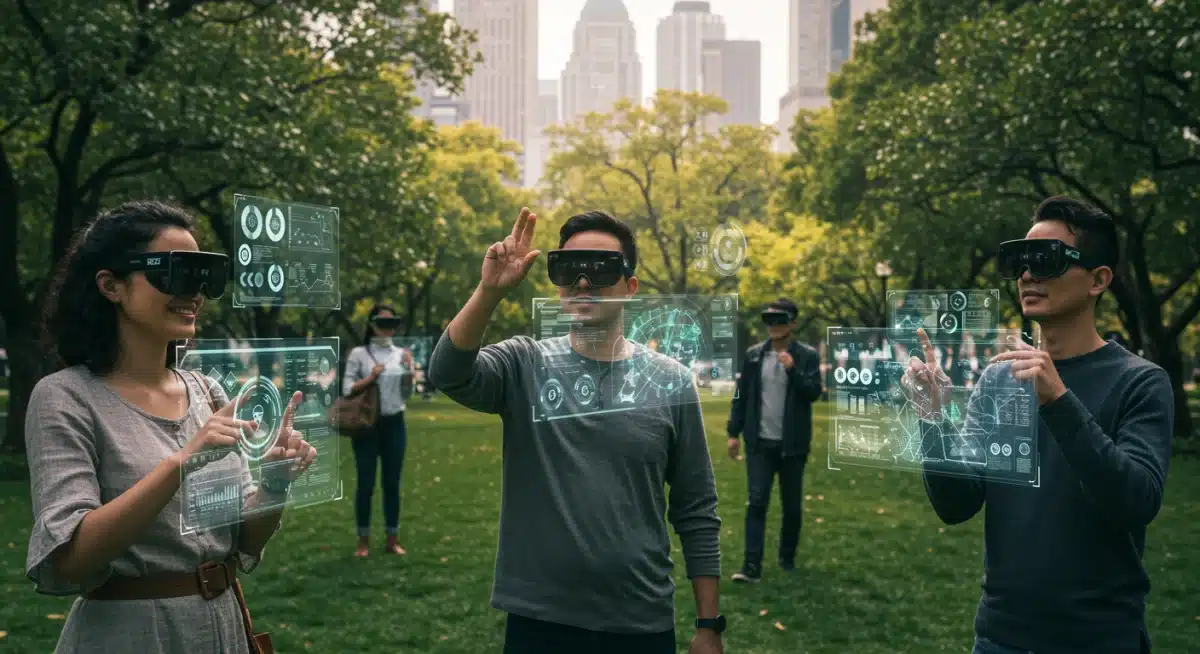
 The landscape of technology is constantly shifting, and few areas promise as much revolutionary change as augmented reality. Over the next half-decade, the future of augmented reality is not just about digital overlays; it’s about a fundamental shift in how we perceive and interact with our world, seamlessly blending the physical and virtual into a cohesive experience.
The Evolution of Augmented Reality Hardware
The foundational element driving AR’s future is the rapid advancement in hardware. Current AR devices, while impressive, often face limitations in form factor, battery life, and field of view. However, the next five years will witness a significant leap forward in these areas, making AR more accessible and comfortable for everyday use.
We are moving beyond bulky headsets towards sleek, lightweight smart glasses that resemble conventional eyewear. These advancements are crucial for widespread consumer adoption, as they overcome the social and practical barriers associated with current designs.
Sleeker Designs and Enhanced Displays
The design of AR glasses is becoming a paramount focus for manufacturers. The goal is to make them indistinguishable from regular glasses, fostering greater acceptance and integration into daily life. This involves miniaturization of components and improvements in display technology.
Micro-LED Displays: Offering higher brightness, better contrast, and lower power consumption, micro-LEDs are poised to replace traditional display technologies in AR glasses, providing clearer and more vibrant visuals.
Waveguide Optics: These advanced optics allow for thinner and lighter lenses, significantly reducing the bulk of AR devices while maintaining a wide field of view.
Integrated Sensors: Future AR glasses will incorporate an array of sensors for improved environmental understanding, eye-tracking, and gesture recognition, enhancing user interaction and immersion.
Furthermore, battery technology will see substantial improvements, allowing for all-day use without frequent recharging. This extended battery life is vital for enterprise applications where continuous operation is often a requirement.
The hardware evolution is not merely about aesthetics; it’s about creating a truly immersive and intuitive user experience. As these devices become more powerful and less intrusive, the potential for augmented reality to integrate into every facet of life grows exponentially.
Immersive Consumer Experiences: Gaming and Entertainment
For many, the first encounter with augmented reality has been through mobile games like Pokémon GO. In the coming five years, consumer AR experiences will transcend simple mobile applications, offering deeply immersive and interactive entertainment that blurs the lines between digital content and the real world.
This will be a significant driver for the future of augmented reality in the consumer market.
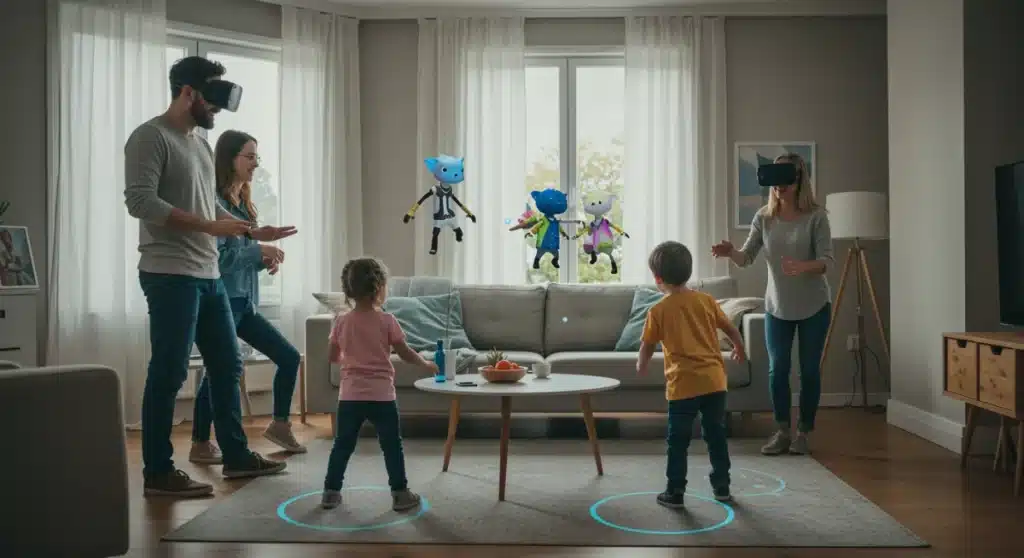
Imagine not just seeing digital characters on your phone screen, but having them interact with your physical environment, responding to your movements and the layout of your home. This level of immersion is what next-generation AR gaming aims to achieve.
Interactive Storytelling and Live Events
AR will revolutionize storytelling, allowing users to become active participants in narratives rather than passive observers. This opens up new avenues for educational content, interactive tours, and personalized entertainment.
Location-Based AR Games: These games will become more sophisticated, integrating real-world landmarks and dynamic environments into complex narratives.
AR-Enhanced Live Events: Concerts, sports events, and theatrical performances will offer AR overlays, providing real-time statistics, behind-the-scenes content, or even virtual avatars interacting with the performers.
Personalized Content: AR will enable highly personalized content delivery, adapting experiences based on user preferences, location, and even emotional state, creating truly unique engagements.
The entertainment sector will leverage AR to create new forms of media that combine traditional viewing with interactive elements.
Sports broadcasts could project player stats and team strategies directly onto your living room floor, making you feel like you’re right there on the field. The possibilities are vast and will undoubtedly captivate a new generation of consumers.
Transforming Industries: Enterprise and Healthcare
While consumer applications capture headlines, the most profound impact of augmented reality in the next five years will likely be within enterprise and healthcare sectors. Here, AR is not just about entertainment; it’s about enhancing productivity, improving safety, and enabling previously impossible procedures. This will be a critical aspect of shaping the future of augmented reality.
From manufacturing floors to operating rooms, AR solutions are proving their value by providing workers with crucial information, hands-free guidance, and remote assistance, leading to increased efficiency and reduced errors.
Augmented Reality in Manufacturing and Logistics
In manufacturing, AR glasses can overlay assembly instructions, quality control checklists, and real-time data onto physical objects, guiding workers through complex tasks with precision. This reduces training time and minimizes human error.
Remote Assistance: Expert technicians can guide on-site workers through repairs or diagnostics from thousands of miles away, viewing the same environment through the worker’s AR device and providing visual annotations.
Inventory Management: AR can streamline warehousing and logistics by providing real-time information on item locations, optimizing picking routes, and reducing search times.
Training and Simulation: Complex machinery operation or maintenance procedures can be simulated in AR, offering a safe and cost-effective training environment without needing access to actual equipment.
Revolutionizing Healthcare and Medicine
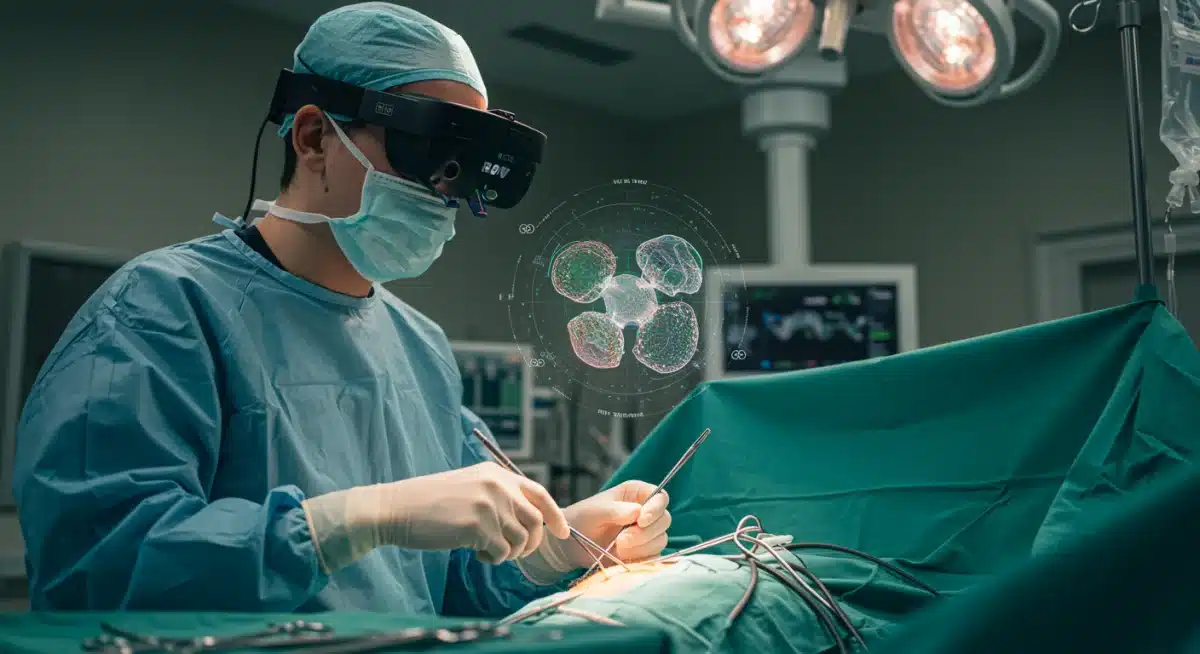
In healthcare, AR offers groundbreaking tools for surgeons, nurses, and medical students. It can overlay patient data, 3D anatomical models, and surgical plans directly onto a patient’s body during an operation, enhancing precision and situational awareness.
Medical training can be transformed with AR, allowing students to visualize complex anatomical structures and practice procedures in a risk-free environment. Telemedicine can also benefit, with doctors able to guide remote patients or caregivers through examinations or treatments with visual aids.
The integration of AR in these critical sectors promises not only operational improvements but also a significant impact on human lives, making complex tasks simpler, safer, and more efficient.
The Role of AI and 5G in AR’s Advancement
The true potential of augmented reality in the coming years is inextricably linked to the advancements in artificial intelligence (AI) and the widespread deployment of 5G networks. These technologies act as crucial enablers, providing the processing power and connectivity necessary for sophisticated AR experiences. Understanding their synergy is key to comprehending the future of augmented reality.
Without robust AI and high-speed, low-latency networks, many of the advanced AR applications we envision would simply not be feasible. They form the backbone upon which the next generation of AR will be built.
AI-Powered Contextual Awareness
AI will imbue AR systems with advanced contextual awareness, allowing them to understand the user’s environment, intentions, and even emotional state. This enables AR experiences to be far more intelligent, personalized, and proactive.
Object Recognition: AI will allow AR devices to instantly recognize and understand objects in the real world, providing contextually relevant information or interactions.
Predictive Analytics: Based on user behavior and environmental data, AI can anticipate user needs and proactively offer relevant AR content, such as navigation cues or product information.
Natural Language Processing: Enhanced voice interfaces will make interacting with AR systems more intuitive, allowing users to command and query without complex gestures or physical inputs.
This intelligent layer will make AR less about simply overlaying digital content and more about creating a truly intelligent assistant that understands and anticipates your needs.
5G: The Backbone for Seamless AR
5G connectivity is essential for delivering the high-bandwidth, low-latency data required for complex, real-time AR applications. Streaming high-fidelity 3D models, collaborative AR experiences, and cloud-rendered content all depend on 5G’s capabilities.
The ability to offload heavy processing to the cloud via 5G allows AR devices to remain lightweight and energy-efficient, as they don’t need powerful onboard processors. This is a game-changer for the form factor and battery life of AR glasses.
Combined, AI and 5G will unlock a new era of augmented reality, where experiences are not only visually stunning but also incredibly smart, responsive, and seamlessly integrated into our lives.
Challenges and Ethical Considerations
As promising as the future of augmented reality appears, its widespread adoption and integration are not without significant challenges and ethical considerations.
Addressing these issues proactively will be crucial for ensuring AR develops in a responsible and beneficial manner. These challenges will undeniably shape the future of augmented reality.
From privacy concerns to potential societal impacts, a thoughtful approach is required to navigate the complexities that come with such a powerful and pervasive technology.
Privacy and Data Security
AR devices, particularly smart glasses, are designed to constantly perceive and analyze the user’s environment. This raises significant privacy concerns, as these devices can potentially record, process, and transmit vast amounts of personal and environmental data.
Data Collection: What data is collected by AR devices, how is it stored, and who has access to it? Clear regulations and transparent policies will be essential.
Consent and Notification: How will individuals be notified when they are being recorded or analyzed by someone else’s AR device? Social norms and technological safeguards will need to evolve.
Biometric Data: Eye-tracking and other biometric data collected by AR devices could be used for targeted advertising or even surveillance, necessitating robust protection measures.
Ensuring data security and preventing unauthorized access to this sensitive information will be paramount. Companies developing AR technology must prioritize user privacy from the outset, embedding strong encryption and user controls into their products.
Societal Impact and Digital Divide
The widespread adoption of AR could lead to new societal challenges. Questions about digital addiction, the blurring of lines between reality and digital content, and the potential for a new digital divide need to be considered.
Access to AR technology might not be equitable, potentially exacerbating existing inequalities if certain segments of society are left behind. Developers and policymakers must work together to ensure that AR benefits everyone, not just a privileged few.
Furthermore, the psychological impact of being constantly connected to a digital overlay of reality needs further research. Striking a balance between enhancement and distraction will be a delicate but necessary task for the coming years.
The Road Ahead: Mainstream Adoption and New Paradigms
The next five years will be pivotal in determining the trajectory of augmented reality. While challenges remain, the rapid pace of innovation suggests that AR is poised for mainstream adoption, moving beyond niche applications to become an integral part of our daily lives. This will fundamentally redefine the future of augmented reality.
We can expect to see AR not just as a tool, but as a new paradigm for interaction, communication, and information access. Its integration will be so seamless that it becomes an almost invisible layer of our existence.
AR in Education and Everyday Life
In education, AR will offer immersive learning experiences, bringing history to life, allowing students to dissect virtual organs, or explore distant galaxies from their classrooms. This will make learning more engaging and accessible.
Smart Home Integration: AR will allow for intuitive control and visualization of smart home devices, overlaying information and controls directly onto physical appliances.
Enhanced Navigation: Beyond simple GPS, AR navigation will provide real-time directional cues overlaid onto the real world, identifying points of interest and even guiding you through complex indoor environments.
Personalized Shopping: Imagine trying on clothes virtually, seeing how furniture looks in your home before buying, or receiving instant product information by simply looking at an item in a store.
The concept of a ‘metaverse’ will increasingly incorporate AR, allowing users to move fluidly between physical and digital spaces, seamlessly interacting with both. This blend will create richer, more dynamic experiences than ever before.
Collaborative AR and Digital Twins
Collaborative AR will enable multiple users to interact with the same digital content in a shared physical space, revolutionizing teamwork, design, and remote collaboration. Digital twins, virtual replicas of physical objects or systems, will be enhanced by AR, allowing real-time monitoring and interaction with complex systems.
The convergence of advanced hardware, powerful AI, ubiquitous 5G, and a thoughtful approach to ethical considerations will pave the way for augmented reality to become a truly transformative technology, reshaping our world in ways we are only just beginning to imagine.
| Key Aspect | Expected Development in 5 Years |
|---|---|
| Hardware Evolution | Sleeker, lighter smart glasses with enhanced displays and longer battery life. |
| Consumer Experiences | Deeply immersive gaming, interactive storytelling, and AR-enhanced live events. |
| Enterprise & Healthcare | Increased productivity, enhanced training, and precision tools for complex tasks. |
| Enabling Technologies | AI for contextual awareness and 5G for seamless, real-time data processing. |
Frequently Asked Questions About Augmented Reality’s Future
What is the primary driver for augmented reality’s growth in the next five years?
The rapid expansion of augmented reality will be fueled by the powerful convergence of next-generation hardware, artificial intelligence, and ultra-fast connectivity. Lightweight smart glasses are expected to replace bulky headsets, making augmented reality more comfortable for everyday use.
At the same time, AI-driven contextual awareness will allow augmented reality systems to understand environments, recognize objects, and deliver highly relevant information in real time.
Additionally, widespread 5G and emerging network technologies will drastically reduce latency, enabling smoother augmented reality experiences without frustrating delays.
This combination will push augmented reality beyond niche applications and into mainstream adoption, transforming it from an experimental technology into an essential digital layer woven into daily life.
How will augmented reality impact daily consumer life?
Augmented reality is positioned to reshape everyday experiences by blending digital enhancements with the physical world. Instead of constantly looking down at a phone, users will interact with information naturally through overlays that appear exactly when and where they are needed.
Shopping will become far more personalized, allowing consumers to visualize furniture in their homes, try on clothes virtually, or test products before purchasing. Navigation will evolve into interactive, step-by-step visual guidance projected directly onto streets or sidewalks.
Even entertainment will feel more immersive, with augmented reality turning living rooms, parks, and public spaces into dynamic interactive environments.
As augmented reality integrates with smart homes and connected devices, it will simplify routine tasks—adjusting lighting, managing security systems, or monitoring energy usage with intuitive visual dashboards.
Ultimately, augmented reality will make technology feel less intrusive and more seamlessly embedded into everyday behavior.
What are the biggest challenges facing augmented reality adoption?
Despite its enormous promise, augmented reality must overcome several critical hurdles before achieving universal acceptance. Privacy remains one of the most pressing concerns, as augmented reality devices often rely on cameras, sensors, and continuous environmental scanning.
Ensuring that user data is protected—and transparently managed—will be essential for building public trust.
Another challenge involves social and psychological considerations. Overreliance on augmented reality could blur the boundary between digital and physical experiences, raising concerns about distraction, reduced face-to-face interaction, and digital fatigue. Developers must prioritize ethical design to encourage healthy usage patterns.
Cost and accessibility also play a role. For augmented reality to truly scale, devices must become affordable while maintaining high performance. Bridging the digital divide will ensure that the benefits of augmented reality are shared broadly rather than limited to early adopters or high-income users.
Will augmented reality replace smartphones in the near future?
While augmented reality is expected to dramatically redefine human–technology interaction, it is unlikely to fully replace smartphones within the next five years. Instead, augmented reality will act as a powerful companion interface, reducing the need to constantly handle a device while still relying on smartphones for processing power, connectivity, and app ecosystems.
Think of augmented reality as the evolution of the screen rather than its immediate successor. Over time, as wearable technology becomes more sophisticated, some smartphone functions may gradually migrate into augmented reality platforms. However, the transition will likely be incremental, giving consumers time to adapt to new interaction models without abandoning familiar tools overnight.
How will augmented reality benefit the healthcare industry?
The healthcare sector stands to gain tremendously from augmented reality, particularly in areas requiring precision, visualization, and real-time collaboration. Surgeons will be able to access critical data—such as patient vitals or 3D anatomical maps—projected directly into their field of vision during procedures, improving accuracy and reducing risks.
Medical education will also be transformed through immersive simulations that allow students to practice complex procedures safely before working with real patients. Meanwhile, augmented reality-powered telemedicine could guide patients through treatments at home, enabling healthcare professionals to provide visual instructions remotely.
Beyond clinical settings, augmented reality may enhance rehabilitation programs, support mental health therapies through controlled environments, and improve diagnostic workflows. As the technology matures, it has the potential to elevate both patient outcomes and operational efficiency across the healthcare ecosystem
Conclusion
The next five years promise to be a transformative period for augmented reality. As hardware becomes more refined, AI more intelligent, and connectivity more pervasive, AR will shed its nascent image to become a powerful, integrated technology.
From revolutionizing how we play and learn to fundamentally changing how industries operate and healthcare is delivered, the future of augmented reality is not just about seeing digital objects in the real world; it’s about a profound shift in human-computer interaction, creating a more informed, efficient, and interconnected society.
While challenges in privacy and societal integration remain, the trajectory is clear: AR is poised to become an indispensable layer of our everyday lives, subtly enhancing and redefining our reality.