Improve Your Posture in 2 Weeks: Simple Exercises for Back Pain

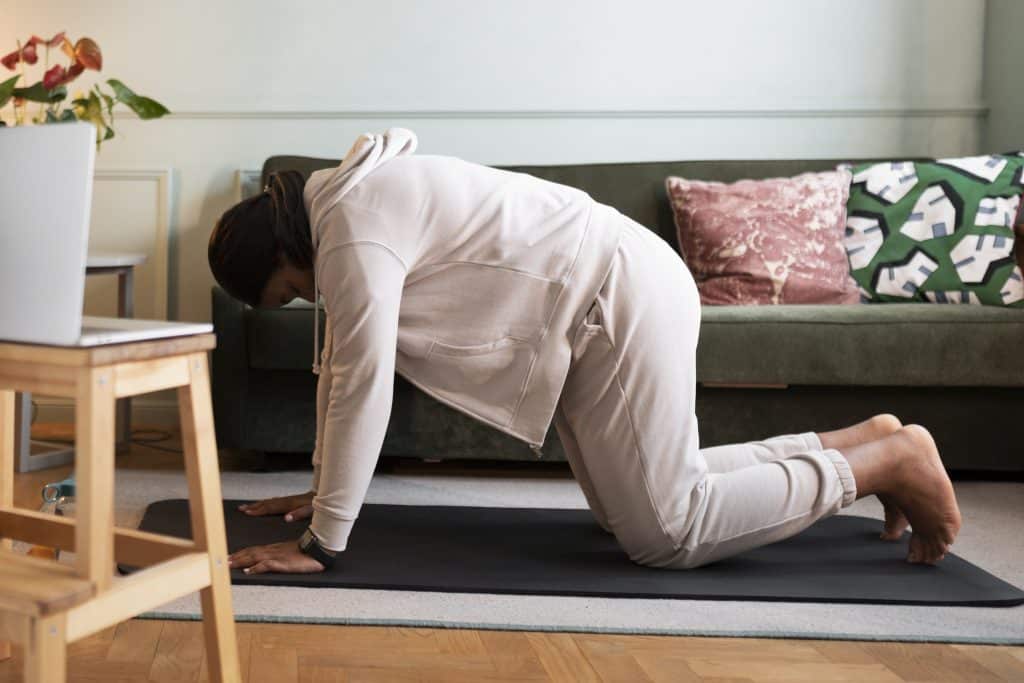 Achieving better posture within two weeks is attainable through consistent practice of targeted exercises and mindful daily habits, effectively reducing slouching and alleviating back pain for improved overall health.
Are you tired of constantly slouching or battling persistent back pain? It’s a common struggle, but what if you could significantly
improve your posture in 2 weeks? This guide will walk you through simple yet powerful exercises and adjustments that can help you stand taller, feel better, and reduce discomfort in a remarkably short time.
understanding the roots of poor posture
Before we dive into solutions, it’s crucial to understand why poor posture develops. Often, it’s not just about laziness; it’s a culmination of modern lifestyle habits that subtly reshape our bodies over time. Recognizing these underlying causes is the first step toward effective correction.
Our daily routines, from hours spent hunched over computers to scrolling through smartphones, contribute significantly to the erosion of good posture.
These repetitive actions create muscular imbalances, weakening some muscles while tightening others. Over time, your body adapts to these positions, making them feel ‘normal,’ even if they’re detrimental to your spinal health.
sedentary lifestyle and its impact
A sedentary lifestyle is a major culprit. When we spend most of our day sitting, our hip flexors can become tight, and our glutes and core muscles weaken.
This combination often leads to an anterior pelvic tilt, where the pelvis tilts forward, increasing the arch in the lower back and causing the abdomen to protrude. This shift forces the upper back to compensate, often resulting in rounded shoulders and a forward head posture.
Weak core muscles: A weak core cannot adequately support the spine, leading to excessive strain.
Tight hip flexors: Prolonged sitting shortens these muscles, pulling the pelvis out of alignment.
Rounded shoulders: Constant forward arm positions contribute to this common postural fault.
Beyond physical habits, certain environmental factors and even emotional states can influence posture. Stress, for instance, often causes us to tense our shoulders and neck, leading to a hunched position.
Similarly, ill-fitting furniture or an improperly set up workstation can perpetuate bad habits, making it harder to break free from poor postural patterns. Addressing these factors concurrently with exercises yields the best results.
Understanding these contributing factors allows for a more holistic approach to posture correction. It’s not just about doing exercises; it’s about retraining your body and mind to adopt healthier habits throughout your day. By identifying and modifying these root causes, you lay a strong foundation for lasting postural improvement.
the two-week posture challenge: setting realistic goals
Committing to a two-week challenge to improve your posture is an excellent way to kickstart positive change. While permanent, perfect posture takes ongoing effort, significant improvements are absolutely achievable within this timeframe. The key is consistency and a focused approach to daily exercises and awareness.
Setting realistic goals means understanding that you won’t completely overhaul decades of postural habits in fourteen days.
However, you can dramatically reduce slouching, alleviate chronic back pain, and build a strong foundation for continued improvement. This period is about establishing new neural pathways and strengthening dormant muscles.
daily commitment and mindfulness
To succeed in this challenge, daily commitment is non-negotiable. Aim for short, frequent exercise sessions rather than long, infrequent ones. Even 10-15 minutes, two to three times a day, can make a profound difference.
Equally important is mindfulness: constantly checking in with your body throughout the day, whether you’re sitting, standing, or walking.
Morning routine: Start your day with gentle stretches to wake up your postural muscles.
Work breaks: Incorporate micro-breaks to stretch and adjust your sitting position.
Evening wind-down: Finish with relaxing stretches to release tension built up during the day.
Measuring progress can be motivating. Take a “before” photo on day one and an “after” photo on day fourteen. You might be surprised by the visible changes.
Beyond aesthetics, pay attention to how you feel: Is your back pain lessening? Do you feel more energetic? These internal metrics are just as important as external ones.
Remember, this two-week challenge is designed to be a springboard. The habits you form and the strength you build during this period will serve as the basis for maintaining excellent posture long-term. Stay motivated, stay consistent, and celebrate every small victory along the way.
essential exercises for upper back and shoulder alignment
Targeting the upper back and shoulders is crucial for correcting the common issue of rounded shoulders and forward head posture. These exercises are designed to strengthen the muscles that pull your shoulders back and down, while also stretching the tight chest muscles that contribute to slouching.
Consistency is vital for these exercises to be effective within the two-week timeframe. Aim to perform them daily, or at least every other day, gradually increasing repetitions or holding times as your strength improves. Listen to your body and avoid any movements that cause sharp pain.
doorway chest stretch
This simple stretch helps open up the chest and shoulders, counteracting the tightness caused by prolonged sitting.
Stand in a doorway, place your forearms on the doorframe with elbows bent at 90 degrees, and gently lean forward until you feel a stretch across your chest. Hold for 20-30 seconds, repeating 2-3 times.
Focus: Stretches pectorals, improving shoulder retraction.
Technique: Keep shoulders relaxed, avoid shrugging.
Frequency: Perform multiple times throughout the day, especially after sitting.
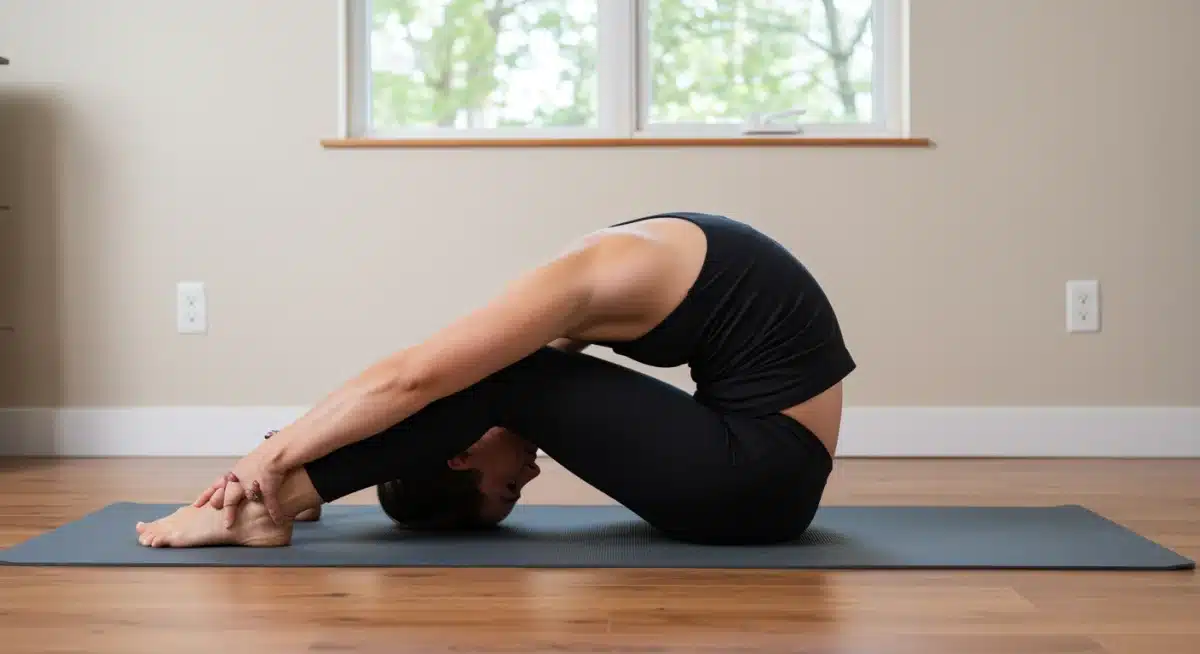
Another highly effective exercise is the “Scapular Squeeze.” Sit or stand tall, then gently squeeze your shoulder blades together as if trying to hold a pencil between them. Hold this contraction for 5-10 seconds, and release slowly.
Repeat 10-15 times. This exercise directly activates the rhomboids and middle trapezius muscles, which are key for maintaining proper upper back alignment.
The “Wall Angel” is also excellent for improving shoulder mobility and promoting upper back extension. Stand with your back against a wall, feet about six inches away. Press your lower back, upper back, and head against the wall.
Bring your arms up with elbows bent at 90 degrees, trying to keep your forearms and hands against the wall. Slowly slide your arms up and down, mimicking a snow angel motion, while keeping contact with the wall. Perform 10-15 repetitions.
These exercises, when done regularly, will start to re-educate your muscles, making it easier to hold a more upright posture.
You’ll likely notice a reduction in neck and upper back tension, and a greater awareness of your shoulder position throughout your day. Consistent effort here will yield significant results in your two-week challenge.
strengthening your core for spinal support
A strong core is the bedrock of good posture. It acts as a natural corset, stabilizing your spine and preventing excessive arching or rounding.
Without adequate core strength, your back muscles bear disproportionate strain, leading to pain and poor alignment. Focusing on core strengthening is non-negotiable for lasting postural improvement.
Many people misunderstand what “core” truly means. It’s not just about your rectus abdominis (the six-pack muscles). Your core comprises a deep network of muscles, including the transverse abdominis, obliques, and multifidus, all working together to support your torso. Engaging these muscles correctly is key to effective posture correction.
plank variations
The plank is an isometric exercise that effectively engages multiple core muscles simultaneously. Start in a push-up position, then lower onto your forearms, keeping your body in a straight line from head to heels.
Engage your glutes and abs, ensuring your hips don’t sag or lift too high. Hold for 20-60 seconds, resting and repeating 2-3 times.
Progression: Start with knee planks if a full plank is too challenging.
Variations: Side planks target obliques, improving lateral stability.
Benefit: Builds endurance in core stabilizers, essential for sustained good posture.
Another excellent core exercise is the “Bird-Dog.” Start on your hands and knees, ensuring your back is flat. Slowly extend one arm forward and the opposite leg straight back, keeping your core engaged and your hips level.
Hold for a few seconds, then return to the starting position and alternate sides. Perform 10-12 repetitions on each side. This exercise improves core stability and coordination, crucial for dynamic posture.
The “Dead Bug” is also fantastic for targeting the deep core muscles without straining the lower back. Lie on your back with your knees bent at 90 degrees and arms extended towards the ceiling.
Slowly lower one arm towards the floor above your head and the opposite leg towards the floor, keeping your lower back pressed into the mat. Return to the start and alternate. This controlled movement teaches core engagement and spinal stabilization.
By consistently incorporating these core exercises, you’ll build the internal support system necessary to maintain an upright, healthy posture. A strong core not only alleviates back pain but also improves athletic performance and overall functional movement in daily life.
lower body and hip mobility for balanced posture
Poor posture isn’t solely an upper body issue; it often originates from imbalances in the lower body, particularly the hips and glutes.
Tight hip flexors and weak glutes can lead to an anterior pelvic tilt, which then cascades up the spine, causing lower back pain and contributing to slouching. Addressing these lower body aspects is fundamental for comprehensive posture correction.
Improving hip mobility and strengthening the glutes helps restore pelvic alignment, which in turn supports a neutral spine.
This creates a stable base for your upper body, making it easier to maintain good posture without conscious effort throughout the day. Neglecting the lower body in posture work is like building a house on a shaky foundation.
hip flexor stretch
Given the prevalence of sitting, tight hip flexors are extremely common. A kneeling hip flexor stretch is highly effective.
Kneel on one knee, with the other foot flat on the floor in front of you. Gently push your hips forward until you feel a stretch in the front of the hip of the kneeling leg. Keep your core engaged to avoid arching your lower back. Hold for 30 seconds, and repeat 2-3 times per side.
Target: Iliopsoas muscles, crucial for pelvic alignment.
Benefit: Reduces anterior pelvic tilt, easing lower back strain.
Tip: Ensure a straight line from shoulder to kneeling knee for proper form.
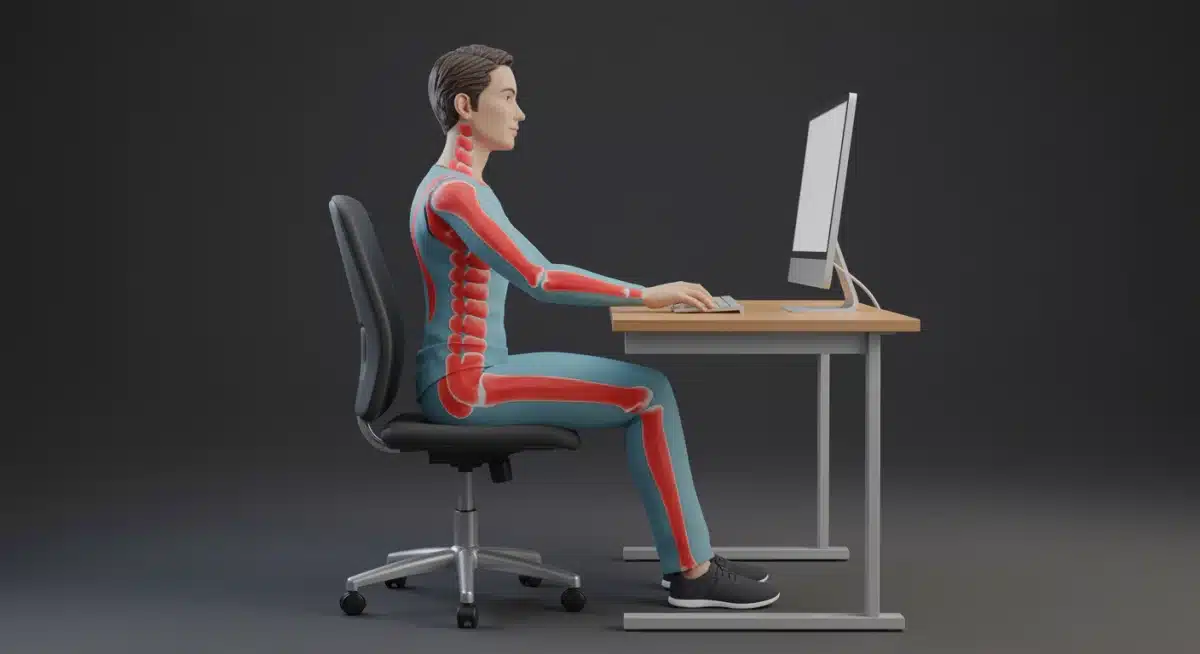
Strengthening the glutes is equally important. Glute bridges are an excellent exercise for this. Lie on your back with knees bent and feet flat on the floor, hip-width apart. Engage your glutes and lift your hips off the floor until your body forms a straight line from shoulders to knees.
Hold for a moment, then slowly lower. Perform 10-15 repetitions for 2-3 sets. This helps activate muscles often dormant from prolonged sitting.
Another beneficial movement is the “Clamshell.” Lie on your side with knees bent and stacked, and hips stacked. Keep your feet together and lift your top knee towards the ceiling, engaging your glutes. Ensure your hips don’t roll back. Perform 10-15 repetitions per side. This targets the gluteus medius, a key muscle for hip stability and preventing pelvic drop during walking.
By dedicating time to these lower body exercises, you’ll address fundamental imbalances that often undermine your posture. You’ll feel more stable, your lower back pain may diminish, and your overall body alignment will improve, contributing significantly to your goal of better posture in two weeks.
integrating posture awareness into daily life
Exercises are essential, but true postural improvement comes from integrating awareness into your everyday activities. It’s about making conscious choices about how you sit, stand, walk, and even sleep.
This continuous mindfulness reinforces the work you do during your dedicated exercise sessions and prevents old habits from creeping back in.
Think of your posture as a constant work in progress, not just something you address during a workout.
Every interaction with your environment is an opportunity to practice good alignment. This consistent effort is what transforms temporary fixes into lasting change, especially within the two-week challenge and beyond.
ergonomic workstation setup
For those who spend hours at a desk, an ergonomic setup is non-negotiable. Your computer monitor should be at eye level, your chair should support the natural curve of your lower back, and your feet should be flat on the floor or on a footrest. Your keyboard and mouse should be close enough to keep your elbows at a 90-degree angle.
Monitor height: Prevents forward head posture and neck strain.
Lumbar support: Maintains the natural curve of the lower spine.
Regular breaks: Stand, stretch, and move every 30-60 minutes.
Beyond the workstation, pay attention to your posture while driving. Adjust your car seat to support your lower back, and ensure your headrest is at the correct height.
When walking, imagine a string pulling you upwards from the crown of your head, keeping your shoulders relaxed and pulled back, and your gaze forward, not down at your feet.
Even small habits, like how you carry your bag or look at your phone, can impact posture. Try to alternate shoulders when carrying a heavy bag, and hold your phone at eye level to avoid “text neck.” These micro-adjustments accumulate over time, significantly contributing to overall postural health.
By actively observing and correcting your posture throughout the day, you empower yourself to make lasting changes. This constant awareness, combined with your targeted exercises, will accelerate your progress and solidify your new, improved posture, making it feel natural and effortless.
addressing common challenges and maintaining progress
Embarking on a two-week posture improvement journey often comes with its own set of challenges. It’s not always smooth sailing, and understanding potential hurdles can help you overcome them and stay on track. From muscle soreness to forgotten habits, being prepared is key to maintaining your progress.
One common challenge is muscle soreness, especially in the initial days as you activate previously underused muscles. This is normal and usually a sign that your body is adapting.
However, distinguishing between muscle soreness and sharp pain is crucial. Sharp pain indicates you should stop and reassess your movement or consult a professional.
staying consistent and motivated
Consistency can be tough, especially when daily life gets busy. One effective strategy is to integrate your exercises into existing routines.
For example, do your stretches while your coffee brews, or perform scapular squeezes during a commercial break. Small, consistent efforts are far more effective than sporadic, intense sessions.
Set reminders: Use phone alarms or apps to prompt posture checks and exercise breaks.
Find an accountability partner: A friend or family member can help keep you motivated.
Track your progress: Journaling or using a posture app can visualize your improvements.
Another challenge is reverting to old habits, especially when tired or stressed. This is where mindfulness truly shines.
Regularly check in with your body. If you catch yourself slouching, gently adjust your posture and take a few deep breaths. This conscious correction reinforces the new neural pathways you’re building.
Maintaining progress beyond the two weeks requires viewing posture improvement as a lifelong journey, not a temporary fix.
Continue your exercises, remain mindful of your daily habits, and periodically review your ergonomic setups. Consider incorporating activities like yoga or Pilates, which inherently promote good posture and body awareness.
Ultimately, the goal is to make good posture feel natural and effortless. By addressing challenges proactively and committing to ongoing self-care, you can not only improve your posture in two weeks but sustain that improvement for a healthier, more comfortable life.
| Key Aspect | Brief Description |
|---|---|
| Upper Back & Shoulders | Exercises like doorway stretches and scapular squeezes strengthen muscles for upright posture. |
| Core Strengthening | Planks and bird-dogs build spinal support, reducing back pain and improving stability. |
| Lower Body & Hips | Hip flexor stretches and glute bridges correct pelvic tilt and create a stable foundation. |
| Daily Awareness | Integrating ergonomic practices and mindful posture checks into daily life sustains improvements. |
frequently asked questions about posture improvement
Yes, significant improvements are possible within two weeks through consistent daily exercises and increased self-awareness. While perfect posture takes longer, you can reduce slouching and alleviate back pain considerably by focusing on targeted stretches and strengthening routines.
For rounded shoulders, focus on exercises that open the chest and strengthen the upper back. Doorway chest stretches, scapular squeezes, and wall angels are highly effective in pulling the shoulders back and improving alignment.
A strong core acts as a natural stabilizer for your spine. When your core muscles are weak, other muscles, particularly in your back, overcompensate, leading to strain, pain, and poor posture. Strengthening your core provides essential spinal support.
Simple daily habit changes include ensuring an ergonomic workstation, taking regular breaks to move and stretch, holding your phone at eye level, and being mindful of how you sit, stand, and walk throughout the day. These small adjustments add up.
If you experience sharp or persistent pain during exercises, stop immediately. Muscle soreness is normal, but pain is a warning sign. Reassess your form, reduce intensity, or consult a healthcare professional or physical therapist to avoid injury and get personalized advice.
conclusion
Achieving better posture and alleviating back pain within a two-week timeframe is an ambitious yet entirely attainable goal.
By understanding the root causes of poor posture, committing to a consistent routine of targeted exercises for your upper back, core, and lower body, and integrating mindful awareness into your daily life, you can make significant strides.
This journey is about more than just standing taller; it’s about reclaiming comfort, boosting confidence, and fostering a healthier relationship with your body.
Remember, consistency is your most powerful tool, and the benefits of improved posture extend well beyond the initial two weeks, paving the way for lasting well-being.