Negotiate Lower Rates: Save 15% on Internet & Cable Bills

 Implementing strategic negotiation tactics can significantly help you reduce your internet and cable expenses, allowing you to save up to 15% on your monthly bills.
Are you tired of skyrocketing monthly bills? Many Americans overlook a simple yet powerful way to cut down on household expenses: to negotiate lower rates for their internet and cable services. This guide will walk you through proven strategies to potentially save up to 15% on your bills this month.
understanding your current services and spending
Before you even think about calling your provider, a thorough understanding of your current internet and cable services is paramount.
Many consumers pay for features or speeds they don’t actually use, leading to unnecessary expenditures.
This initial step involves a detailed review of your existing plan, usage patterns, and the associated costs to identify areas where you might be overpaying.
Begin by gathering all your recent bills. Look beyond the total amount due and delve into the itemized charges.
Identify the specific services you’re paying for, such as internet speed, data caps, TV channel packages, and any additional equipment rental fees.
Often, these fees accumulate over time, adding significantly to your monthly outlay without you realizing it.
reviewing your internet usage
Your internet speed is a prime area for potential savings. Do you truly need the fastest gigabit connection, or would a slightly slower, more affordable plan suffice for your daily activities?
Consider how many devices are connected simultaneously and what those devices are used for. Streaming 4K video on multiple devices demands more bandwidth than casual browsing and email.
Assess your typical daily internet activities.
Note the number of users and devices in your household.
Utilize online speed tests to confirm your actual received speeds.
Understanding your actual usage helps you argue for a more appropriate and cost-effective plan. If your current speed is far greater than your needs, you have a strong case for reducing it without sacrificing performance.
evaluating your cable package
Cable television packages are often bundled with internet services, and they can be a significant source of inflated bills.
Many households subscribe to hundreds of channels but only watch a handful regularly. This is a common trap that providers leverage.
List the channels you and your family actually watch.
Consider cutting the cord entirely if streaming services meet your needs.
Investigate smaller, more focused channel packages.
By identifying unused channels and features, you can confidently request a reduction in your cable package, or even eliminate it, opting for more flexible and often cheaper streaming alternatives.
This careful preparation forms the bedrock of a successful negotiation strategy.
researching competitor offers and market rates
Knowledge is power, especially when it comes to negotiating. Before contacting your current provider, you must equip yourself with information about what competitors are offering in your area.
This research provides leverage and demonstrates that you are a savvy consumer who understands the market value of these services.
Start by visiting the websites of other internet and cable providers that service your geographical location. Look for their introductory offers, promotional bundles, and standard pricing for comparable services.
Pay close attention to internet speeds, data allowances, and specific channel lineups that match your current usage or desired upgrades.
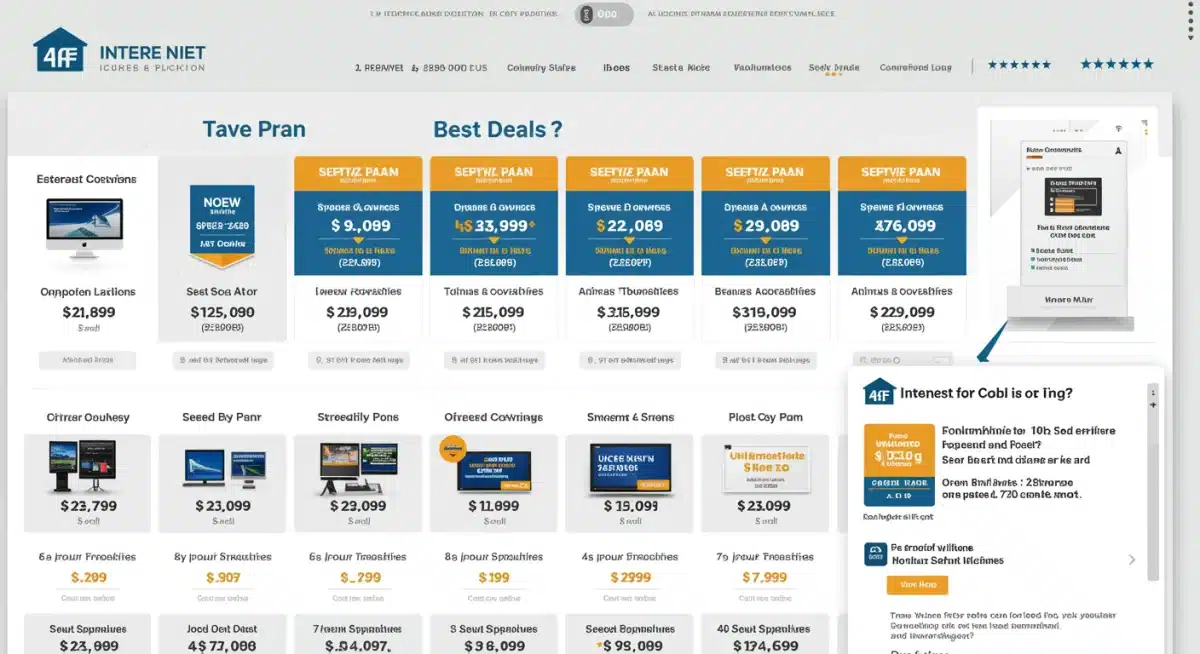
gathering specific competitor details
Don’t just get a general idea; gather concrete examples. Print out screenshots or save links to specific deals. Note down the prices, speeds, and any perks like free installation or gift cards.
These details are crucial for a persuasive argument during your negotiation.
Identify at least two competitive offers in your area.
Record the exact pricing and service details.
Note any special promotions or sign-up bonuses.
For instance, if your current provider charges $80 for 100 Mbps internet, and a competitor offers 200 Mbps for $60, you have a clear point of comparison. This not only shows your provider that you’re well-informed but also gives them a tangible benchmark to match or beat.
understanding market trends
Beyond direct competitor offers, it’s beneficial to have a general understanding of current market trends. Are internet speeds increasing across the board while prices remain stagnant, or are new, more affordable technologies emerging?
Websites like BroadbandNow or HighSpeedInternet.com can provide insights into average prices and available providers in your zip code.
This broader understanding helps you gauge whether your provider is genuinely offering competitive rates or if they are lagging.
If the market is generally trending towards lower prices for higher speeds, you have an even stronger argument for a rate reduction. This proactive research makes your negotiation much more effective and increases your chances of securing a better deal.
preparing your negotiation strategy and script
Effective negotiation isn’t about confrontation; it’s about clear communication and presenting a well-reasoned case.
Before you pick up the phone, mentally prepare and even jot down a few key talking points. This preparation ensures you remain calm, focused, and articulate during the conversation.
Start by outlining your objective: what specific rate reduction or service upgrade are you aiming for? Be realistic but firm.
For example, aiming to save 15% is a good starting point. Have your competitor research readily available, along with notes on your current usage and any pain points you’ve experienced with their service.
crafting your opening statement
Your opening statement should be polite but direct. Clearly state that you are calling to discuss your current bill and explore options for lowering your monthly rate.
Avoid immediately threatening to cancel; instead, frame it as an opportunity for them to retain a valued customer.
Politely state your intention to lower your bill.
Mention your loyalty as a long-standing customer (if applicable).
Express openness to finding a mutually beneficial solution.
For example, you might say, “Hello, I’ve been a loyal customer for X years, and I’m calling today to review my current internet and cable package. My bill has become quite high, and I’m hoping we can find a way to reduce it.” This sets a collaborative tone.
anticipating objections and responses
Customer service representatives are trained to handle these calls. They might initially offer minor discounts or try to upsell you. Be prepared to counter these by reiterating your research into competitor offers and your specific needs. If they say a certain price isn’t possible, ask what they *can* do.
Be ready to present competitor offers as evidence.
Politely decline irrelevant add-ons or minor discounts.
Ask to speak with the retention department if the initial representative cannot help.
The retention department often has more authority to offer significant discounts or special promotions to prevent customer churn.
Remember, your goal is to convey that you are serious about finding a better deal, and you are prepared to switch providers if necessary, though you’d prefer to stay if they can meet your needs. A well-prepared script boosts your confidence and effectiveness.
the art of negotiation: making the call

With your research and strategy in hand, it’s time to make the call. This is where your preparation truly pays off. Remember to maintain a polite, firm, and confident demeanor throughout the conversation.
The person on the other end is often following a script, and your goal is to guide them towards a solution that benefits you.
Call during off-peak hours if possible, as representatives may be less rushed and more willing to spend time finding a solution.
Have your account number, current bill, and notes on competitor offers right in front of you. Take notes during the call, including the representative’s name, the date, and any offers or promises made.
speaking with the right department
When you first call, you’ll likely speak to a general customer service representative. While they can sometimes offer minor adjustments, your best bet for significant savings is usually the retention or loyalty department.
Politely explain your situation and ask to be transferred to this department if the initial representative cannot meet your needs.
Request to speak with the customer retention department.
Clearly state your intention to explore options for a lower bill.
Be persistent but always respectful.
The retention department has specific budgets and incentives to keep customers, making them more likely to offer better deals, including promotional pricing or waiving fees. They understand the cost of acquiring new customers often outweighs the cost of retaining an existing one through a discount.
presenting your case effectively
Once you’re speaking with the right person, clearly articulate your desire to lower your bill. Present your researched competitor offers as a direct comparison.
For example, “I’ve seen that [Competitor Name] is offering [specific plan] for [price] in my area, which is significantly better than what I’m currently paying for comparable services.”
Highlight your loyalty as a long-term customer.
State your dissatisfaction with your current rate.
Be prepared to politely mention considering other providers.
Don’t be afraid to ask directly for a specific discount or to match a competitor’s offer. If they still seem hesitant, inquire about removing unnecessary services or equipment fees.
Sometimes, simply removing a modem rental fee can save you $10-$15 per month. The key is to be patient, persistent, and clear about your expectations.
Exploring Alternative Solutions and Bundles When You Negotiate
Sometimes, a direct price reduction isn’t immediately available when you negotiate with your provider.
However, that doesn’t mean you can’t save money. Staying open to alternative packages, bundles, or service adjustments can help you negotiate smart solutions that still reduce your monthly bills. Flexibility often makes it easier to negotiate deals you might not have considered before.
One effective strategy when you negotiate is adjusting your service tier. If your internet usage has changed or you realize you’re paying for speeds you don’t actually need, negotiating a lower-tier plan can be a simple way to cut costs.
Likewise, if you pay for a premium TV package but only watch a few channels, negotiating a basic or customized package can significantly reduce your expenses.
Re-evaluating Service Tiers When You Negotiate
When you negotiate, take time to assess whether your current internet speed or TV channel lineup truly matches your household’s needs. Many providers offer multiple tiers, and you may find that a slightly lower tier still delivers excellent performance at a more affordable price.
Ask about lower internet speed tiers when you negotiate.
Inquire about basic or customized TV packages.
Calculate potential savings before you negotiate changes.
In many cases, the performance difference between service tiers is minimal for everyday users, while the price difference can be substantial. Don’t hesitate to negotiate a lower speed if it leads to meaningful monthly savings.
Leveraging Bundles and Promotions When You Negotiate
Providers often encourage customers to bundle services such as internet, TV, and phone. When you negotiate, ask about current bundle offers or promotional discounts. Even existing customers can often negotiate new deals, especially if they express willingness to switch providers.
Ask about bundle deals when you negotiate.
Inquire about loyalty programs or exclusive discounts.
Be ready to negotiate a new contract if the savings are significant.
Sometimes, agreeing to a one- or two-year contract while you negotiate can be worthwhile if the discount is substantial. Just be sure to review all terms carefully and understand any early termination fees.
Following Up After You Negotiate New Rates
After you negotiate a better deal, your work isn’t finished. It’s essential to confirm that the new rates and services have been correctly applied to your account. Errors can occur, and verifying details ensures you receive everything you negotiated.
Ask the representative to send a confirmation email or written summary of the new plan, pricing, and discounts. If that’s not possible, record the representative’s name, the date and time of the call, and any reference numbers. This documentation strengthens your position if you need to negotiate again.
Reviewing Your Next Bill After You Negotiate
When your next bill arrives, review it carefully and compare it with what you negotiated. Look for the updated monthly rate, removed fees, and changes to your service package.
Confirm the negotiated monthly rate.
Check that waived fees are removed.
Verify the details of your new plan.
If something doesn’t match what you negotiated, contact your provider again and reference your previous conversation. Detailed notes make it easier to negotiate corrections quickly and effectively.
Setting Reminders to Negotiate in the Future
Promotional rates are often temporary, lasting 6, 12, or 24 months. To avoid unexpected increases, set reminders to negotiate again before your promotion expires.
Note the expiration date of your current deal.
Set calendar reminders to negotiate in advance.
Prepare to negotiate regularly for ongoing savings.
By making it a habit to negotiate your bills, you can maintain control over your internet and cable expenses and prevent costs from rising over time. Regularly negotiating is one of the most effective strategies for long-term savings and financial stability.
troubleshooting and additional tips for success
Even with the best preparation, you might encounter challenges during your negotiation. Some representatives might be unhelpful, or the initial offers might not meet your expectations.
Knowing how to troubleshoot these situations and having a few extra tips in your arsenal can significantly increase your chances of success.
If you’re not getting anywhere with the first representative, politely end the call and try again later. You might connect with a different representative who is more empowered or willing to help.
Persistence is a key trait of successful negotiators. Remember, every call is a new opportunity.
escalating your request
If repeated calls to customer service or the retention department prove fruitless, consider escalating your request.
This could mean asking to speak to a supervisor or even sending a formal letter or email to the company’s corporate office. Sometimes, a higher level of management has more flexibility to approve special discounts.
Request to speak with a supervisor if unsatisfied.
Consider formal written communication to corporate.
Document all interactions, including names and dates.
Another option is to file a complaint with the Federal Communications Commission (FCC) or your state’s public utilities commission.
While this is a more extreme step, the threat of regulatory action can sometimes prompt providers to address customer concerns more seriously. However, this should be a last resort.
consider alternative providers or services
If your current provider simply won’t budge on pricing, it might be time to seriously consider switching.
The competitive market for internet and cable services means there are often other options available, including satellite internet, fixed wireless, or even 5G home internet in some areas.
Research all available internet and TV providers in your area.
Explore cord-cutting options like streaming services and antennas.
Be prepared to switch if a better deal is truly outside your current provider.
Sometimes, the only way to truly save money is to take your business elsewhere. Even the act of initiating a cancellation with a new provider lined up can sometimes trigger a last-minute, better offer from your current company.
Being ready to walk away is a powerful negotiation tool itself. Always explore all avenues to ensure you’re getting the best value for your money.
| Key Point | Brief Description |
|---|---|
| Understand Your Bills | Review current services, usage, and itemized charges to identify overpaying areas. |
| Research Competitors | Gather specific offers from other providers to leverage during negotiation. |
| Prepare and Call | Develop a script, call the retention department, and clearly state your objective. |
| Follow Up Diligently | Confirm new rates, review next bill, and set reminders for future negotiations. |
Frequently Asked Questions About How to Negotiate Bills
How often should I negotiate my internet and cable bills? ▼
You should try to negotiate your internet and cable bills at least once a year or whenever a promotional period ends.
Providers often increase prices after introductory offers expire, so proactively calling to negotiate can help you secure better rates and avoid unexpected hikes. Setting reminders makes it easier to negotiate consistently.
What should I prepare before I negotiate with my provider?
Before you negotiate, gather your account details, a recent bill, your current service plan, and competitor offers in your area. Having this information ready strengthens your position and helps you negotiate more confidently and effectively.
What if the provider refuses to negotiate lower rates?
If the first representative cannot negotiate a better deal, politely ask to speak with the retention or loyalty department. These teams often have more flexibility to negotiate discounts and special offers. Staying calm and persistent significantly increases your chances to negotiate successfully.
Can I negotiate better prices by bundling services?
Yes, bundling services is often a powerful way to negotiate lower bills. Even as an existing customer, you can negotiate by asking about current bundle promotions or requesting a customized package that better fits your needs and budget.
Does mentioning competitors help me negotiate better deals?
Definitely. Referring to real competitor offers is one of the most effective ways to negotiate. It demonstrates that you are informed and willing to switch providers, which often motivates companies to negotiate and offer better rates to keep you as a customer.
conclusion
Taking control of your internet and cable bills is not just about saving money; it’s about being an informed and empowered consumer.
By understanding your services, researching competitor offers, preparing your negotiation strategy, and diligently following up, you can significantly reduce your monthly expenses. Remember, every dollar saved adds up, contributing to your overall financial well-being.
Don’t let your bills silently increase; take action today and enjoy the benefits of lower rates.