Price Drop Alert: Your Guide to Refunds After Purchase
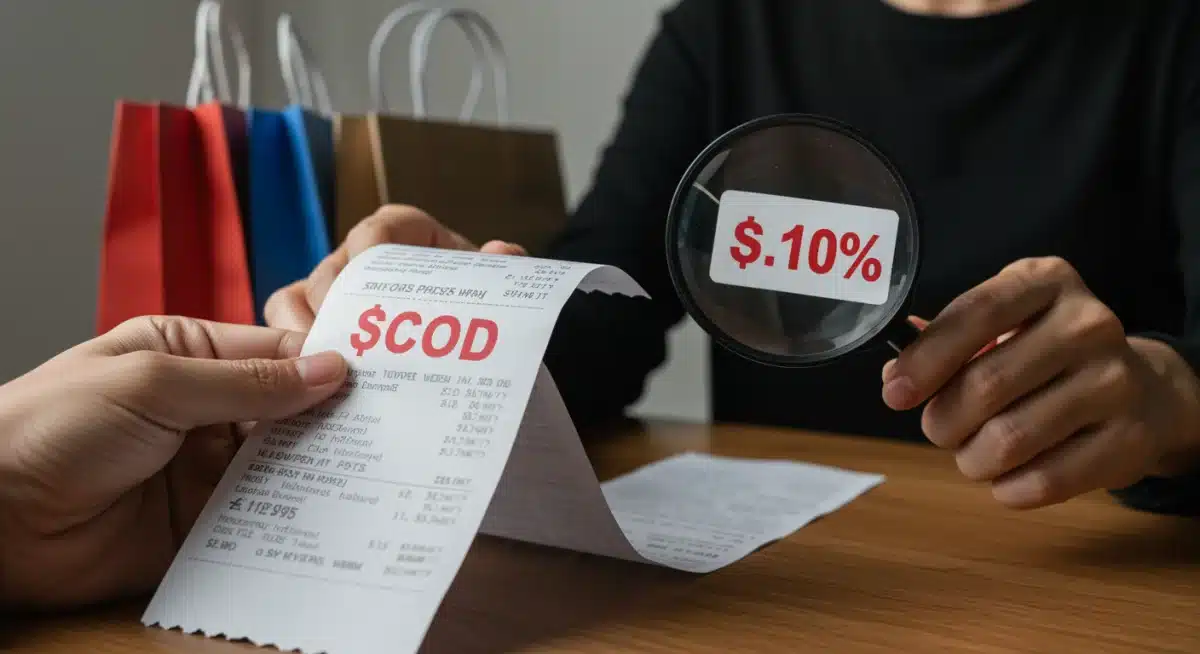
 Understanding store policies and leveraging credit card benefits are crucial steps for consumers seeking refunds when prices drop after a purchase, allowing them to recapture savings effectively.
Have you ever bought something, only to see its price drop significantly days later? It’s a frustrating experience, but it doesn’t have to be a lost cause. Learning about a price drop alert:
how to get refunds when prices fall after you buy can save you a substantial amount of money. This guide will walk you through the various avenues available to you, ensuring you’re equipped to reclaim those lost savings.
Understanding retailer price adjustment policies
Most major retailers in the United States have specific price adjustment policies designed to address situations where an item’s price decreases shortly after a customer’s purchase.
These policies are not universal, however, and can vary significantly from one store to another. It’s crucial for consumers to familiarize themselves with these guidelines before making a claim, as they often dictate the timeframe within which a price adjustment can be requested and the conditions under which it will be granted.
These policies typically specify a window, usually between 7 and 30 days from the date of purchase, during which a customer can request a refund for the price difference.
Some retailers might offer a longer period, especially during holiday seasons, while others might have very strict, short windows. Understanding these timelines is the first step in successfully navigating a price drop scenario.
Common policy variations and exclusions
Retailer price adjustment policies are rarely one-size-fits-all. Many stores impose certain conditions or exclusions that can impact your eligibility for a refund.
For instance, some retailers may only offer price adjustments for items purchased at their full original price, excluding sale items or clearance merchandise.
Others might explicitly state that their policy does not apply to Black Friday sales or other major promotional events.
Time limits: Be aware of the exact number of days you have to claim a price adjustment.
Proof of purchase: Always keep your original receipt or order confirmation.
Item condition: The item usually needs to be in its original, unopened condition.
Exclusions: Certain categories like electronics, jewelry, or seasonal items might be exempt.
Furthermore, some stores may require that the lower price be advertised by the same retailer, rather than a competitor.
This means that if you find a better deal elsewhere, the original store might not honor a price match or adjustment based on a competitor’s offer.
Always check if the policy distinguishes between internal price drops and external price matches, as this can significantly affect your chances of obtaining a refund.
Knowing these nuances beforehand can save you time and frustration when attempting to claim a price adjustment.
In conclusion, the first line of defense against post-purchase price drops is a thorough understanding of the retailer’s specific price adjustment policy.
This involves checking timeframes, required documentation, and any exclusions that might apply. Being prepared with this knowledge will significantly increase your success rate in securing a refund for the price difference.
Leveraging credit card price protection benefits
Beyond retailer-specific policies, many credit cards offer a valuable perk known as price protection. This benefit can be a game-changer for consumers, acting as a safety net against price drops even when a store’s own policy might not cover your situation.
Credit card price protection typically reimburses you the difference if an item you purchased with that card goes on sale for a lower price within a specified period, usually 60 to 120 days.
This protection is particularly useful because it extends the window for claiming a refund far beyond what most retailers offer.
It also often covers a broader range of items and sales, including those from competitors, depending on the card issuer. However, not all credit cards provide this benefit, and the terms can vary widely, so it’s essential to understand your specific card’s offerings.
How to file a credit card price protection claim
The process of filing a claim for credit card price protection usually involves a few key steps. First, you’ll need to identify that the price of an item you purchased has dropped.
This can be done by regularly checking store websites, receiving promotional emails, or using price tracking tools. Once a lower price is found, you’ll need to gather the necessary documentation.
Original receipt: Proof of purchase with the original price.
Credit card statement: To verify the purchase was made with the eligible card.
Advertisement of lower price: A printed ad or screenshot showing the new, lower price.
Claim form: Usually available through your credit card’s benefits administrator.
After compiling these documents, you typically submit them to your credit card’s benefits administrator, often through an online portal or via mail.
They will review your claim and, if approved, issue a credit to your account for the price difference. It’s important to note that most credit card price protection policies have limits on the maximum amount you can claim per item and per year, so be sure to check those details.
While credit card price protection can be an excellent way to recover savings, it’s not without its limitations. Exclusions often include certain types of items, such as perishable goods, motorized vehicles, or services.
Some cards might also exclude specific types of sales, like going-out-of-business events or online-only flash sales. Always read the fine print of your credit card benefits guide to fully understand what is and isn’t covered, ensuring you can maximize this valuable consumer protection.
Utilizing price tracking apps and browser extensions
In today’s digital age, keeping an eye on price fluctuations no longer requires constant manual checking. The market is saturated with innovative price tracking apps and browser extensions designed to do the heavy lifting for you.
These tools can be incredibly effective in helping you secure a refund when prices fall after you buy, by alerting you the moment a product’s price drops at a specific retailer or across multiple stores.
These digital assistants work by monitoring product pages on various e-commerce sites. Once you add an item to your watch list, the app or extension will track its price and notify you if it falls below a certain threshold or simply drops from your purchase price.
This proactive approach ensures you don’t miss out on potential refunds, making the process of claiming a price adjustment much more efficient and less time-consuming.

Popular price tracking tools and their features
There are several reputable price tracking tools available, each with its unique set of features. Choosing the right one depends on your shopping habits and specific needs.
Some popular options include Honey, Keepa (especially for Amazon), CamelCamelCamel, and PriceBlink. These tools often integrate directly into your web browser, providing real-time alerts and historical price data.
Real-time alerts: Instant notifications via email or push notification when a price drops.
Price history charts: Visual data showing how a product’s price has fluctuated over time.
Wishlist integration: Easily add desired items to a list for monitoring.
Comparison shopping: Some tools compare prices across different retailers simultaneously.
Beyond simple price alerts, many of these tools offer additional functionalities that enhance your shopping experience.
For example, some can automatically apply coupon codes at checkout, further maximizing your savings. Others might provide insights into a product’s typical sale cycle, helping you predict when the best time to buy might be.
Leveraging these advanced features can turn a frustrating price drop into a rewarding refund opportunity.
While price tracking apps and extensions are powerful allies in your quest for refunds, it’s important to use them wisely. Ensure you’re tracking items you’ve actually purchased and are within the return or price adjustment window.
These tools serve as excellent complements to understanding retailer and credit card policies, providing the timely information you need to act quickly and effectively when a price drop occurs, ultimately helping you save money effortlessly.
The art of negotiation: talking to customer service
Sometimes, despite all the policies and tools, you might find yourself in a gray area. Perhaps you missed the retailer’s price adjustment window by a day, or your credit card doesn’t offer price protection for the specific item.
In these situations, a well-crafted conversation with customer service can be your best bet. While not guaranteed, a polite and reasonable approach can often yield surprising results, leading to a refund or store credit.
Customer service representatives often have some discretion, especially for loyal customers or purchases of significant value.
They are trained to resolve issues and maintain customer satisfaction. Approaching them with a clear, calm explanation of your situation, rather than an aggressive demand, can make a significant difference in the outcome. Remember, they are people too, and a little empathy can go a long way.
Tips for a successful customer service interaction
Before you even pick up the phone or start a chat, prepare yourself. Have all your purchase details readily available, including the date, item, original price, and the lower price you’ve found.
Be ready to articulate why you believe you’re entitled to an adjustment, even if it falls outside standard policy. Highlight your loyalty to the brand or store, if applicable, as this can sometimes sway their decision.
Be polite and respectful: A positive attitude increases your chances of a favorable outcome.
Have all information ready: Order number, date of purchase, original price, and current lower price.
Explain your situation clearly: Briefly and concisely state why you are requesting an adjustment.
Ask for a supervisor if necessary: If the initial representative can’t help, politely ask to speak with someone with more authority.
It’s also beneficial to consider the timing of your call or chat. Calling during off-peak hours might mean shorter wait times and less stressed representatives.
If your request is denied, don’t be afraid to politely ask if there are any other options, such as store cre
dit or a discount on a future purchase. While a full refund might not always be possible, an alternative solution can still provide value and demonstrate the store’s commitment to customer satisfaction.
Ultimately, negotiating with customer service requires patience and persistence. Even if the first attempt isn’t successful, sometimes a different representative on another day might offer a different solution.
The goal is to present your case clearly and respectfully, allowing the representative to understand your perspective and, hopefully, find a way to assist you in securing a price adjustment or an alternative form of compensation.
Special considerations for online vs. in-store purchases

The landscape of price adjustments can differ notably depending on whether your purchase was made online or in a physical store.
While the core principle of seeking a refund for a price drop remains the same, the practicalities, policies, and evidence required can vary. Understanding these distinctions is key to successfully navigating the process, regardless of your shopping channel.
Online purchases often come with the advantage of digital trails, making it easier to track purchase dates, original prices, and subsequent price drops.
Order confirmations, shipping emails, and direct links to product pages serve as readily available documentation.
However, online retailers might also have more restrictive return windows or specific conditions for price adjustments due to the nature of e-commerce and rapid price changes.
Navigating online price adjustments
For online purchases, the process for claiming a price adjustment often begins by checking the retailer’s website for their specific policy.
Many online stores have a dedicated section for returns and refunds, which will typically outline their price adjustment terms.
If a price drop occurs, you’ll usually need to contact their customer service, often through email, live chat, or a dedicated online form.
Digital receipts: Keep all email confirmations and order details accessible.
Screenshots: Capture screenshots of the lower price, including the date and time.
Online forms: Many retailers provide specific forms for price adjustment requests.
Chat support: Live chat can be an efficient way to make your claim and get immediate responses.
In contrast, in-store purchases typically require you to physically return to the store with your original receipt. The advantage here is the face-to-face interaction, which can sometimes facilitate a quicker resolution.
However, the challenge lies in providing tangible proof of the price drop, especially if it was a time-sensitive promotion or an unadvertised sale. Bringing a printout of an online ad or a competitor’s flyer can strengthen your case.
Regardless of the channel, consistency in documentation is paramount. For online purchases, saved emails and screenshots are your best friends.
For in-store purchases, the physical receipt is non-negotiable, and any printed evidence of the price drop will aid your claim. Being prepared for the specific requirements of each shopping method will significantly streamline your efforts to obtain a refund for a price drop.
Documentation is key: what you need to prove your claim
When it comes to securing a refund for a price drop, the old adage rings true: if it’s not documented, it didn’t happen.
Proper documentation is the bedrock of any successful price adjustment claim, whether you’re dealing with a retailer directly or leveraging your credit card’s benefits. Without concrete evidence, your request is likely to be denied, simply because there’s nothing to substantiate your claim.
The type of documentation required can vary slightly depending on the specific policy and the nature of your purchase, but a few core pieces of evidence are almost universally necessary.
Having these items organized and readily accessible will not only expedite the process but also significantly increase your chances of a positive outcome. Think of it as building a robust case for your refund.
Essential documents for a price adjustment claim
The primary document you will always need is proof of your original purchase.
This is non-negotiable. Beyond that, you must also provide clear and undeniable evidence of the lower price. This often means capturing the new price in a way that is verifiable and shows the date of the price drop.
Original sales receipt: This is the most critical piece of evidence, showing the item, purchase date, and original price. For online purchases, a detailed email confirmation or order history screenshot works.
Evidence of the lower price: This could be a screenshot of the product page with the new price and date, a link to the current advertisement, or a picture of an in-store sign. Ensure the date is visible.
Credit card statement (for credit card claims): To prove the purchase was made with the card offering price protection.
Product details: Ensure the item on your receipt exactly matches the item with the lower price (model number, color, size, etc.).

When providing evidence of the lower price, attention to detail is crucial. A simple screenshot often suffices, but ensure it clearly shows the product, the reduced price, the retailer’s name, and, most importantly, the date the screenshot was taken.
Some retailers or credit card companies might require a direct link to the product page or a physical advertisement.
Being meticulous with your documentation demonstrates your preparedness and seriousness about the claim, making it harder for it to be dismissed.
In summary, never underestimate the power of thorough documentation. It is the backbone of any successful price drop refund claim. By systematically collecting and organizing your original purchase receipts, clear evidence of the lower price, and any other relevant financial statements, you position yourself strongly to reclaim the difference and ensure you get the best possible deal, even after the sale.
When to give up: understanding limitations and timing
While the pursuit of a price drop refund is often worthwhile, there are instances when it’s more practical to acknowledge limitations and redirect your efforts.
Not every price drop will result in a successful refund, and understanding when to pivot can save you time and unnecessary frustration.
Recognizing these boundaries involves considering factors such as policy restrictions, the value of the price drop, and the effort required to make a claim.
The most common limitation is the expiration of a retailer’s price adjustment policy or your credit card’s price protection window.
Once these deadlines pass, the chances of securing a refund diminish significantly. While a polite conversation with customer service might still be attempted, the likelihood of success drops considerably.
It’s important to act promptly when you notice a price drop to avoid missing these crucial windows.
Assessing the value vs. effort of a claim
Another key consideration is the monetary value of the price drop itself. If an item drops by only a few dollars, the time and effort required to file a claim, gather documentation, and potentially negotiate might outweigh the actual refund you’d receive.
For smaller discrepancies, it might be more prudent to simply accept the loss and focus your energy on larger potential savings.
Expired policy windows: Claims outside the stated timeframe are rarely honored.
Minimal price difference: Small savings might not justify the effort involved.
Specific exclusions: Items or sales explicitly excluded by policy are unlikely to yield refunds.
Unverifiable price drops: If you can’t provide clear proof of the lower price, your claim is weak.
Furthermore, be aware of specific exclusions within policies. Some items, like perishable goods, personalized items, or certain electronics, are often excluded from price protection. Similarly, some sales events, such as doorbuster deals or going-out-of-business sales, might not qualify for adjustments. Attempting to claim a refund for an explicitly excluded item is almost certainly a lost cause and wastes both your time and the customer service representative’s.
In conclusion, while being proactive about price drop alerts is smart, it’s equally important to be realistic. Understand the policies, assess the potential refund amount against the effort, and recognize when a claim is unlikely to succeed. Knowing when to give up is not about surrendering savings; it’s about optimizing your time and focusing on the most impactful opportunities to get refunds when prices fall after you buy.
| Key Strategy | Brief Description |
|---|---|
| Check Retailer Policies | Understand specific store price adjustment windows and exclusions before purchase. |
| Use Credit Card Protection | Leverage credit card benefits for extended price protection beyond store policies. |
| Employ Price Tracking Tools | Utilize apps/extensions for automatic alerts on price drops after your purchase. |
| Maintain Documentation | Keep receipts and clear evidence of lower prices for all refund claims. |
Frequently asked questions about price drop refunds
A price adjustment is a partial refund for the difference when an item’s price drops after purchase. It differs from a return, where you give back the item for a full refund. Adjustments let you keep the product while still benefiting from the lower price.
The timeframe varies by retailer, usually ranging from 7 to 30 days from the purchase date. Credit card price protection can extend this window significantly, often up to 60 or 120 days, depending on your card’s benefits.
No, not all credit cards offer price protection. This benefit is typically found on premium or rewards-based credit cards.
It’s crucial to check your specific credit card’s benefits guide or contact your issuer to confirm if this feature is available to you.
You’ll need your original purchase receipt or order confirmation and clear evidence of the lower price, such as a screenshot of the current product page, a link to an advertisement, or a picture of an in-store sign, all showing the date.
It depends on the retailer’s policy. Many stores explicitly exclude clearance, doorbuster, or major holiday sale items from price adjustments. Always review the specific terms and conditions for significant promotional events before making a claim.
Conclusion
Navigating the world of post-purchase price drops might seem daunting at first, but with the right knowledge and tools, it’s entirely possible to reclaim your savings.
By understanding retailer policies, leveraging credit card price protection, utilizing price tracking apps, and approaching customer service with a clear, documented case, you empower yourself as a consumer.
Don’t let a price drop become a missed opportunity; instead, turn it into a smart saving strategy.
Being proactive and informed ensures you always get the best value for your money, reinforcing the idea that smart shopping doesn’t end at checkout.