Install a Water Filter: Improve Water Quality, Save Money
 Installing a water filter at home is a simple yet impactful DIY project that significantly improves your tap water quality and can lead to substantial annual savings by eliminating the need for expensive bottled water.
Are you tired of constantly buying bottled water, spending hundreds of dollars each year, and still questioning the quality of your tap water? It’s time to consider a game-changing solution for your home.
Learning how to install a water filter can dramatically improve your family’s drinking water quality while simultaneously saving you a significant amount of money, potentially upwards of $500 annually.
This guide will walk you through the undeniable benefits, various types of filters, and the straightforward process of bringing cleaner, safer water directly to your faucet, transforming your daily hydration habits and your budget.
The undeniable benefits of filtered water
Choosing to filter your tap water goes beyond just taste; it’s a commitment to a healthier lifestyle and a more sustainable household. The benefits are wide-ranging, impacting everything from your physical well-being to your financial health and even the environment.
Many municipal water sources, while generally safe, can still contain residual chlorine, heavy metals, pesticides, and other contaminants that affect both the taste and long-term health implications of the water you drink.
A proper filtration system acts as a barrier, ensuring that what comes out of your tap is as pure as possible.
Enhanced taste and odor
One of the most immediate and noticeable improvements after you install a water filter is the dramatic change in taste and odor.
Chlorine, often used as a disinfectant, can give tap water an unpleasant chemical smell and flavor.
Filters, especially activated carbon types, are highly effective at removing these elements, leaving you with crisp, clean-tasting water that rivals, or even surpasses, bottled brands.
Eliminates chlorine taste and smell.
Removes earthy or metallic undertones.
Makes beverages, like coffee and tea, taste better.
Encourages increased water consumption for better health.
Beyond chlorine, various organic compounds and sediment can contribute to undesirable flavors and cloudiness.
Filtration systems tackle these issues head-on, delivering a consistently clear and refreshing glass of water every time. This can lead to a significant increase in your daily water intake, which is crucial for overall health.
Protecting your health from contaminants
While tap water in the United States is regulated, concerns about contaminants persist. Lead from aging pipes, industrial pollutants, agricultural runoff, and even emerging contaminants like microplastics can find their way into your drinking supply.
A robust water filtration system provides an essential layer of protection for your family.
Different types of filters are designed to target specific contaminants. For instance, reverse osmosis systems are highly effective against a broad spectrum of impurities, including dissolved solids, while specialized filters can remove lead or PFAS chemicals.
Understanding what’s in your water, often through a simple home test, can help you choose the right system to safeguard your health.
The long-term health implications of consuming even small amounts of certain contaminants are still being studied, but proactive measures like filtering your water can offer peace of mind.
Children and pregnant women are often more vulnerable to the effects of waterborne impurities, making filtration an even more critical consideration for families.
In conclusion, the benefits of installing a water filter are multifaceted.
From improving the sensory experience of drinking water to robustly protecting your family’s health, and even contributing to a greener planet, the investment in a quality filtration system pays dividends in countless ways.
It’s a practical step towards a healthier and more economically sensible home.
Saving hundreds: The financial argument
Beyond the health and taste benefits, one of the most compelling reasons to install a water filter is the significant financial savings it offers.
The cost of bottled water, often perceived as a healthier or more convenient option, quickly accumulates, becoming a substantial drain on household budgets over time.
Americans spend billions annually on bottled water. By switching to a home filtration system, you can effectively eliminate this recurring expense, channeling those dollars back into your pocket.
The initial investment in a quality filter is often recouped within a year, sometimes even sooner, making it a highly cost-effective solution.
Calculating your bottled water expenses
Consider a typical scenario: if a household consumes just two bottles of water per day, at an average cost of $1.50 per bottle, that’s $3 per day, or approximately $1095 per year. Even buying in bulk at a lower price per bottle, the costs still add up significantly. For a family of four, these figures can easily double or triple.
Average cost per bottle: $1.00 – $2.00
Daily consumption (2 bottles/person): $2.00 – $4.00 per person
Annual cost (1 person): $730 – $1460
Annual cost (family of 4): $2920 – $5840
These calculations highlight just how quickly bottled water consumption impacts your finances. The convenience of grabbing a bottle often masks the true financial burden it creates.
By contrast, a home water filter provides an unlimited supply of clean water for a fraction of the cost.
Return on investment for water filters
The upfront cost of a good quality under-sink or whole-house water filter can range from $100 to $500, with replacement filters costing approximately $50-$150 per year.
Even at the higher end, this investment is negligible compared to the annual expense of bottled water. For example, if you spend $500 on a filter and $100 annually on replacements, your total cost for the first year is $600.
Compared to spending $1000+ on bottled water, you’re already saving hundreds.
Over five years, your bottled water cost could reach $5000 or more, while your filtered water cost (initial investment plus five years of replacements) would be around $1000-$1250.
This represents thousands of dollars in savings, money that can be used for other household needs, vacations, or savings goals.
The financial argument for installing a water filter is incredibly strong and offers a tangible return on investment that few other home upgrades can match.
In summary, the financial benefits of installing a water filter are clear and substantial.
By making a one-time investment and committing to regular filter replacements, you can eliminate the recurring and escalating costs of bottled water, freeing up significant funds in your household budget. It’s a smart financial decision that pays for itself many times over.
Understanding different types of water filters
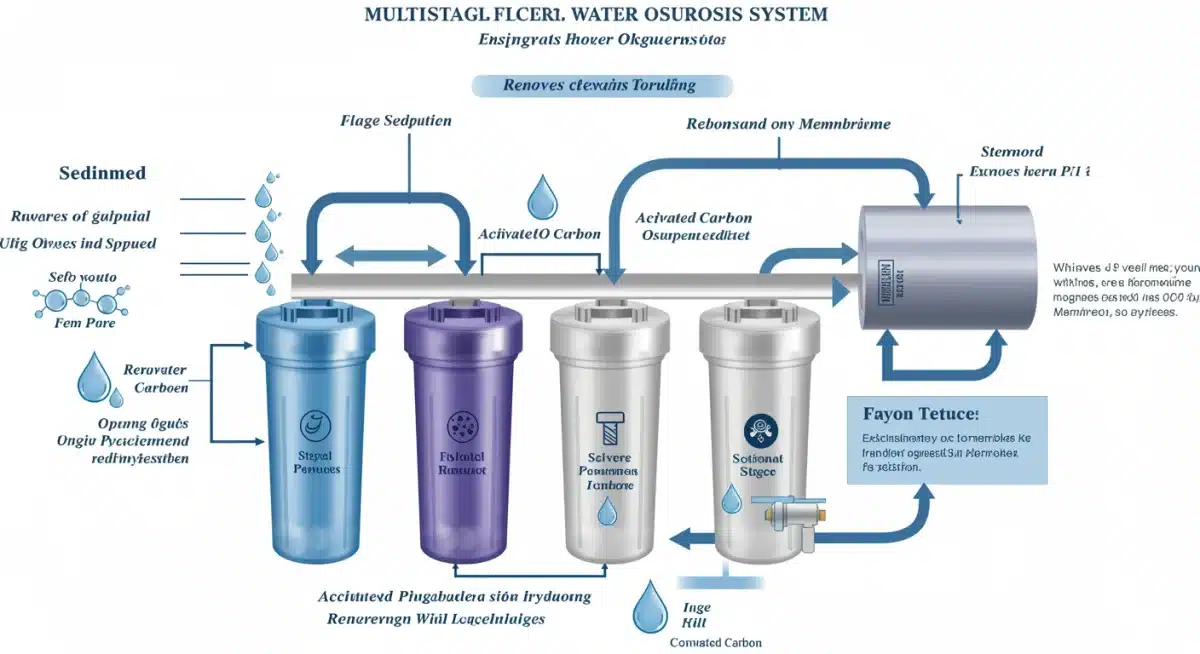
When you decide to install a water filter, you’ll discover a variety of options, each designed to address different water quality concerns and fit various household needs and budgets. Understanding these types is crucial to making an informed decision that best suits your specific situation.
From simple pitcher filters to comprehensive whole-house systems, the technology varies in complexity and effectiveness.
The choice often depends on the level of filtration desired, the specific contaminants you’re concerned about, and your willingness to invest time and money into the installation and maintenance.
Point-of-use (POU) filters
Point-of-use filters are installed at specific locations where you need filtered water, such as a kitchen faucet or showerhead.
They are generally easier to install and more affordable than whole-house systems, making them an excellent starting point for many homeowners.
Faucet-mounted filters: Attach directly to your existing faucet, providing filtered water on demand. They are easy to install and replace cartridges.
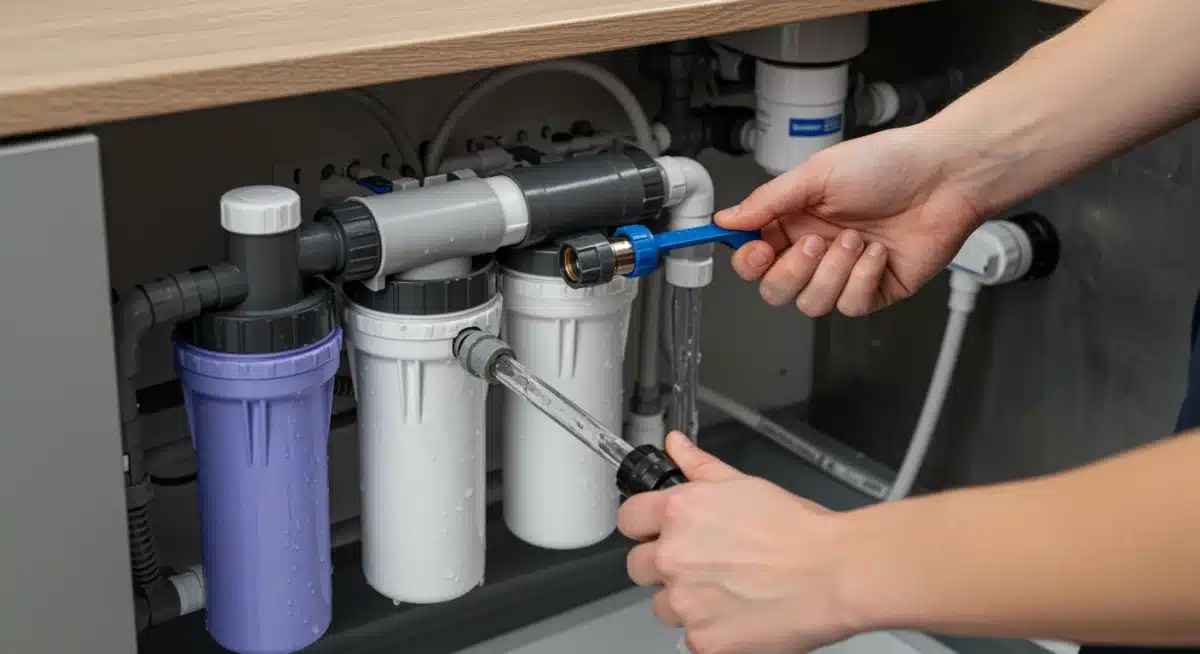
Under-sink filters: Installed beneath the kitchen sink, these systems typically connect to a dedicated faucet or your existing cold water line. They offer superior filtration compared to faucet-mounted options and are often multi-stage.
Countertop filters: Sit on your counter and connect to the faucet via a diverter valve. They are portable and require no permanent installation.
Water filter pitchers: The simplest and most affordable option, requiring no installation. Water is poured into the pitcher and slowly filters through a cartridge.
POU filters are ideal if you primarily want to improve the quality of your drinking and cooking water. They are effective for removing chlorine, sediment, and some common contaminants, offering a noticeable improvement in taste and odor.
Whole-house (POE) filtration systems
Whole-house, or Point-of-Entry (POE), filtration systems are installed where the main water line enters your home. This means all water used in your house – for drinking, bathing, washing dishes, and laundry – is filtered.
This provides comprehensive protection against contaminants and can also extend the life of your plumbing and appliances by reducing sediment and scale buildup.
These systems are more complex to install, often requiring professional plumbing work, and represent a larger initial investment. However, the benefits of having filtered water throughout your entire home are substantial, especially if you have hard water or significant concerns about overall water quality.
Common types of whole-house filters include sediment filters, activated carbon filters, and water softeners.
Some advanced systems combine multiple filtration methods to address a wide range of issues. Understanding your water quality through a professional test can guide you in selecting the most appropriate whole-house system.
Ultimately, the best type of water filter for you depends on your specific needs, budget, and the quality of your incoming water.
Whether you choose a simple pitcher or a comprehensive whole-house system, the decision to install a water filter is a positive step towards healthier living and significant savings.
Step-by-step guide to installing an under-sink filter
For many homeowners, an under-sink water filter strikes the perfect balance between effectiveness, convenience, and affordability.
It provides high-quality filtered water directly from your tap, without the commitment or cost of a whole-house system. If you’re ready to install a water filter yourself, an under-sink model is an excellent DIY project.
The installation process for most under-sink filters is straightforward and can be completed by anyone with basic plumbing skills and tools.
While models vary, the general steps remain consistent. Always refer to your specific filter’s instruction manual for precise details and safety warnings.
Tools and materials you’ll need
Before you begin, gather all the necessary tools and materials. Having everything on hand will ensure a smooth and efficient installation process, preventing frustrating delays.
Most filter kits come with the necessary tubing and connectors, but it’s good to double-check.
Adjustable wrench or basin wrench
Drill with a suitable bit (for faucet hole, if needed)
Bucket and towels
Safety glasses
Teflon tape (plumber’s tape)
Marker
Measuring tape
Ensure you have enough space under your sink for the filter unit and access to the cold water line. Clear out the cabinet under the sink to give yourself ample room to work comfortably. Good lighting is also essential for seeing connections clearly.
Installation process overview
The general steps involve turning off the water supply, installing a dedicated filtered water faucet (if applicable), connecting the filter to the cold water line, and flushing the system. Take your time with each step, ensuring all connections are secure to prevent leaks.
Turn off water supply: Locate the cold water shut-off valve under your sink and turn it off. Open the existing kitchen faucet to drain any residual water from the line.
Install the dedicated faucet (if included): If your filter comes with a separate faucet, you’ll need to drill a hole in your countertop or sink. Many sinks have pre-drilled holes covered by a cap. Secure the new faucet according to the manufacturer’s instructions.
Connect to the cold water line: Install a T-fitting or saddle valve onto your existing cold water line, diverting a portion of the flow to the filter. Connect the inlet tubing from the filter to this valve.
Connect outlet to faucet: Connect the outlet tubing from the filter to the new dedicated faucet or to a compatible connection on your existing faucet.
Mount the filter unit: Secure the filter housing to the cabinet wall using the provided brackets and screws, ensuring it’s stable and accessible for filter changes.
Flush the system: Slowly turn the cold water supply back on. Open the filtered water faucet and let the water run for 5-10 minutes (or as recommended by the manufacturer) to flush out any carbon fines or air from the system. Check for leaks at all connections.
Once flushed, your new under-sink water filter is ready to provide clean, great-tasting water. Regularly check for leaks and follow the manufacturer’s guidelines for filter replacement to maintain optimal performance.
This DIY project is not only empowering but also immediately rewarding, bringing better water and savings right to your home.
Install & Maintain Your Water Filter for Optimal Performance
Learning how to install a water filter is only the first step toward enjoying consistently clean, safe drinking water.
To keep your system working at peak efficiency, ongoing maintenance is essential. Proper care ensures your filter continues to protect your health, delivers great-tasting water, and helps you maximize long-term savings.
When maintenance is overlooked, filtration performance can decline, water quality may suffer, and costly damage to the system can occur.
The good news is that once you install a water filter, maintaining it is usually simple. In most cases, it revolves around one core task: replacing the filter cartridges on schedule.
Understanding when and how to do this is key to keeping your system operating at its best.
When and How to Replace Filter Cartridges After You Install a Water Filter
The most critical maintenance step after you install a water filter is timely cartridge replacement.
How often this is needed depends on the filter type, water usage, and the quality of your local water supply. Always follow the manufacturer’s recommendations for best results.
Key signs and guidelines include:
Manufacturer’s schedule: Many under-sink systems require cartridge replacement every 6–12 months, while whole-house systems may vary by filtration stage.
Reduced water flow: A noticeable drop in pressure often signals a clogged cartridge that needs replacing.
Changes in taste or odor: If filtered water starts tasting or smelling like tap water again, the filter media is likely exhausted.
Visual inspection: Some filters allow you to see sediment buildup—heavy discoloration means it’s time for a change.
To replace a cartridge after you install your system, simply turn off the water supply, release pressure, remove the housing, insert the new cartridge, and flush the system. The entire process usually takes just a few minutes.
Troubleshooting Common Issues After You Install a Water Filter
Even after you properly install a water filter, minor issues can occasionally arise. Knowing how to address them can save time and avoid unnecessary service calls.
Leaks: Check that O-rings are seated correctly, lightly lubricated, and that housings are tightened securely (but not too tight).
Low water pressure: Besides a clogged filter, look for kinked tubing or partially closed valves.
Air in the lines: Sputtering water is common after you install or replace a filter and usually resolves after flushing for a few minutes.
If problems persist, consult the system manual or contact the manufacturer’s support team for guidance.
Why Maintenance Matters After You Install a Water Filter
Once you install a water filter, consistent upkeep delivers big returns. Regular cartridge changes and quick troubleshooting ensure a steady supply of high-quality water, extend the life of your system, and protect your investment. With minimal effort, you’ll continue enjoying cleaner water, better taste, and meaningful savings over time.
Environmental impact and sustainability
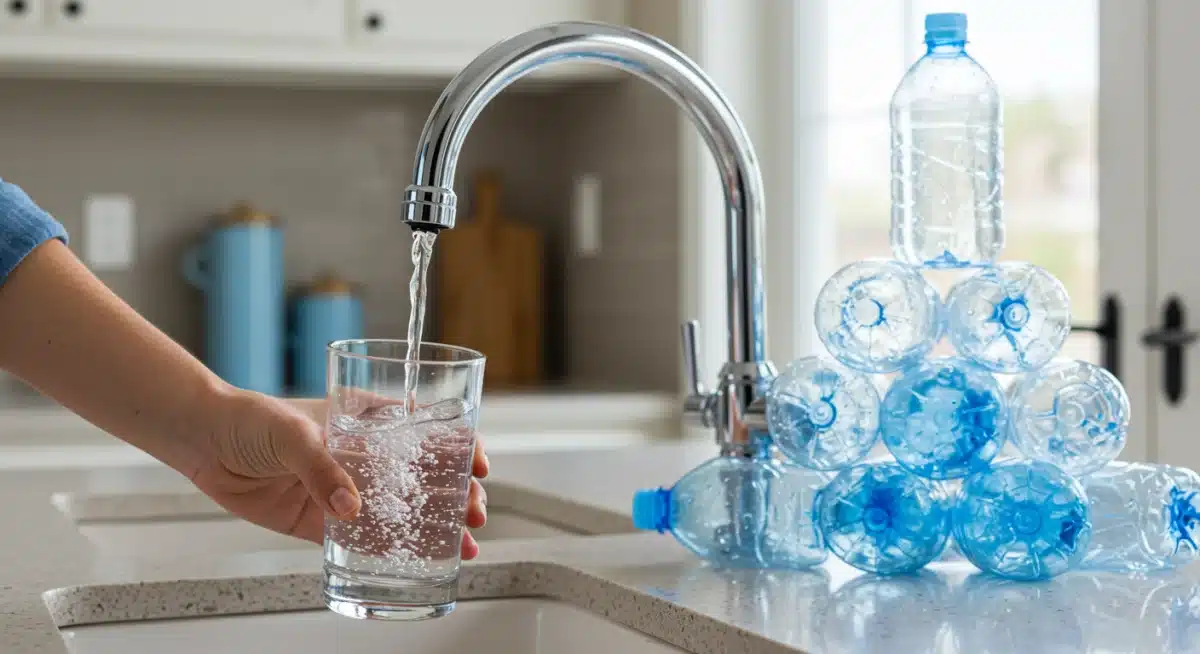
Beyond the personal health and financial benefits, choosing to install a water filter at home has a profound positive impact on the environment.
The rampant consumption of bottled water contributes significantly to plastic waste, carbon emissions, and resource depletion.
By making the switch to filtered tap water, you become part of the solution to these pressing environmental challenges.
Reducing your reliance on single-use plastic bottles is one of the most direct and impactful actions you can take.
Every year, billions of plastic bottles end up in landfills or polluting our oceans, taking hundreds of years to decompose. A home water filter provides an immediate and sustainable alternative.
Reducing plastic waste
The sheer volume of plastic waste generated by bottled water consumption is staggering. Manufacturing these bottles requires significant amounts of petroleum, and their transportation contributes to greenhouse gas emissions.
Once used, a large percentage of these bottles are not recycled, leading to environmental contamination.
Billions of plastic bottles consumed annually in the US.
Many end up in landfills or as ocean pollution.
Plastic takes hundreds of years to break down.
Manufacturing and transporting bottled water consumes vast resources.
By using a reusable water bottle filled with water from your home filter, you directly reduce your personal contribution to this plastic waste epidemic.
This simple change, adopted by millions, could lead to a dramatic decrease in plastic pollution, protecting ecosystems and wildlife.
Lowering your carbon footprint
The journey of a bottled water from its source to your refrigerator involves a considerable carbon footprint.
This includes the energy used in manufacturing the plastic bottle, purifying and bottling the water, and then transporting it across states or even continents. Each step adds to greenhouse gas emissions.
In contrast, tap water travels through existing infrastructure directly to your home, requiring minimal additional energy for filtration.
The energy required to produce and transport a single-use plastic bottle far outweighs the energy needed to filter tap water at home.
By opting for filtered tap water, you are significantly reducing your carbon footprint and supporting a more sustainable lifestyle.
This shift also reduces the demand for bottled water, encouraging companies to find more sustainable packaging solutions or for consumers to reconsider their purchasing habits.
The environmental benefits of installing a water filter are a compelling reason to make this home improvement, aligning personal well-being with global ecological responsibility. It’s a small change with a large collective impact, contributing to a healthier planet for future generations.
Choosing the right filter for your household
The decision to install a water filter is an excellent one, but selecting the right system for your specific needs is paramount.
With a myriad of options available, from simple pitchers to complex whole-house systems, understanding your water quality and household requirements will guide you to the most effective and satisfying solution.
There’s no one-size-fits-all answer, as water quality varies significantly by location, and individual preferences for convenience and budget play a crucial role.
Taking the time to assess these factors upfront will ensure you choose a filter that truly meets your expectations.
Assessing your water quality
The first and most critical step in choosing a water filter is to understand what’s in your water. While public water suppliers provide annual water quality reports, these reports represent general area conditions and may not reflect specific issues in your home, such as lead from old pipes.
Review local water quality reports: These are usually available online from your municipal water provider and list common contaminants found in your area.
Conduct a home water test: DIY test kits are available at hardware stores and can check for common issues like hardness, chlorine, lead, and nitrates.
Professional water testing: For a comprehensive analysis, consider hiring a certified laboratory. This is especially recommended if you have well water or suspect specific, serious contaminants.
Knowing what you need to filter out will narrow down your options significantly. For example, if lead is a concern, you’ll need a filter specifically certified for lead removal. If you have very hard water, a water softener might be more appropriate than a standard filter.
Considering household size and budget
Once you understand your water quality, consider your household’s daily water consumption and your budget. These factors will influence the type, size, and cost of the filtration system that makes the most sense for you.
For individuals or small households primarily concerned with drinking water and a limited budget, a filter pitcher or a faucet-mounted filter might be sufficient. These are inexpensive and require no permanent installation.
For families who consume a lot of water and want better quality for cooking, an under-sink system offers a good balance of performance and cost. These typically range from $100 to $500.
For larger homes or those with significant water quality issues, a whole-house system might be the best investment. While more expensive (ranging from $500 to $2000+ for installation), they provide filtered water to every tap, shower, and appliance.
Factor in the cost of replacement filters, which can vary from $50 to $150 annually, depending on the system. Balancing initial cost, ongoing maintenance, and desired filtration level will lead you to the ideal choice for your home.
By carefully assessing your water quality and matching it with your household’s needs and budget, you can confidently select the right water filter.
This thoughtful approach ensures that when you install a water filter, you’re investing in a solution that effectively delivers clean, safe, and great-tasting water for years to come, maximizing both your health benefits and financial savings.
Maximizing savings and long-term value
The decision to install a water filter is a strategic move that offers immediate benefits in water quality and long-term financial advantages.
To truly maximize these savings and ensure your investment provides continuous value, it’s essential to adopt smart practices beyond the initial installation.
This involves understanding the full lifecycle costs, leveraging warranties, and making informed choices about filter types and usage.
Thinking about the long game will transform your water filter from a one-time purchase into a sustainable and economical household staple.
It’s about optimizing performance, extending longevity, and consistently reaping the financial rewards.
Smart filter purchasing and usage
When purchasing your filter and replacement cartridges, look for sales, subscribe-and-save options, or buy in bulk if feasible.
Many manufacturers offer discounts for purchasing multiple filters at once, which can significantly reduce your annual maintenance costs.
Also, consider the filter’s capacity; a filter designed for higher gallonage might have a higher upfront cost but require less frequent replacement, offering better long-term value.
Compare prices from different retailers and online stores.
Sign up for manufacturer newsletters for discount codes.
Consider multi-packs for replacement cartridges to save per unit.
Choose filters with longer lifespans if your water quality allows.
Furthermore, only use filtered water for drinking and cooking where purity is essential.
For tasks like washing dishes or showering (unless you have a whole-house system), unfiltered water is often acceptable, thus extending the life of your drinking water filter cartridges.
This intelligent usage strategy ensures you’re getting the most out of each filter’s capacity without unnecessary wear.
Leveraging warranties and customer support
Most reputable water filter manufacturers offer warranties on their systems, typically covering defects in materials and workmanship for a certain period. Register your product upon purchase to ensure your warranty is active.
This can save you money on repairs or replacements if an issue arises with the unit itself, protecting your initial investment.
Don’t hesitate to utilize customer support channels if you encounter problems or have questions about your filter’s performance or maintenance.
Manufacturers often have valuable resources, including troubleshooting guides, FAQs, and direct technical assistance, which can help you resolve issues without incurring additional costs.
Sometimes, a simple adjustment or clarification can prevent the need for a costly professional service call.
By being a savvy consumer—making informed purchasing decisions, using your filter wisely, and taking advantage of available support—you can significantly enhance the long-term value of your water filtration system.
This proactive approach ensures you continue to enjoy clean, safe water while maximizing the hundreds of dollars in savings you achieve each year by avoiding bottled water. It’s an investment that keeps giving back, both to your health and your wallet.
| Key Aspect | Brief Description |
|---|---|
| Water Quality Improvement | Removes contaminants like chlorine, lead, and sediment, enhancing taste and safety. |
| Cost Savings | Eliminates bottled water expenses, saving over $500 annually for typical households. |
| Environmental Impact | Significantly reduces plastic waste and carbon footprint from bottled water production. |
| Installation & Maintenance | DIY-friendly for most types; regular filter replacement ensures optimal performance. |
Frequently asked questions about water filters
Most households can save hundreds of dollars annually, often exceeding $500. This saving comes from eliminating the need to purchase bottled water.
The initial investment in a filter system is typically recouped within the first year, making it a financially sound decision for long-term savings.
For many common types, like under-sink or faucet-mounted filters, installation is a straightforward DIY project requiring basic tools and minimal plumbing experience.
Whole-house systems can be more complex and might benefit from professional installation, but under-sink models are generally very manageable for homeowners.
Replacement frequency varies depending on the filter type, water quality, and usage. Most under-sink cartridges last 6 to 12 months.
Signs like reduced water flow or a return of unpleasant taste/odor indicate it’s time for a change. Always follow the manufacturer’s specific recommendations for optimal performance.
Water filters can remove a wide range of contaminants, including chlorine, sediment, lead, pesticides, heavy metals, and various organic compounds.
The effectiveness depends on the filter type and technology used. For specific concerns, testing your water first helps ensure you select the appropriate filtration system.
Absolutely. Using a home water filter significantly reduces your reliance on single-use plastic bottles, thereby decreasing plastic waste in landfills and oceans.
It also lowers your carbon footprint by minimizing the energy consumed in manufacturing and transporting bottled water, contributing to a more sustainable lifestyle.
Conclusion
The decision to install a water filter in your home is a powerful step towards a healthier, more economical, and environmentally conscious lifestyle.
As we’ve explored, the benefits extend far beyond just taste, encompassing significant health protection, substantial financial savings by eliminating bottled water costs, and a meaningful reduction in your environmental footprint.
With various filter types available to suit every need and budget, and straightforward installation processes for many models, there’s never been a better time to make this impactful home improvement.
Embrace the convenience, purity, and savings that come with filtered tap water, transforming how you and your family hydrate every day.