Home Automation on a Budget: 5 Smart DIY Upgrades Under $100 Each
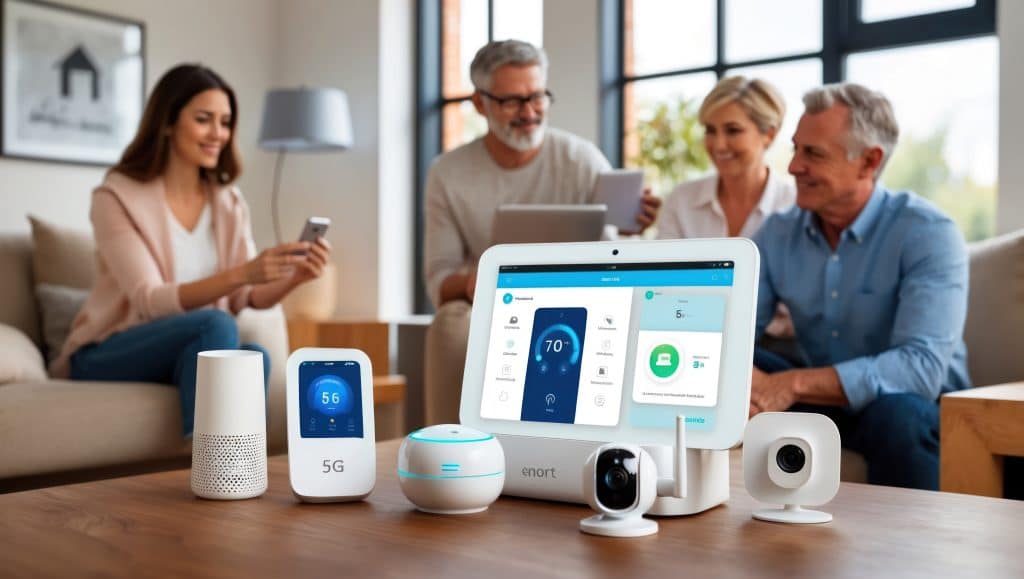 Transforming your living space into a smart home doesn’t require a substantial investment; affordable home automation on a budget is entirely achievable with five impactful DIY upgrades, each costing less than $100, enhancing convenience and efficiency.
Are you dreaming of a smarter home but worried about the hefty price tag? It’s a common misconception that home automation is an exclusive luxury. The truth is, with a little ingenuity and the right products, you can achieve significant smart home functionality without breaking the bank.
This article will guide you through Home Automation on a Budget: 5 Smart DIY Upgrades Under $100 Each, proving that convenience and efficiency are within everyone’s reach. Let’s explore how you can upgrade your living space for less.
Understanding the Basics of Budget Home Automation
Embarking on the journey of smart home integration doesn’t mean you need to invest in a complete overhaul of your existing setup.
Budget home automation is all about strategic, incremental upgrades that deliver significant impact for minimal cost. It focuses on identifying key areas where smart technology can simplify daily routines or improve energy efficiency, all while keeping a strict eye on the $100 per upgrade limit.
This approach ensures that you gain tangible benefits without financial strain, making smart living accessible to more households across America.
What Defines a “Smart” Upgrade?
A smart upgrade isn’t just about adding Wi-Fi connectivity to an appliance; it’s about intelligent control, automation, and data insights.
These devices typically connect to your home network, allowing you to manage them remotely via a smartphone app, voice commands, or automated schedules.
The “smart” aspect comes from their ability to learn your preferences, interact with other devices, and provide feedback that helps optimize their performance and your home’s overall efficiency.
This level of control and insight is what truly differentiates a smart device from its traditional counterpart, offering a new dimension of convenience and security.
Remote Control: Operate devices from anywhere using your smartphone.
Scheduling: Automate tasks like turning lights on/off at specific times.
Voice Integration: Control devices hands-free using smart assistants.
Energy Monitoring: Track power consumption to identify saving opportunities.
The beauty of these budget-friendly smart upgrades lies in their ease of installation and integration. Most are designed for DIY enthusiasts, requiring no professional help or complex wiring.
This not only saves on installation costs but also empowers homeowners to take control of their smart home journey.
By starting with individual, affordable components, you can gradually build a comprehensive smart home ecosystem that perfectly suits your needs and budget, adding layers of convenience and sophistication over time without feeling overwhelmed.
In essence, budget home automation is a practical and empowering way to step into the future of living. It demystifies smart technology, making it approachable and affordable for the average American household.
By understanding what constitutes a smart upgrade and embracing the DIY spirit, you’re well on your way to a more efficient, convenient, and secure home environment, all while respecting your financial limits. The focus remains on value, ensuring every dollar spent delivers a noticeable improvement to your daily life.
Upgrade 1: Smart Plugs – The Gateway to Smart Living
Smart plugs are arguably the simplest and most cost-effective entry point into the world of home automation. For well under $100, you can turn almost any “dumb” appliance into a smart one, instantly adding remote control, scheduling, and even voice command capabilities.
Imagine turning off your curling iron from work or scheduling your coffee maker to brew a fresh pot just as you wake up. These small devices offer immense convenience and peace of mind, making them an indispensable first step for anyone looking to embrace home automation on a budget.
Installation and Setup: Simplicity Itself
The appeal of smart plugs extends beyond their low cost to their incredibly straightforward installation.
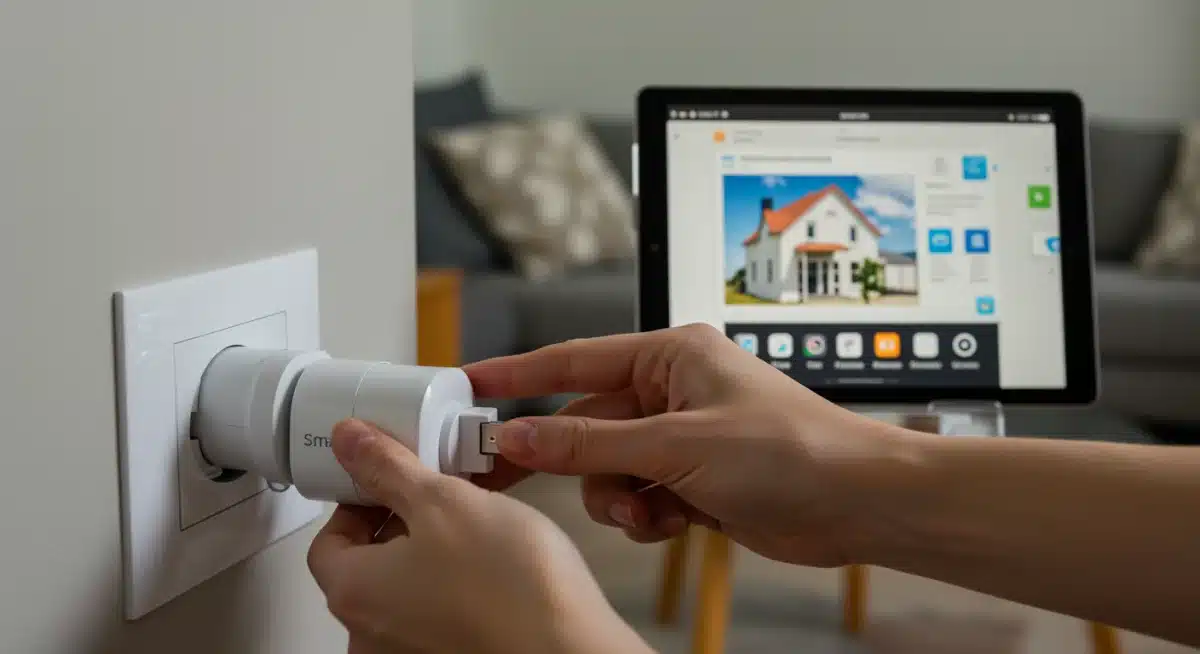
Typically, you just plug the smart plug into an existing wall outlet, then plug your appliance into the smart plug. After downloading the manufacturer’s app and connecting the plug to your home Wi-Fi network, you’re ready to go.
The entire process often takes mere minutes, requiring no special tools or technical expertise. This ease of setup makes them perfect for renters or those hesitant about complex installations, offering immediate gratification and functionality.
Plug and Play: No wiring or complex installation required.
App Control: Manage devices from your smartphone, anywhere.
Voice Assistant Integration: Compatible with popular platforms like Alexa and Google Assistant.
Scheduling Features: Automate daily routines for lights, fans, and more.
Beyond convenience, smart plugs can also contribute to energy savings. Many models offer energy monitoring features, allowing you to track the power consumption of connected devices.
This insight can help identify “vampire” devices that draw power even when turned off, enabling you to proactively unplug them or schedule them to power down completely when not in use.
Over time, these small savings can add up, further justifying the modest initial investment and aligning with the ethos of smart, efficient living.
In conclusion, smart plugs are a powerful introductory tool for anyone seeking to dip their toes into home automation without a significant financial commitment. Their affordability, ease of use, and versatile applications make them an ideal starting point for transforming everyday appliances into smart, controllable devices.
By integrating smart plugs into your home, you’re not just adding convenience; you’re taking a tangible step towards a more connected and energy-conscious lifestyle, all within a budget-friendly framework.
Upgrade 2: Smart Lighting – Ambiance and Efficiency for Less
Smart lighting has evolved from a luxury item to an accessible upgrade that significantly enhances both ambiance and energy efficiency in any home. For under $100, you can replace several traditional bulbs with smart LED alternatives, unlocking a world of customizable lighting scenes, remote control, and scheduling options.
This transformation not only allows you to set the perfect mood for any occasion but also contributes to lower electricity bills, making it a brilliant choice for home automation on a budget.
Beyond Basic On/Off: The Power of Smart Bulbs
Unlike traditional bulbs, smart LEDs offer a spectrum of possibilities. Many can change color, adjust brightness, and even shift color temperature from warm to cool white, all controllable via an app or voice commands.
Imagine dimming the lights for a movie night with a simple voice prompt or setting a vibrant color scheme for a party. These features add a dynamic layer to your home’s atmosphere, adapting to your activities and preferences throughout the day.

Customizable Colors & Brightness: Tailor your lighting to any mood or activity.
Energy Savings: LED technology consumes significantly less power.
Remote Access: Turn lights on/off or adjust settings from anywhere.
Scheduling & Routines: Automate lighting to align with your daily schedule.
The energy efficiency of smart LED bulbs is a major draw. LEDs inherently use less electricity than incandescent bulbs, and when combined with smart features like scheduling and presence detection (if integrated with other sensors), the savings can be substantial.
You can program lights to turn off automatically when a room is vacant or dim themselves during certain hours, reducing wasted energy without any conscious effort on your part. This dual benefit of enhanced convenience and reduced operating costs makes smart lighting an exceptionally smart investment.
Installation is as simple as screwing in a light bulb. Most smart bulbs connect directly to your Wi-Fi, eliminating the need for a separate hub, though some brands offer hubs for extended functionality.
This straightforward setup ensures that anyone can upgrade their lighting system in minutes, instantly experiencing the benefits of a smarter, more responsive home. Smart lighting is not just about illumination; it’s about creating an intelligent, efficient, and aesthetically pleasing environment that adapts to your life, all while staying within an affordable budget.
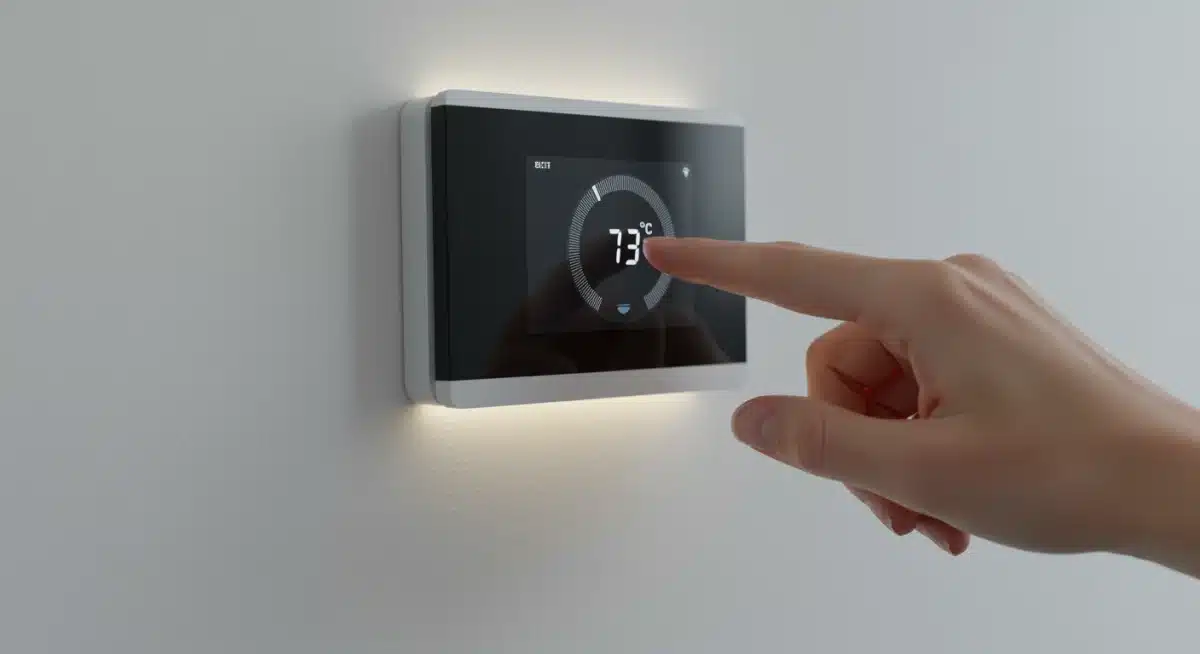
Upgrade 3: Smart Thermostats – Intelligent Climate Control
Managing your home’s climate effectively is crucial for comfort and energy conservation, and a smart thermostat offers an excellent solution for under $100.
While some high-end models exceed this budget, several reputable brands offer feature-rich smart thermostats that fall within our price range, providing significant long-term savings on utility bills.
This upgrade allows for precise temperature control, remote adjustments, and intelligent scheduling, making it a cornerstone of any truly smart and efficient home, perfectly aligning with the goals of home automation on a budget.
Saving Energy with Smart Learning
One of the most compelling features of a smart thermostat is its ability to learn your preferences and adapt to your schedule. Over time, it can recognize when you’re home or away, adjusting temperatures accordingly to minimize energy waste.
Many models also offer geofencing capabilities, meaning they can detect when you leave or approach home using your smartphone’s location and adjust the thermostat automatically. This proactive approach to climate control ensures comfort when needed and savings when not.
Remote Temperature Control: Adjust your home’s climate from anywhere.
Learning Capabilities: Adapts to your schedule and preferences over time.
Energy Reports: Gain insights into your heating and cooling usage.
Voice Command Integration: Change settings hands-free with smart assistants.
Installation typically involves replacing your existing thermostat, which can be a DIY project for those comfortable with basic wiring. Manufacturers provide clear instructions, and many offer online tutorials to guide you through the process step-by-step.
While it might be slightly more involved than plugging in a smart plug, the potential for significant energy savings makes the effort well worth it. These thermostats also often integrate with other smart home devices, allowing for a more cohesive and automated environment.
The investment in a smart thermostat quickly pays for itself through reduced energy consumption. By optimizing your heating and cooling, you can see a noticeable decrease in your monthly utility bills, sometimes within the first year.
This makes smart thermostats not just a convenience upgrade but a financially savvy decision for any homeowner looking to enhance their home’s intelligence and efficiency without overspending. It’s a prime example of how smart technology can deliver tangible returns, reinforcing the value of budget-conscious home automation.
Upgrade 4: Smart Door/Window Sensors – Enhanced Security and Automation
For those prioritizing security and subtle automation, smart door and window sensors are an incredibly effective and affordable solution, often available in multipacks for under $100.
These small, unobtrusive devices detect when a door or window is opened or closed, sending alerts to your smartphone and enabling a host of automation possibilities. They provide an extra layer of peace of mind, whether you’re home or away, making them a valuable addition to any home automation on a budget setup.
Beyond Security: Automation Triggers
While their primary function is security, smart sensors offer much more. They can act as triggers for other smart devices. For example, you could set up an automation where the lights in a room turn on automatically when a door opens, or your smart thermostat adjusts if a window is left open.
This interconnectedness is where the true power of smart home ecosystems lies, creating a responsive and intuitive living space without constant manual intervention.
Real-time Alerts: Receive notifications when a door or window is opened.
Seamless Integration: Connects with other smart devices for advanced routines.
Easy DIY Installation: Typically uses adhesive backing, no tools required.
Enhanced Security: Monitors entry points for unauthorized access.
Installation is remarkably simple, usually involving peeling off an adhesive backing and sticking the two sensor pieces to a door or window frame. One piece attaches to the frame, and the other to the moving part of the door or window.
When the connection between the two pieces is broken, the sensor registers an “open” event. This DIY-friendly setup means you can secure multiple entry points in minutes, without the need for professional installation or drilling.
The versatility of these sensors makes them a fantastic budget-friendly upgrade. They can be used to monitor the opening of cabinets, drawers, or even pet gates, offering insights into household activity. For families with children, they can provide alerts if a restricted area is accessed.
By providing both security and automation capabilities, smart door and window sensors demonstrate how small, affordable devices can have a significant impact on both the safety and intelligence of your home, proving that smart home security doesn’t have to be expensive.
Upgrade 5: Smart Assistant Speakers – The Command Center for Under $100
While not strictly an “automation” device in itself, a smart assistant speaker is the essential command center that ties many budget-friendly smart home upgrades together, and several excellent models are available for under $100.
Devices like the Amazon Echo Dot or Google Nest Mini provide voice control for your smart plugs, lights, and thermostats, making your automated home truly hands-free and intuitive. This central hub is crucial for maximizing the convenience of your other smart devices, making it an invaluable part of any home automation on a budget strategy.
Voice Control: The Ultimate Convenience
The ability to control your smart home devices with simple voice commands is a game-changer. Instead of fumbling for your phone to adjust the lights or turn on a fan, you can simply speak your command, and your smart assistant speaker will execute it.
This hands-free operation is particularly useful when your hands are full, or you’re across the room, adding a layer of effortless convenience to your daily life. It transforms your smart home from a collection of devices into a truly responsive environment.
Centralized Control: Manage all compatible smart devices with voice.
Information Hub: Get weather, news, and answer questions instantly.
Music & Entertainment: Stream audio directly from the speaker.
Intercom Functionality: Communicate between rooms with multiple speakers.
Beyond controlling smart devices, these compact speakers offer a wealth of other functionalities. They can play music, set alarms, provide weather updates, answer questions, and even make calls.
They become a versatile helper in your home, streamlining various aspects of your daily routine. Many can also be linked to create a multi-room audio system, enhancing your entertainment experience without requiring expensive dedicated audio equipment.
Setting up a smart assistant speaker is typically very easy. You plug it in, connect it to your Wi-Fi network via a companion app, and then link your existing smart devices.
The apps often guide you through the process of discovering and integrating new devices, making the setup seamless even for tech novices. Once connected, you can start issuing commands immediately, bringing your smart home to life with your voice.
For under $100, a smart assistant speaker provides incredible value by unifying your smart home experience. It acts as the brain and voice of your budget automation system, making all your other smart upgrades more accessible and enjoyable.
Without this central control point, the full potential of your smart plugs, lights, and sensors might go untapped. It’s an investment that amplifies the convenience and functionality of every other smart device you add, solidifying its place as a top budget-friendly upgrade.
Maximizing Your Budget Automation: Tips and Tricks
Venturing into home automation on a budget requires not only selecting the right devices but also understanding how to maximize their potential through strategic planning and integration.
It’s about getting the most bang for your buck, ensuring that each under-$100 upgrade works cohesively to create a truly smart and efficient living space.
By focusing on compatibility, starting small, and leveraging automation routines, you can build a sophisticated smart home without overspending.
Compatibility is Key
Before purchasing any smart device, always check its compatibility with existing platforms or devices you plan to acquire.
Most budget-friendly options work with major ecosystems like Amazon Alexa, Google Home, or Apple HomeKit. Sticking to one ecosystem, or ensuring cross-compatibility, simplifies management and allows your devices to communicate seamlessly.
For instance, if you already have an Echo Dot, prioritize smart plugs and bulbs that explicitly state “Works with Alexa” to avoid frustrating integration issues. A unified system makes creating automation routines much smoother.
Research Compatibility: Ensure new devices work with your existing smart home ecosystem.
Start Small: Begin with one or two devices and expand gradually.
Utilize Routines/Scenes: Automate multiple actions with a single command or schedule.
Regular Updates: Keep device firmware and apps updated for optimal performance.
Starting small is a powerful strategy. Instead of trying to automate your entire home at once, pick one area or one specific problem you want to solve. Perhaps it’s automating your living room lights or monitoring a specific door.
This allows you to learn the ropes, understand how different devices interact, and identify what truly adds value to your daily life. As you gain confidence and experience, you can gradually expand your smart home, making informed decisions about future purchases and staying within your budget.
Leveraging automation routines and scenes is where the magic truly happens. Most smart home apps allow you to create custom routines that trigger multiple actions based on specific conditions.
For example, a “Good Morning” routine could turn on your bedroom lights, start the coffee maker (via a smart plug), and adjust the thermostat to a comfortable temperature.
A “Leaving Home” routine could turn off all lights, lock smart doors (if you upgrade later), and arm security sensors. These routines transform individual devices into a symphony of automated convenience, maximizing the value of each budget upgrade.
By carefully considering compatibility, adopting an incremental approach, and mastering automation routines, you can build an impressive and highly functional smart home on a budget.
Each under-$100 upgrade, when thoughtfully integrated, contributes to a more convenient, secure, and energy-efficient living environment, proving that smart living is accessible to everyone.
The Long-Term Benefits of Smart Home Investment
While the initial focus of home automation on a budget is on immediate, affordable upgrades, it’s crucial to consider the long-term benefits these investments yield.
Beyond the obvious convenience, smart home technology can significantly enhance your home’s value, improve energy efficiency, and provide a greater sense of security over time.
These cumulative advantages make even small, budget-friendly upgrades a smart financial and lifestyle decision for American homeowners.
Increased Home Value and Appeal
In today’s real estate market, homes equipped with smart technology are often more attractive to potential buyers. Features like smart thermostats, lighting, and security sensors are no longer niche luxuries but desirable amenities that indicate a modern, efficient, and well-maintained property.
Even a few budget-friendly smart upgrades can subtly increase your home’s appeal and potentially its resale value, offering a return on your modest investment when it comes time to sell.
Enhanced Resale Value: Smart features are a selling point for modern buyers.
Significant Energy Savings: Lower utility bills over the lifespan of devices.
Improved Security: Remote monitoring and alerts for peace of mind.
Greater Convenience: Streamlined daily routines and effortless control.
The ongoing energy savings from smart lighting and thermostats contribute significantly to your household budget over the years. Smart LEDs last much longer than traditional bulbs, reducing replacement costs, while smart thermostats optimize heating and cooling, leading to lower monthly utility bills.
These accumulated savings can often surpass the initial investment in the devices, demonstrating the financial prudence of adopting smart home technologies, even on a tight budget. It’s an investment that keeps paying dividends.
Furthermore, the enhanced security offered by smart door/window sensors provides invaluable peace of mind. Knowing you’ll receive instant alerts if an entry point is compromised, or being able to remotely check the status of your home, adds a layer of protection that traditional homes lack.
This proactive security, coupled with the daily convenience of voice control and automated routines, creates a living environment that is not only smarter but also safer and more enjoyable.
In conclusion, while the initial cost of individual smart devices may be low, the long-term benefits of investing in home automation on a budget are substantial.
From increasing your home’s marketability and reducing energy expenses to providing enhanced security and unparalleled convenience, these upgrades offer a compelling package of advantages. Embracing smart technology, even incrementally, is a forward-thinking decision that enriches your living experience and provides tangible returns for years to come.
| Upgrade Type | Key Benefit |
|---|---|
| Smart Plugs | Turns any appliance smart, remote control, scheduling. |
| Smart Lighting | Customizable ambiance, significant energy savings. |
| Smart Thermostats | Intelligent climate control, substantial utility bill reduction. |
| Smart Assistant Speakers | Voice command hub, centralizes smart home control. |
Frequently Asked Questions About Budget Home Automation
Can I really automate my home for under $100 per device?
Yes! Budget home automation is more accessible than ever. Many entry-level smart devices—such as smart plugs, single smart bulbs, and basic door or window sensors—are widely available for under $100. Even compact smart assistant speakers often fit this price range, allowing you to expand your automation setup gradually without overspending.
Do I need a central hub for budget automation devices?
Not always. Many modern budget automation devices connect directly to your home Wi-Fi, removing the need for a dedicated hub. That said, a smart assistant speaker can function as a centralized control point, making it easier to manage devices and use voice commands across your automation system.
Are DIY automation upgrades difficult to install?
Most budget automation upgrades are designed with DIY users in mind. Smart plugs simply connect to outlets, smart bulbs install like standard bulbs, and sensors typically attach with adhesive strips.
While smart thermostats may require basic wiring knowledge, clear instructions and online guides make the automation process manageable for many homeowners.
Can budget home automation actually save money on utility bills?
Absolutely. Home automation can lead to real energy savings. Smart lighting reduces electricity use, smart thermostats optimize heating and cooling schedules, and energy-monitoring smart plugs help identify power-hungry devices. Over time, these automation features can noticeably lower monthly utility costs.
What’s the best first step for beginners in home automation?
Starting with smart plugs is one of the easiest ways to explore home automation. They’re affordable, simple to install, and instantly add scheduling and remote control to everyday appliances. This low-risk entry point builds confidence and creates a strong foundation for future automation upgrades.
Conclusion
Embracing home automation on a budget is not just a possibility; it’s an accessible reality for every American homeowner.
By strategically implementing smart plugs, lighting, thermostats, door/window sensors, and a smart assistant speaker, all for under $100 each, you can significantly enhance your home’s convenience, security, and energy efficiency.
These DIY upgrades prove that a smarter home doesn’t require a hefty investment but rather a thoughtful approach to technology.
Start small, expand wisely, and enjoy the myriad benefits of a connected living space that truly works for you.