Mindfulness for Stress: 15 Minutes Daily Reduces Anxiety
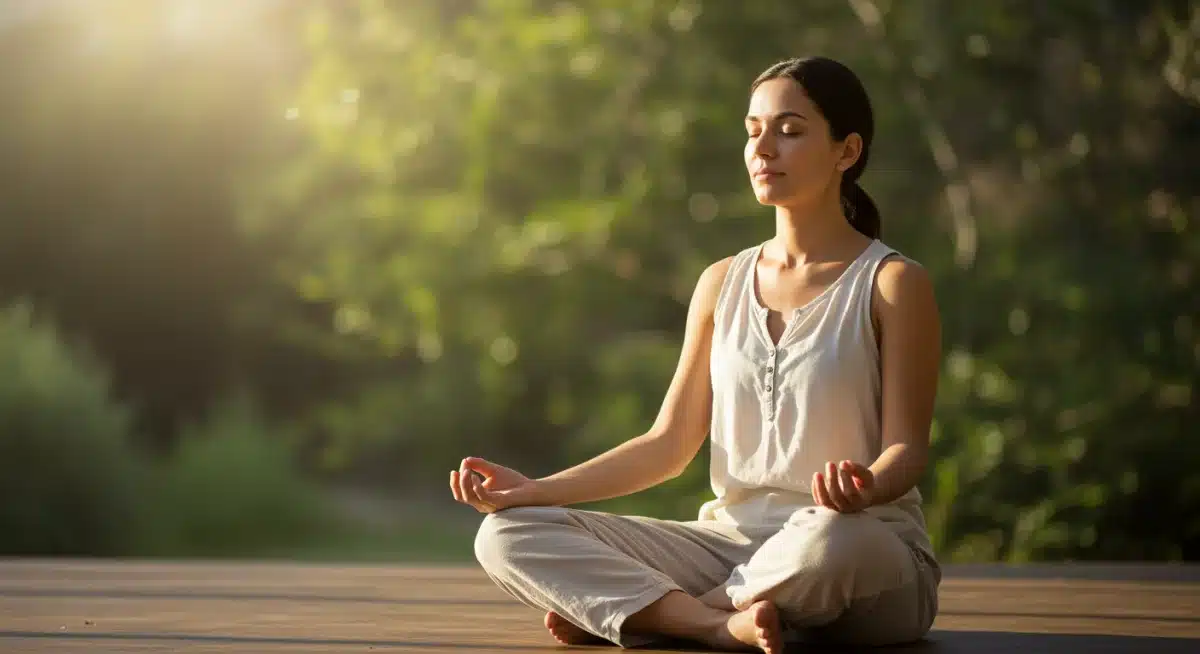
 In the fast-paced rhythm of American life, finding moments of calm can feel like a luxury. Yet, the profound benefits of integrating mindfulness stress anxiety reduction techniques into your daily routine are more accessible than you might think.
This article will guide you through understanding how just 15 minutes a day can transform your mental landscape, offering a powerful antidote to the pervasive challenges of modern stress and anxiety.
Understanding mindfulness: more than just meditation
Mindfulness is often misunderstood as simply meditation, but it encompasses a much broader concept. It is fundamentally about bringing your full attention to the present moment, observing your thoughts, feelings, and bodily sensations without judgment.
This practice cultivates a deeper awareness of your internal and external experiences, allowing you to respond to life’s challenges with greater clarity and calm.
The roots of mindfulness trace back thousands of years to ancient contemplative traditions, yet its application in contemporary psychology and stress reduction is remarkably modern.
It’s not about emptying your mind, but rather about noticing what’s there, acknowledging it, and letting it pass without getting carried away by it. This foundational understanding is crucial for anyone looking to harness its power.
The core principles of mindful living
At its heart, mindful living revolves around several key principles that can be integrated into everyday activities, not just formal meditation sessions. These principles act as a guide to help individuals cultivate a more present and appreciative approach to life.
Non-judgment: Observing thoughts and feelings without labeling them as good or bad.
Patience: Understanding that things unfold in their own time and accepting the present as it is.
Beginner’s mind: Approaching each moment with fresh eyes, as if seeing it for the very first time.
Trust: Believing in your own intuition and inner wisdom.
These principles work in concert to create a mental environment where stress and anxiety have less power. By applying them, individuals can develop a more resilient mindset, better equipped to handle the inevitable ups and downs of daily life. The goal is not to eliminate challenges, but to change your relationship with them.
Distinguishing mindfulness from other practices
While often used interchangeably, mindfulness differs from other forms of meditation. Many meditation practices focus on specific outcomes, such as transcendence or deep relaxation.
Mindfulness, however, emphasizes awareness of the present moment and non-judgmental observation. This distinction is vital because it explains why mindfulness can be so effective for reducing stress and anxiety, as it directly addresses the mental patterns that contribute to these states.
For example, some meditation forms might involve chanting or visualizing specific scenes. Mindfulness, while it can incorporate guided imagery, fundamentally centers on noticing the breath, sounds, and sensations as they occur.
This direct engagement with reality, rather than an escape from it, is what makes mindfulness a unique and powerful tool for mental well-being.
In essence, mindfulness offers a practical, accessible path to greater peace and resilience. It teaches us to pause, observe, and respond thoughtfully rather than react impulsively.
This shift in perspective is the first step towards a life where stress and anxiety are managed more effectively, paving the way for deeper contentment.
The science behind mindfulness: how it reduces stress and anxiety
The effectiveness of mindfulness in combating stress and anxiety isn’t just anecdotal; it’s backed by a growing body of scientific research. Studies have revealed significant neurological and physiological changes that occur with regular mindfulness practice, explaining its profound impact on mental well-being.
Understanding these mechanisms can further motivate individuals to incorporate this powerful practice into their daily lives.
One of the primary ways mindfulness works is by altering brain structures and functions. Specifically, it has been shown to reduce activity in the amygdala, the brain’s fear center, while increasing connectivity in the prefrontal cortex, which is responsible for executive functions like attention and emotional regulation.
This rebalancing allows for a more measured response to stressors rather than an automatic fight-or-flight reaction.
Neurological changes and emotional regulation
Regular mindfulness practice leads to measurable changes in brain activity, particularly in areas associated with emotional processing and self-awareness.
The insula, for instance, which plays a role in interoception (awareness of internal bodily states), shows increased grey matter density in experienced meditators.
This heightened awareness of bodily sensations can help individuals recognize the early signs of stress and anxiety, allowing them to intervene before these feelings escalate.
Reduced amygdala activity: The brain’s alarm system becomes less reactive to perceived threats.
Increased prefrontal cortex activation: Enhances attention, decision-making, and emotional control.
Improved insula connectivity: Fosters greater awareness of internal bodily signals, aiding in early stress detection.
Enhanced neuroplasticity: The brain’s ability to reorganize itself by forming new neural connections, adapting to new experiences and learning.
These neurological shifts contribute to better emotional regulation, enabling individuals to observe their emotions without being overwhelmed by them.
Instead of reacting impulsively to stressors, mindful individuals can choose a more constructive response, leading to a significant reduction in chronic stress and anxiety levels.
Physiological benefits and stress markers
Beyond the brain, mindfulness also impacts various physiological markers of stress. Research indicates that consistent practice can lower heart rate, reduce blood pressure, and decrease levels of cortisol, the body’s primary stress hormone.
These changes collectively contribute to a healthier physiological state, alleviating the physical toll that chronic stress can take on the body.
For instance, a study published in the journal Health Psychology found that participants who engaged in an 8-week mindfulness-based stress reduction (MBSR) program exhibited lower levels of inflammatory markers and improved immune function.
This suggests that mindfulness not only helps manage the psychological aspects of stress but also bolsters the body’s natural defenses against stress-related illnesses.
The deep relaxation achieved through mindfulness also activates the parasympathetic nervous system, often referred to as the ‘rest and digest’ system. This counteracts the ‘fight or flight’ response triggered by stress, promoting a state of calm and recovery.
By consistently activating this system, individuals can train their bodies to be less reactive to everyday stressors, fostering long-term resilience.
In summary, the scientific evidence strongly supports mindfulness as a powerful intervention for reducing stress and anxiety. Its ability to reshape brain function, enhance emotional regulation, and improve physiological health markers makes it an invaluable tool for promoting overall well-being.
This scientific validation provides a compelling reason to embrace mindfulness as a core component of a healthy lifestyle.
The 15-minute daily practice: simple yet powerful techniques
The beauty of mindfulness lies in its accessibility. You don’t need hours of dedicated time or a special retreat to experience its benefits. Just 15 minutes a day can make a remarkable difference in managing stress and anxiety.
The key is consistency and a willingness to engage with simple, yet powerful, techniques that can be easily integrated into your busy schedule.
These short practices are designed to cultivate present moment awareness, helping you to disengage from anxious thoughts and stressful ruminations.
They can be performed anywhere – at home, at work, or even during your commute. The goal is not perfection, but rather the consistent effort to bring your attention back to the present, each time your mind wanders.
Guided breathing meditation
One of the most fundamental and effective mindfulness techniques is guided breathing meditation. This involves focusing your attention on the sensation of your breath as it enters and leaves your body.
Many apps and online resources offer guided meditations that can walk you through this process, making it easy for beginners to get started.
Find a quiet space: Choose a spot where you won’t be disturbed for 15 minutes.
Comfortable posture: Sit or lie down in a position that allows you to be alert yet relaxed.
Focus on breath: Bring your attention to the natural rhythm of your breath, noticing the inhale and exhale.
Observe thoughts: When your mind wanders, gently bring your attention back to your breath without judgment.
This practice helps to anchor you to the present moment, interrupting the cycle of anxious thoughts. With regular practice, you’ll find it easier to return to this calm state even when not formally meditating, serving as an effective tool for mindfulness stress anxiety reduction.
Mindful walking or movement
Mindfulness doesn’t always require sitting still. Mindful walking or engaging in conscious movement can be equally powerful.
This involves paying attention to the sensations of walking – the feel of your feet on the ground, the movement of your legs, the swing of your arms, and the rhythm of your breath. Even a short walk around your block can become a mindful practice.
Similarly, mindful movement can be incorporated into daily activities like stretching or doing simple chores.
The key is to fully immerse yourself in the physical sensations and the present action, rather than letting your mind drift to worries about the past or future. This active form of mindfulness helps to release physical tension while calming the mind.
Body scan meditation
A body scan meditation involves systematically bringing your attention to different parts of your body, noticing any sensations without trying to change them.
This practice helps to build a stronger connection between your mind and body, increasing awareness of physical tension and promoting deep relaxation. It’s particularly effective for those who tend to intellectualize their stress or carry tension in specific areas of their body.
By dedicating just 15 minutes a day to these practices, you can gradually rewire your brain to be less reactive to stressors and more attuned to the present.
The cumulative effect of these short, consistent efforts is a significant reduction in overall stress and anxiety, leading to a more peaceful and balanced life.
Integrating mindfulness into your busy American lifestyle
In a society that often glorifies constant productivity and multitasking, the idea of slowing down for mindfulness can seem counterintuitive.
However, integrating mindfulness into a busy American lifestyle isn’t about adding another task to your plate; it’s about shifting your approach to existing activities. It’s about finding pockets of presence amidst the hustle and bustle, transforming mundane moments into opportunities for calm and awareness.
The key to successful integration is to start small and be flexible. Don’t aim for perfection, but rather for consistency and a genuine desire to connect with the present moment. Mindfulness is a practice, not a destination, and every moment of awareness contributes to your overall well-being.
Mindful eating and drinking
One of the easiest ways to practice mindfulness throughout your day is during meals and drinks. Instead of rushing through your food while distracted by screens or thoughts, take a few moments to truly experience what you’re consuming. Notice the colors, textures, aromas, and tastes. Chew slowly and pay attention to the sensations in your mouth and throat.
Observe: Look at your food, noticing its appearance.
Smell: Take a moment to inhale the aromas.
Taste: Savor each bite, identifying different flavors and textures.
Chew slowly: Pay attention to the process of chewing and swallowing.
Mindful eating not only enhances your enjoyment of food but also helps you become more attuned to your body’s hunger and fullness cues, potentially leading to healthier eating habits and a reduction in stress around meal times.
Mindful pauses throughout the day
Throughout your workday or daily routine, intentionally create brief mindful pauses. These can be as short as 30 seconds to a minute and involve simply stopping what you’re doing and bringing your attention to your breath or your immediate surroundings.
For instance, before answering a phone call, take three deep breaths. Before opening an email, pause and notice the feeling of your hands on the keyboard.
These micro-moments of mindfulness act as reset buttons, preventing stress from accumulating and helping you to approach each task with renewed focus and clarity.
They are particularly valuable in high-pressure environments, offering a quick and effective way to manage rising tension and maintain a sense of control.
Creating mindful routines
Establishing mindful routines can help embed the practice into your daily life without it feeling like an extra chore. This could involve a mindful morning routine, such as taking a few minutes to silently drink your coffee or tea, fully present with the warmth of the mug and the taste of the beverage.
Or, it could be a mindful evening routine, where you spend a few minutes reflecting on your day with gratitude, before bed.
By intentionally weaving mindfulness into the fabric of your day, you transform ordinary moments into opportunities for peace and self-awareness.
This consistent integration reinforces the benefits of your 15-minute formal practice, leading to a profound and lasting reduction in stress and anxiety, making mindfulness stress anxiety management a natural part of your life.
Overcoming common challenges in mindfulness practice
While the concept of mindfulness is simple, the practice itself can present challenges, especially for beginners. The mind is accustomed to wandering, planning, and worrying, making it difficult to stay present.
However, understanding and addressing these common hurdles can help you maintain consistency and deepen your practice, ultimately enhancing your ability to reduce stress and anxiety.
It’s important to approach these challenges with patience and self-compassion. Mindfulness is not about achieving a perfect state of calm, but rather about the continuous effort of returning to the present moment, even when distractions arise.
Each time you notice your mind wandering and gently bring it back, you are strengthening your mindful muscle.


Dealing with a wandering mind
Perhaps the most common challenge in mindfulness is the wandering mind. It’s natural for thoughts to arise during meditation or mindful activities.
The key is not to fight these thoughts or judge yourself for having them, but to simply acknowledge them and gently guide your attention back to your chosen anchor, whether it’s your breath, bodily sensations, or the sounds around you.
Acknowledge thoughts: Notice when your mind has wandered without judgment.
Release gently: Imagine thoughts as clouds passing by, letting them go.
Return to anchor: Gently redirect your focus back to your breath or sensory experience.
Practice patience: Understand that this is a continuous process, not a one-time achievement.
Each time you bring your attention back, you are reinforcing the neural pathways associated with focus and present moment awareness. This consistent effort is what ultimately leads to greater mental clarity and a reduction in the ruminative thinking that often fuels anxiety.
Managing discomfort and boredom
Another challenge can be experiencing discomfort or boredom during mindfulness practice. Sometimes, when we slow down, we become more aware of physical aches, emotional unease, or simply a sense of restlessness. It’s tempting to stop or distract ourselves, but mindfulness encourages us to lean into these sensations with curiosity rather than aversion.
For boredom, consider exploring different mindfulness techniques, such as mindful walking or focusing on different senses. For discomfort, acknowledge it without judgment.
Sometimes, simply observing the sensation without trying to change it can cause it to lessen or even disappear. This practice builds resilience and a greater capacity to tolerate difficult emotions, which is vital for effective mindfulness stress anxiety management.
Finding consistent motivation
Maintaining motivation for a daily practice can also be difficult, especially when immediate results aren’t apparent.
It helps to remember that mindfulness is a cumulative practice; its benefits unfold over time. Setting realistic expectations and celebrating small victories can help sustain your motivation.
Consider joining a mindfulness group or finding an accountability partner. Reading about the experiences of others or revisiting the scientific benefits can also serve as powerful motivators.
Remind yourself why you started this journey – to reduce stress, manage anxiety, and cultivate greater peace in your life. By addressing these common challenges head-on, you can cultivate a more robust and rewarding mindfulness practice.
Long-term benefits of sustained mindfulness practice
While the immediate effects of mindfulness in reducing stress and anxiety are compelling, the long-term benefits of a sustained practice are truly transformative.
Regular engagement with mindfulness extends beyond momentary calm, fostering deep-seated changes in psychological well-being, emotional resilience, and even physical health. It’s an investment in your future self, promising a more balanced and fulfilling life.
The consistent effort of bringing awareness to the present moment gradually reshapes your relationship with challenges, allowing you to navigate life’s complexities with greater ease and wisdom.
These enduring benefits highlight why mindfulness is not just a temporary fix, but a powerful tool for lifelong growth and well-being.
Enhanced emotional well-being and resilience
One of the most significant long-term benefits of mindfulness is an enhanced capacity for emotional regulation and increased resilience.
Over time, practitioners develop a greater ability to observe their emotions without being consumed by them. This leads to fewer emotional outbursts, a reduced tendency to ruminate on negative experiences, and a more stable mood overall.
Greater emotional stability: Less susceptible to mood swings and extreme emotional reactions.
Increased self-compassion: A kinder, more understanding attitude towards oneself.
Improved coping mechanisms: Better equipped to handle life’s stressors and setbacks.
Reduced rumination: Less time spent dwelling on negative thoughts and worries.
This emotional resilience is not about avoiding difficult feelings, but about developing the inner strength to face them with equanimity.
It allows individuals to bounce back from adversity more quickly and maintain a sense of inner peace even amidst external turmoil, making mindfulness stress anxiety management a natural part of daily existence.
Improved cognitive function and focus
Beyond emotional benefits, sustained mindfulness practice has been linked to significant improvements in cognitive function. Regular meditation can enhance attention span, improve working memory, and boost problem-solving abilities.
This is partly due to the structural and functional changes it induces in the brain, particularly in areas associated with executive functions.
Individuals who practice mindfulness consistently often report greater clarity of thought, improved decision-making skills, and a reduced tendency to be distracted.
In a world saturated with information and constant demands on our attention, this enhanced cognitive control is an invaluable asset, leading to greater productivity and a more focused approach to tasks.
Better physical health and sleep quality
The mind-body connection is profound, and the long-term practice of mindfulness underscores this relationship.
Chronic stress and anxiety are known contributors to various physical ailments, from cardiovascular issues to weakened immune function. By consistently reducing these mental states, mindfulness can have a protective effect on physical health.
Furthermore, many individuals find that regular mindfulness practice significantly improves their sleep quality.
By calming the mind and reducing pre-sleep anxiety, mindfulness helps the body and mind transition more smoothly into restorative sleep. This, in turn, has a ripple effect on overall energy levels, mood, and physical health, creating a virtuous cycle of well-being.
In essence, mindfulness is not just a technique for immediate relief, but a pathway to a more resilient, focused, and healthier life. Its long-term benefits underscore its value as a fundamental practice for anyone seeking sustained well-being in the modern world.
Expanding your mindfulness journey: beyond 15 minutes
While the 15-minute daily practice serves as an excellent foundation for managing stress and anxiety, the journey of mindfulness is expansive and can be continually deepened.
Once you’ve established a consistent routine and experienced the initial benefits, you might feel compelled to explore further. Expanding your mindfulness journey doesn’t necessarily mean meditating for hours; it means integrating its principles more fully into all aspects of your life.
This expansion can take many forms, from exploring different types of meditation to incorporating mindful awareness into more complex daily activities. The goal is to cultivate a state of continuous, gentle awareness that permeates your entire existence, transforming your relationship with yourself and the world around you.
Exploring different meditation styles
Once comfortable with basic breathing meditation, you might consider exploring other styles that resonate with you.
For instance, loving-kindness meditation, which focuses on cultivating feelings of warmth and compassion towards oneself and others, can be particularly beneficial for those struggling with self-criticism or interpersonal difficulties.
Walking meditations, when extended, can offer a deeper connection to nature and bodily sensations.
Loving-kindness meditation: Cultivate compassion for self and others.
Walking meditation: Deepen awareness while in motion.
Insight meditation (Vipassana): Observe thoughts and sensations to gain deeper understanding.
Transcendental Meditation (TM): Uses mantras for profound relaxation and inner peace.
Each style offers a unique pathway to cultivating awareness and can provide new insights into your inner landscape. Experimenting with different approaches can keep your practice fresh and engaging, preventing stagnation and fostering continuous growth in your mindfulness stress anxiety management.
Mindful communication and relationships
Mindfulness can profoundly impact your interactions with others. Mindful communication involves listening fully, without judgment or the urge to formulate your response, and speaking intentionally, choosing words that are truthful, kind, and helpful. This practice can transform your relationships, fostering deeper connection and understanding.
Applying mindfulness to relationships also means being present with loved ones, truly seeing and hearing them without the distractions of your own thoughts or external stimuli. This heightened presence can reduce misunderstandings, alleviate relational stress, and build stronger, more empathetic bonds.
Mindfulness in challenging situations
The true test of mindfulness often comes in challenging situations. As you deepen your practice, you’ll find yourself better equipped to approach difficult emotions, conflicts, or stressful events with greater awareness and less reactivity.
Instead of being overwhelmed, you can pause, observe your internal experience, and choose a more skillful response.
This doesn’t mean challenges disappear, but your capacity to meet them with wisdom and equanimity grows.
Expanding your mindfulness journey is about cultivating a continuous state of awareness that supports you in all facets of life, moving beyond the initial 15 minutes to a life lived with greater presence, peace, and purpose.
| Key Aspect | Brief Description |
|---|---|
| Core Principle | Present moment awareness without judgment. |
| Time Commitment | Just 15 minutes daily to see significant benefits. |
| Key Benefits | Reduces stress, lowers anxiety, improves focus, enhances emotional regulation. |
| Practical Techniques | Guided breathing, body scan, mindful walking, mindful eating. |
Frequently asked questions about mindfulness for stress and anxiety
Mindfulness is the practice of being fully present in the moment, observing thoughts and feelings without judgment. While traditional meditation often aims for specific states like transcendence, mindfulness focuses on non-judgmental awareness of current experiences, making it highly effective for stress and anxiety reduction.
Many individuals report feeling calmer and more focused within a few weeks of consistent 15-minute daily practice. However, significant, lasting reductions in chronic stress and anxiety typically unfold over several months as the brain adapts to the new patterns of awareness and emotional regulation.
No special equipment is needed for mindfulness. While a quiet environment can be helpful for beginners, mindfulness can be practiced anywhere by focusing on your breath or sensory experiences. The goal is to integrate awareness into everyday life, regardless of external conditions.
Mindfulness is a powerful complementary tool but should not replace professional therapy or prescribed medication for severe anxiety disorders. Always consult with a healthcare professional to determine the most appropriate treatment plan for your specific needs, integrating mindfulness as a supportive practice.
A wandering mind is a normal part of mindfulness practice. The key is not to get frustrated, but to gently notice when your mind has strayed and kindly guide your attention back to your anchor, such as your breath. Each time you do this, you strengthen your capacity for focus and present moment awareness.
Conclusion
Embracing the power of mindfulness for just 15 minutes a day offers a profound and accessible pathway to significantly reducing stress and anxiety.
From its scientifically proven neurological benefits to its practical integration into a busy American lifestyle, mindfulness provides a robust framework for cultivating inner peace and resilience.
By consistently dedicating a small portion of your day to present moment awareness, you can transform your mental landscape, fostering greater emotional balance, enhanced cognitive function, and improved overall well-being.
This journey is not about eliminating life’s challenges, but about developing the inner resources to meet them with wisdom and calm, ultimately leading to a more fulfilling and less anxious existence.