Budget Raised Garden Bed: Grow Veggies for Less Than $100
Are you dreaming of fresh, homegrown vegetables but intimidated by the cost and effort? Imagine creating a thriving garden space without breaking the bank.
This guide will show you how to build a raised garden bed: grow your own vegetables for under $100 in 2025, making organic produce accessible and enjoyable for everyone.
The undeniable benefits of raised garden beds
Raised garden beds have become a cornerstone for home gardeners, offering a multitude of advantages over traditional in-ground planting.
They not only enhance the aesthetic appeal of your outdoor space but also provide practical solutions to common gardening challenges.
Understanding these benefits is the first step toward appreciating why this project is such a worthwhile endeavor for any aspiring gardener.
One of the primary benefits is the improved soil control they offer. When you build a raised bed, you have complete authority over the soil composition, allowing you to create the ideal growing environment tailored to your specific plants.
This means you can avoid poor native soil, compaction, and drainage issues that often plague conventional gardens. Furthermore, the elevated nature of these beds leads to better drainage and aeration, crucial for healthy root development.
Enhanced soil quality and drainage
With a raised garden bed, you are essentially creating a custom soil blend. This allows you to fill it with nutrient-rich compost and topsoil, providing an optimal foundation for your vegetables.
The elevated structure naturally promotes better drainage, preventing waterlogging which can suffocate roots and lead to disease. This superior drainage also warms the soil earlier in the spring, extending your growing season.
Customizable soil mix for specific plant needs
Prevents soil compaction and improves aeration
Reduces issues with poor native soil and drainage
Allows for earlier planting due to warmer soil temperatures
Beyond soil advantages, raised beds offer significant ergonomic benefits. The elevated height means less bending and kneeling, making gardening more accessible and enjoyable for people of all ages and physical abilities.
This reduced strain can transform gardening from a chore into a relaxing and therapeutic activity, encouraging more consistent care for your plants.
In conclusion, the benefits of raised garden beds extend far beyond just growing vegetables. They provide a controlled, accessible, and efficient gardening system that can significantly improve your yield and overall gardening experience.
Their ability to mitigate common gardening problems makes them an excellent investment for anyone looking to cultivate a successful home garden.
Choosing the right materials on a budget
Embarking on a project to build a raised garden bed for under $100 in 2025 requires smart material choices. The key is to balance durability with affordability, ensuring your garden bed lasts without breaking your budget.
There are several excellent options available, each with its own set of pros and cons, but all capable of delivering a functional and effective gardening solution.
Wood is often the go-to choice for raised beds due to its natural aesthetic and workability. However, not all wood is created equal when it comes to longevity and cost.
Pressure-treated wood, while rot-resistant, can leach chemicals into the soil, which is undesirable for growing edibles.
Untreated cedar or redwood are ideal but can be expensive. The budget-conscious gardener should look for untreated pine, fir, or even reclaimed wood, which offers a sustainable and cost-effective solution.
Affordable wood options for your raised bed
When selecting wood, consider untreated lumber from local hardware stores. Standard 2×6 or 2×8 boards are often economical and provide sufficient height for most vegetable roots.
Look for sales or discounted lumber sections. Reclaimed wood, such as fence boards, pallets (ensure they are heat-treated and not chemically treated), or even old decking, can be fantastic zero-cost alternatives if sourced safely.
Untreated pine or fir for cost-effectiveness
Reclaimed wood (pallets, fence boards) for sustainability
Avoid pressure-treated wood for edible gardens
Check local hardware stores for discounted lumber
Other materials can also be considered for a budget-friendly raised bed. Cinder blocks or concrete blocks are durable, readily available, and relatively inexpensive.
While they might not offer the same aesthetic as wood, they provide excellent structural integrity and can be arranged in various configurations. Their thermal mass can also help regulate soil temperature, which is a bonus.
Ultimately, the best material choice will depend on your local availability, personal preference, and the specific constraints of your budget.
By exploring options like untreated lumber, reclaimed wood, or even concrete blocks, you can successfully build a raised garden bed that is both functional and economical.
The goal is to create a sturdy structure that will contain your soil and provide a healthy environment for your plants without overspending on materials.
Designing your budget-friendly raised garden bed
Once you’ve considered your materials, the next crucial step in your journey to build a raised garden bed for under $100 in 2026 is thoughtful design.
A well-designed bed maximizes growing space, optimizes sunlight exposure, and ensures accessibility, all while keeping costs down. Planning ahead can save you both time and money in the long run.
Start by assessing your available space. Consider the dimensions that will fit comfortably in your yard without obstructing pathways or other features.
Most raised beds are between 3 to 4 feet wide, allowing you to reach the center from either side without stepping into the bed and compacting the soil.
The length can vary based on your preferences, but keeping it manageable will make construction easier and reduce material waste.

Optimal dimensions for accessibility and yield
While larger beds might seem appealing, remember that more surface area often means more soil and more framework, increasing costs.
A standard 4×8 foot raised bed is a popular choice, offering ample growing space while remaining relatively easy to construct and manage. Aim for a depth of at least 6-12 inches to accommodate most vegetable root systems. Deeper beds provide better root development but require more soil fill.
Width: 3-4 feet for easy access from both sides
Length: Variable, but consider manageable sizes like 4×8 feet
Depth: 6-12 inches for adequate root growth
Location: Choose a spot with at least 6-8 hours of direct sunlight daily
Sunlight is a critical factor in garden bed placement. Observe your yard throughout the day to identify areas that receive sufficient sun exposure. Most vegetables require at least 6-8 hours of direct sunlight daily to thrive.
Avoid placing your bed near large trees or structures that might cast too much shade, especially during the peak growing season.
Designing your garden bed also involves thinking about its orientation. In most cases, orienting the bed with its longest side facing north-south can help ensure that all plants receive adequate sunlight throughout the day.
This simple design consideration can have a significant impact on your garden’s productivity and overall health, all without adding to your budget.
Step-by-step construction for under $100
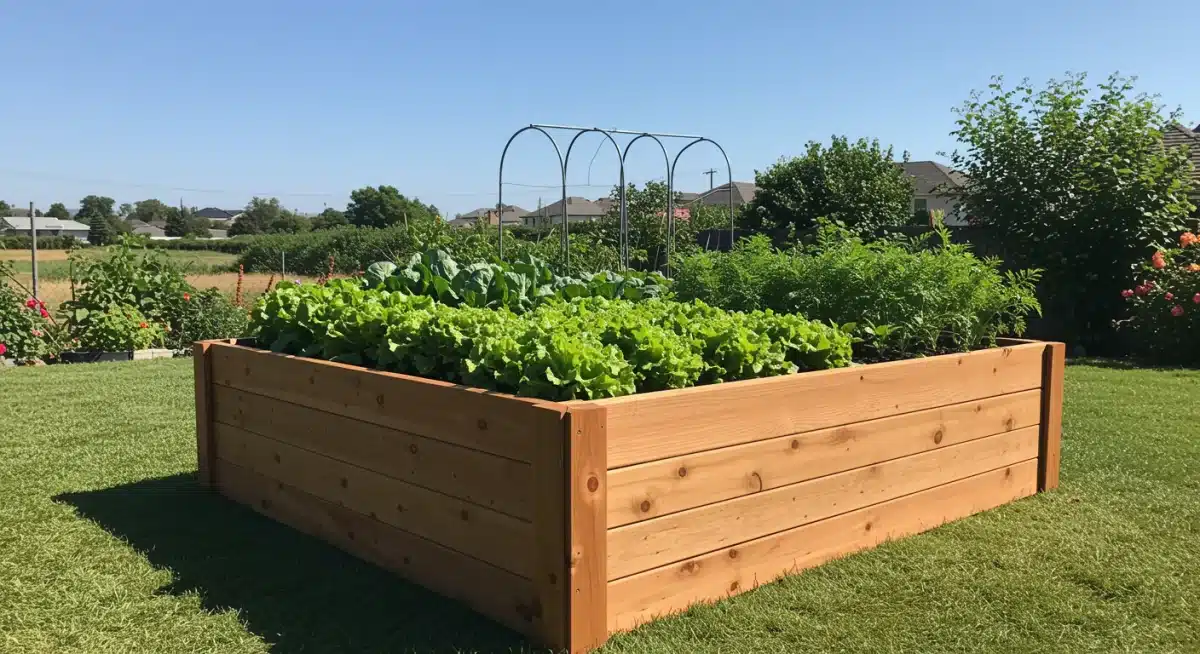
Building your own raised garden bed doesn’t require advanced carpentry skills or expensive tools. With a clear plan and careful execution, you can construct a sturdy and functional bed for under $100.
This section outlines the essential steps to guide you through the construction process, focusing on efficiency and cost-effectiveness.
Before you begin, gather all your materials and tools. For a basic wooden raised bed, you’ll need your chosen lumber (e.g., 2×6 or 2×8 boards), a saw (manual or power), a drill, screws or nails, a tape measure, and a level.
Having everything on hand will streamline the process and prevent unnecessary delays.
Assembling your raised bed frame
Start by cutting your lumber to the desired lengths. For a 4×8 foot bed with 12-inch height, you’d typically need two 8-foot boards and two 4-foot boards for each layer (if using 2x6s, you’d need two layers for 12 inches).
Once cut, lay out your boards in a rectangle. Secure the corners by drilling pilot holes and then driving screws or nails through the end of one board into the face of the perpendicular board. Repeat this for all four corners.
Measure and cut lumber accurately
Pre-drill holes to prevent wood splitting
Use exterior-grade screws or galvanized nails for durability
Ensure corners are square and level for stability
Once the first layer of your frame is complete, stack subsequent layers, aligning the corners precisely. Secure each layer to the one below it using screws.
For added stability, you can attach corner posts (e.g., 2×2 stakes) on the inside of the bed, driving them into the ground and screwing them to the frame. This helps prevent bowing over time, especially with the weight of the soil.
Finally, consider lining the inside of your bed with landscape fabric or cardboard before adding soil. This acts as a weed barrier, preventing weeds from growing up from the ground below, while still allowing water to drain.
This simple step can save you hours of weeding later on and protect your precious garden from unwanted intruders, contributing to the long-term success of your budget raised garden.
Filling your raised garden bed with budget-friendly soil
The success of your raised garden bed hinges significantly on the quality of its soil. However, filling an entire bed with bagged, organic potting mix can quickly exceed your $100 budget.
The trick to keeping costs down while ensuring a fertile growing medium is to employ smart layering techniques and source materials creatively. This approach minimizes the need for expensive bagged soil, making your project truly budget-friendly.
The ‘Hugelkultur’ method is an excellent, cost-effective way to fill a raised bed. This involves layering organic materials like logs, branches, leaves, and compost at the bottom, which decompose over time, enriching the soil and retaining moisture.
This method not only reduces the amount of purchased soil needed but also creates a self-sustaining ecosystem within your bed.
Creating a rich soil mix without breaking the bank
Start with a base layer of cardboard or newspaper to suppress weeds and attract beneficial organisms.
On top of this, add larger organic matter like fallen branches or logs, followed by smaller twigs, leaves, and grass clippings.
These materials will slowly break down, providing nutrients and improving drainage over time. This decomposition process also generates a slight warmth, which can benefit plant growth.
Base layer: Cardboard or newspaper for weed suppression
First layer: Logs, branches, and woody debris
Second layer: Leaves, grass clippings, and kitchen scraps
Top layer: Mix of compost and inexpensive topsoil
Next, add a layer of unfinished compost or kitchen scraps, then a layer of aged manure if available and affordable.
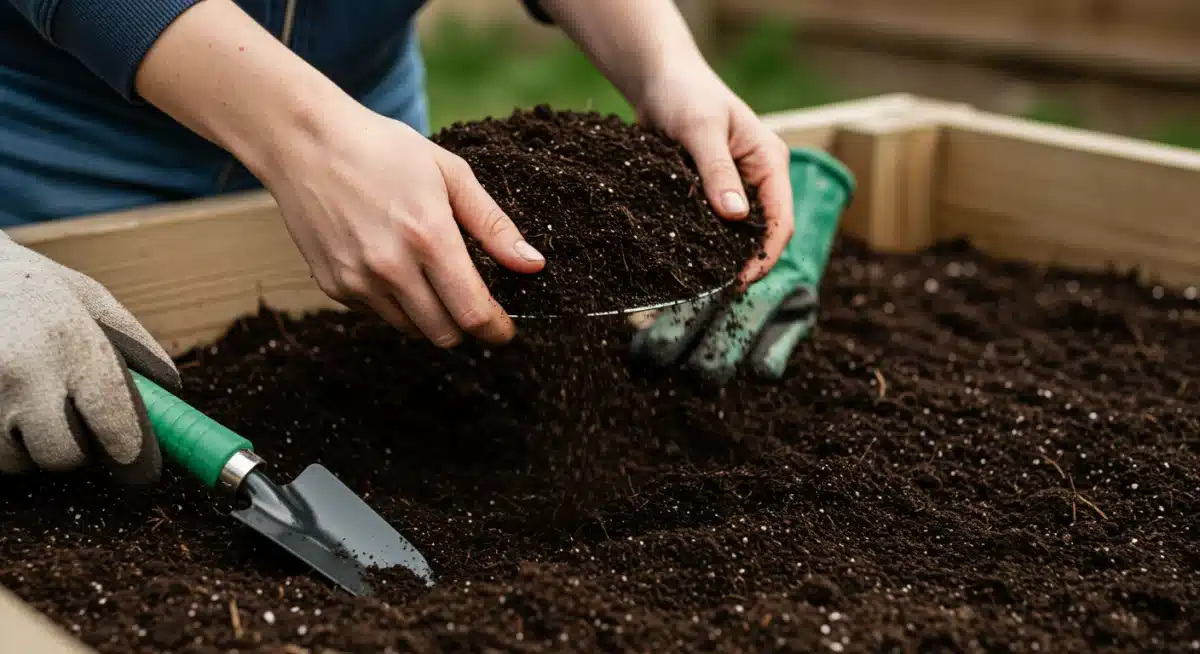
The final 6-8 inches should be a mix of good quality topsoil and finished compost. You can often find bulk topsoil or compost from local landscaping suppliers at a much lower price per cubic yard than bagged alternatives. Many municipalities also offer free or low-cost compost to residents.

By strategically layering various organic materials, you can create a deep, fertile, and well-draining environment for your vegetables without relying solely on expensive bagged soil.
This method not only saves money but also promotes a healthier soil ecosystem, leading to more robust and productive plants in your budget raised garden bed.
Smart planting and maintenance for maximum yield
Once your raised garden bed is built and filled, the focus shifts to planting and ongoing maintenance. To truly grow your own vegetables for under $100 in 2026, smart planting choices and efficient care are paramount.
Maximizing yield from your limited space and resources will ensure your efforts are rewarded with an abundant harvest.
Consider companion planting, a technique where different plants are grown together for mutual benefit.
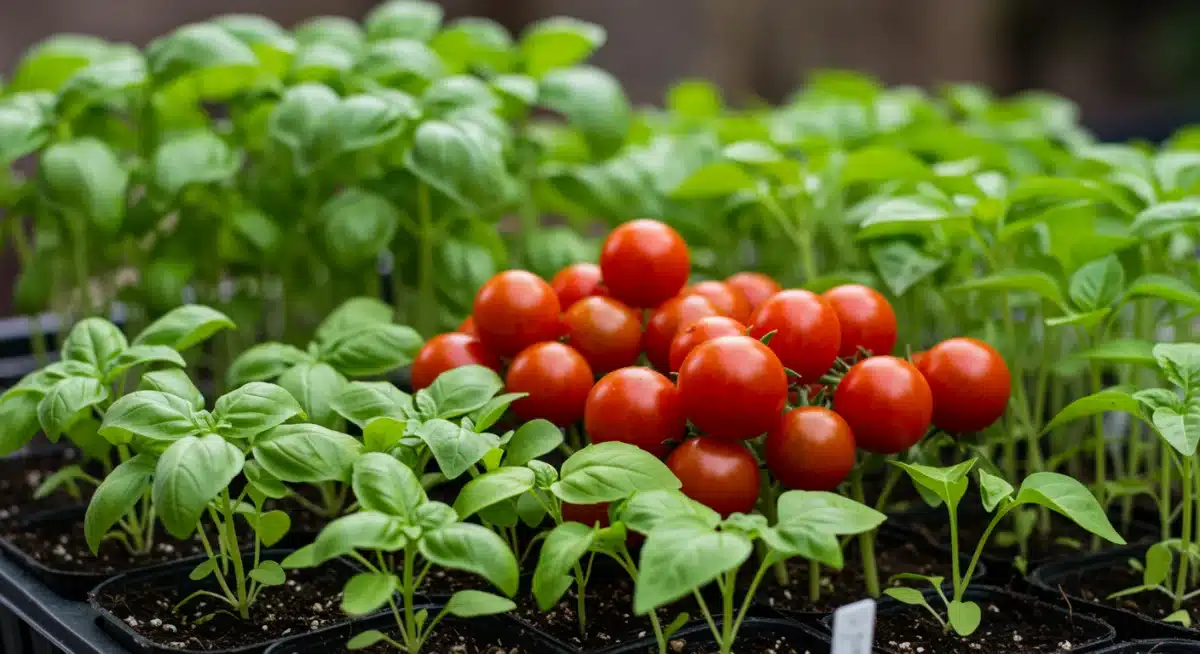
For example, planting marigolds near tomatoes can deter pests, while basil planted with tomatoes is believed to improve their flavor. This natural pest control and growth enhancement reduces the need for costly pesticides or fertilizers, keeping your budget intact.
Choosing the right vegetables for your budget garden
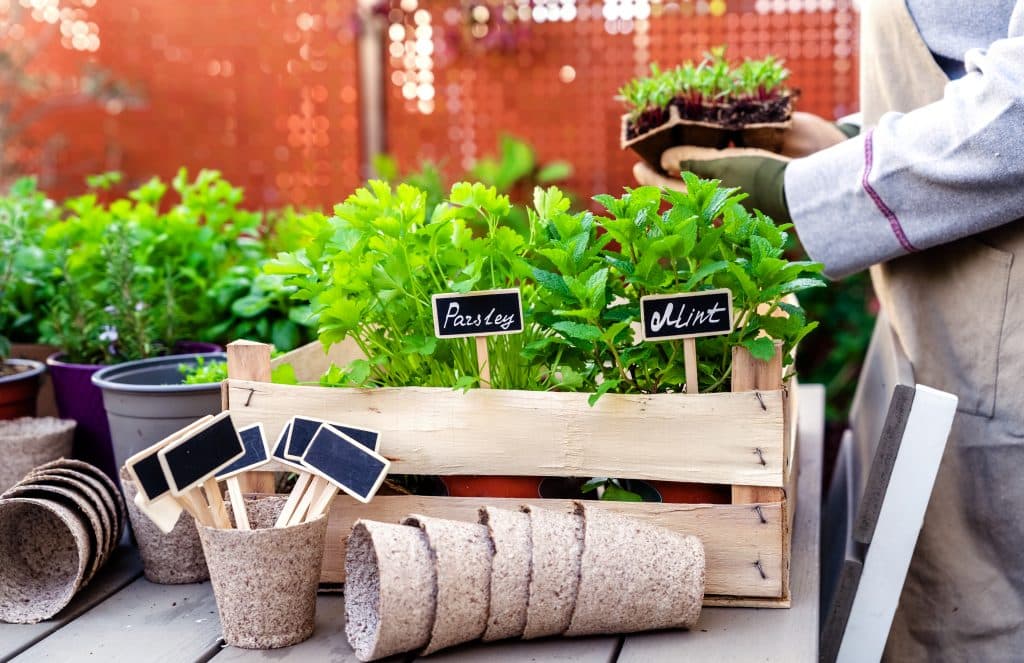
Select vegetables that are known for high yield in small spaces and are relatively easy to grow. Leafy greens like lettuce, spinach, and Swiss chard offer continuous harvests.
Bush beans, radishes, carrots, and herbs are also excellent choices. Prioritize vegetables your family enjoys and those that are expensive to buy at the grocery store, maximizing your savings.
High-yield, space-efficient vegetables: lettuce, spinach, radishes
Cost-effective choices: herbs, bush beans, carrots
Consider continuous harvest varieties for prolonged yield
Choose vegetables your family will actually eat
Efficient watering is another key aspect of maintenance. Raised beds can dry out faster than in-ground gardens, so consistent moisture is essential.
Consider installing a simple drip irrigation system or using soaker hoses; these are inexpensive and deliver water directly to the roots, minimizing waste and evaporation. Mulching around your plants with straw or wood chips also helps retain soil moisture, suppress weeds, and regulate soil temperature.
Regular weeding and monitoring for pests are crucial. Early detection and intervention can prevent small issues from becoming major problems, often without the need for expensive chemical treatments.
Hand-pulling weeds and using organic pest control methods like neem oil or insecticidal soap are effective and budget-friendly.
By implementing these smart planting and maintenance strategies, your raised garden bed can become a highly productive and sustainable source of fresh produce.
Troubleshooting and advanced tips for your budget raised garden
Even with careful planning, gardening often presents unexpected challenges. Knowing how to troubleshoot common issues and implementing a few advanced tips can significantly improve your success in maintaining a thriving raised garden bed, especially when operating on a budget.
These insights will help you adapt and optimize your growing space for long-term productivity.
One common issue in raised beds is nutrient depletion over time. As plants grow and are harvested, they draw nutrients from the soil.
To combat this without constantly buying new soil or expensive fertilizers, embrace organic amendments.
Composting your kitchen scraps and yard waste provides a continuous supply of nutrient-rich material that can be added to your bed each season, rebuilding soil fertility naturally.
Addressing common issues and boosting productivity
If you notice stunted growth or yellowing leaves, it could indicate a nutrient deficiency. Conduct a simple soil test (kits are inexpensive) to identify specific imbalances.
Instead of broad-spectrum fertilizers, target the missing nutrients with organic options like bone meal for phosphorus, Epsom salts for magnesium, or a balanced organic granular fertilizer applied sparingly.
Crop rotation is also vital; avoid planting the same vegetables in the same spot year after year to prevent nutrient depletion and disease build-up.
Regularly amend soil with homemade compost
Perform soil tests to identify nutrient deficiencies
Practice crop rotation to maintain soil health
Utilize organic pest control methods
Another advanced tip for maximizing space and yield in a budget raised garden is vertical gardening. Incorporate trellises, stakes, or cages for climbing plants like tomatoes, cucumbers, and pole beans. This allows you to grow more in the same footprint, increasing your harvest significantly.
You can construct these supports using inexpensive materials like rebar, bamboo stakes, or reclaimed wood, keeping costs minimal.
Finally, consider extending your growing season. Using row covers or cold frames, even simple ones made from PVC pipes and plastic sheeting, can protect plants from early frosts or harsh sun, allowing you to plant earlier in spring and harvest later into fall.
These budget-friendly solutions enhance your garden’s productivity and provide fresh produce for a longer period, truly making the most of your investment.
| Key Aspect | Budget Strategy |
|---|---|
| Materials | Use untreated pine, fir, or reclaimed wood; consider cinder blocks for durability. |
| Soil Fill | Employ Hugelkultur layering with organic matter, compost, and bulk topsoil. |
| Plant Selection | Choose high-yield, space-efficient vegetables and start from seeds. |
| Maintenance | Utilize companion planting, mulching, and homemade compost for nutrients. |
Frequently asked questions about budget raised garden beds
The cheapest materials for a raised garden bed typically include untreated pine or fir lumber, reclaimed wood (like pallets or old fence boards), or cinder blocks.
These options offer a good balance of cost-effectiveness and durability, especially when sourced creatively or during sales events.
To fill a raised garden bed affordably, use the ‘Hugelkultur’ method. Layer organic materials like logs, branches, leaves, and grass clippings at the bottom.
Top this with homemade compost and then a final layer of inexpensive bulk topsoil, which significantly reduces the need for costly bagged potting mix.
For high yield in a budget raised bed, focus on space-efficient and productive vegetables. Excellent choices include leafy greens (lettuce, spinach, kale), radishes, carrots, bush beans, and various herbs. Starting these from seeds instead of seedlings also saves money.
Yes, absolutely! By carefully selecting budget-friendly materials like untreated lumber or reclaimed wood, using smart soil layering techniques, and starting plants from seed, it is entirely possible to build a functional and productive raised garden bed for under $100 in 2025.
Low-cost maintenance involves using homemade compost for nutrients, mulching with straw or leaves to retain moisture and suppress weeds, and practicing companion planting for natural pest control.
Regular hand-weeding and organic pest solutions like neem oil also keep costs down while ensuring a healthy garden.
Conclusion
Building a raised garden bed for under $100 in 2025 is not just a dream but a tangible goal for any enthusiastic gardener.
By strategically choosing materials, applying savvy design principles, and implementing cost-effective filling and maintenance techniques, you can create a highly productive and beautiful garden space.
This endeavor not only provides you with fresh, healthy produce but also offers a rewarding DIY experience, proving that sustainable living can indeed be affordable. Embrace the challenge, and soon you’ll be enjoying the fruits (and vegetables!) of your labor.