Improving Your Posture: Simple Exercises for a Healthier Spine

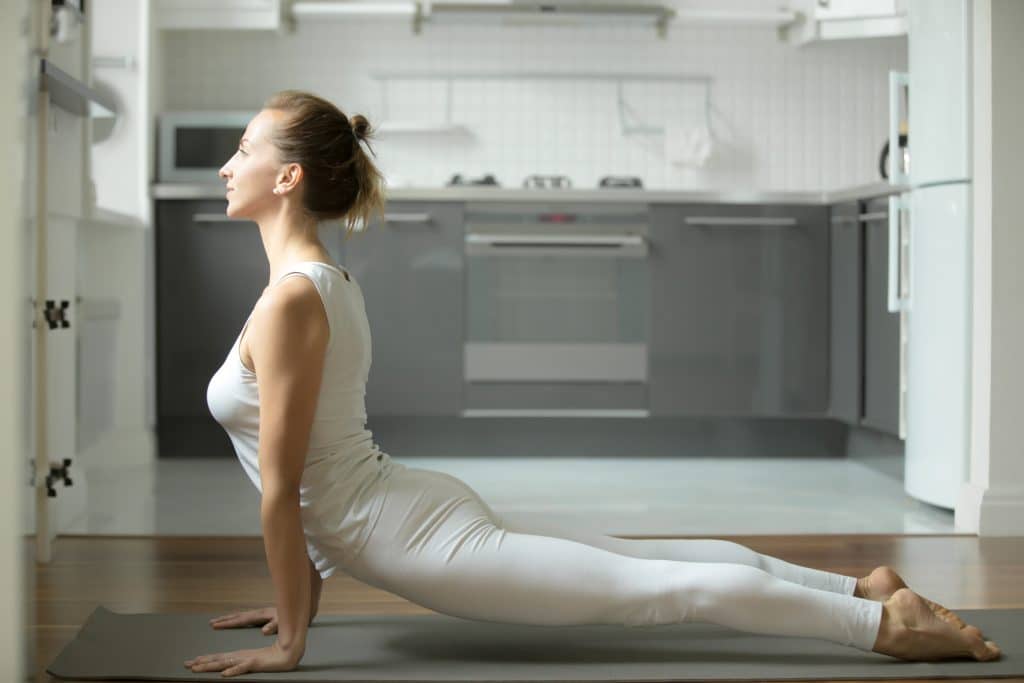 Maintaining proper posture is vital for reducing pain and improving overall physical well-being, and incorporating simple, consistent exercises can significantly contribute to a healthier spine and better bodily alignment.
In today’s fast-paced world, where many of us spend long hours hunched over computers, scrolling on smartphones, commuting in traffic, or sitting in meetings, the importance of maintaining proper posture is often overlooked.
Modern lifestyles encourage forward head positioning, rounded shoulders, and prolonged sitting — all of which place excessive strain on the spine. Over time, these habits can lead to muscle imbalances, stiffness, reduced mobility, and chronic discomfort that affects both productivity and quality of life.
Improving your posture through simple exercises for a healthier spine is not merely about appearance or standing taller. It plays a critical role in preventing chronic neck and back pain, reducing tension headaches, supporting joint health, and protecting the natural curves of the spine.
Proper alignment also allows your muscles to function efficiently, decreases unnecessary pressure on ligaments and discs, and helps prevent long-term structural issues.
Beyond pain prevention, good posture enhances breathing capacity by allowing the lungs to fully expand. When the chest collapses forward, breathing becomes shallow, limiting oxygen intake and potentially contributing to fatigue and reduced concentration.
By maintaining proper alignment, you improve circulation, increase energy levels, and even support better digestion.
There are also psychological benefits. Studies suggest that upright posture can positively influence mood, confidence, and stress levels. Standing or sitting tall signals alertness and self-assurance, which can subtly impact how you feel and how others perceive you.
The good news is that improving spinal alignment does not require complicated equipment or intense workouts. Small, consistent changes — including targeted strengthening exercises, mobility work, ergonomic adjustments, and mindful awareness — can create significant, lasting improvements.
This comprehensive guide will walk you through practical, easy-to-follow exercises and actionable strategies designed to strengthen your core, support your upper back, mobilize tight areas, and promote balanced muscle activation.
Whether you work at a desk, drive for long periods, or simply want to move more comfortably throughout the day, these techniques can help you achieve and maintain optimal spinal alignment.
By committing to simple daily practices, you can transform not only how you stand and sit, but also how you feel — improving daily comfort, reducing pain risk, and supporting long-term spinal health for years to come.
Understanding the Importance of Good Posture
Good posture is more than just standing up straight. It’s about holding your body in positions that place the least strain on supporting muscles and ligaments during movement or weight-bearing activities. When your posture is correct, the bones are properly aligned, and your muscles, joints, and ligaments can work as nature intended. This reduces the risk of injuries, decreases abnormal wear and tear on joint surfaces, and helps prevent conditions like arthritis.
The spine, often called the backbone, is a complex structure of bones, ligaments, and discs that supports your entire body. Poor posture can lead to a variety of issues, including chronic back pain, neck pain, headaches, and even fatigue. Over time, habitually poor alignment can cause structural changes in your spine, leading to more severe health problems. Recognizing the critical role posture plays in your health is the first step towards making positive changes.
Beyond physical discomfort, good posture also influences your appearance and confidence. Standing tall and aligned projects an image of self-assurance and competence. It can also improve circulation, digestion, and even mood. Therefore, understanding and actively working on your posture is an investment in your physical and mental well-being, offering benefits that extend far beyond simply alleviating pain.
Common Causes of Poor Posture
Poor posture doesn’t just happen overnight; it’s often the result of prolonged habits and lifestyle factors. Identifying these causes is crucial for effective intervention and lasting improvement. Many people develop poor posture due to sedentary lifestyles, spending hours sitting at desks, driving, or looking at smartphones.
Sedentary Lifestyles and Digital Devices
The rise of office jobs and digital technology has significantly contributed to poor posture. Sitting for extended periods, especially without proper ergonomic support, can lead to muscle imbalances. The head-forward posture, often seen in smartphone users, puts immense strain on the neck and upper back. This constant forward flexion can weaken neck extensors and tighten chest muscles, pulling the shoulders inward.
- Prolonged Sitting: Weakens core muscles and hip flexors, leading to a slouched position.
- Smartphone Use: Causes ‘tech neck’ due to constant downward gaze.
- Lack of Movement: Reduces flexibility and muscle strength needed for proper alignment.
Muscle Imbalances and Weakness
Another major contributor to poor posture is muscle imbalance. When certain muscles are overused and tight, while others are underused and weak, your body’s natural alignment gets disrupted. For example, tight chest muscles combined with weak upper back muscles can lead to rounded shoulders. Similarly, weak abdominal muscles can cause the pelvis to tilt forward, increasing the arch in the lower back (lordosis).
These imbalances are often exacerbated by repetitive activities or an absence of varied physical activity. Strengthening the right muscles and stretching tight ones is key to restoring balance and supporting a healthier spine. Without addressing these underlying muscular issues, any attempts at temporary posture correction will likely be short-lived.
Foundational Exercises for Spinal Health
To embark on the journey of improving your posture: simple exercises for a healthier spine, it’s essential to start with foundational movements that gently strengthen and realign your body.
These exercises are accessible to most fitness levels and require minimal equipment, making them perfect for daily practice. Consistency is more important than intensity when it comes to posture correction.
Cat-Cow Stretch
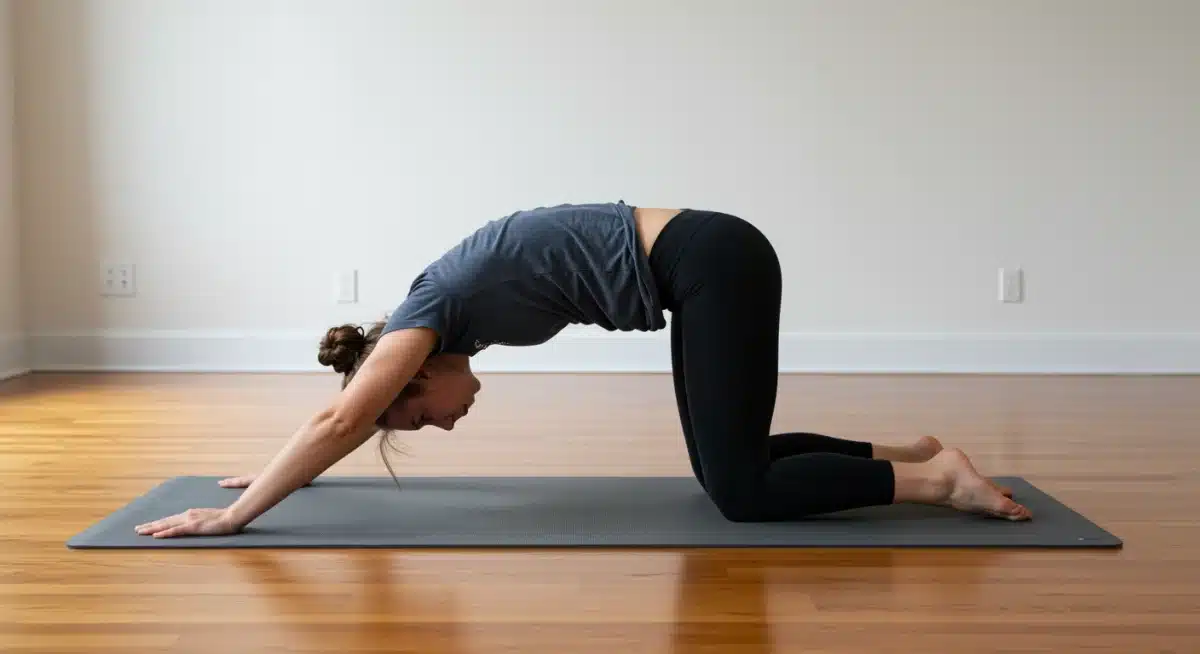
The cat-cow stretch is a gentle yoga pose that helps improve spinal flexibility and core strength. It involves moving your spine through its full range of motion, from flexion to extension, which can relieve tension and promote better alignment.
This exercise warms up the spine and helps you become more aware of its movement.
How to Perform: Start on all fours, hands directly under shoulders, knees under hips. Inhale as you drop your belly, lift your chest and tailbone (cow pose). Exhale as you round your spine, tucking your chin to your chest (cat pose).
Repetitions: Perform 10-15 repetitions, focusing on slow, controlled movements and coordinating with your breath.
Pelvic Tilts
Pelvic tilts are excellent for strengthening the deep abdominal muscles and improving awareness of pelvic positioning, which directly impacts lower back posture. This exercise helps to reduce excessive arching in the lower back and can alleviate related pain.
To do a pelvic tilt, lie on your back with your knees bent and feet flat on the floor. Flatten your lower back against the floor by tightening your abdominal muscles and gently tilting your pelvis upward.
Hold for a few seconds, then relax. This subtle movement helps to engage the correct muscles and prevent your lower back from becoming overly lordotic. Aim for 10-12 repetitions, ensuring the movement is controlled and pain-free.
Strengthening Your Core for Better Posture
A strong core is the cornerstone of good posture. Your core muscles act as a natural corset, supporting your spine and keeping your body upright.
Without sufficient core strength, other muscles have to compensate, leading to strain and poor alignment. Incorporating specific core-strengthening exercises is vital for sustained posture improvement.
Plank
The plank is a highly effective full-body exercise that targets your core, shoulders, and glutes. It teaches your body to maintain a neutral spine position against gravity, which is crucial for everyday posture. There are many variations, but the basic plank is an excellent starting point.
How to Perform: Start in a push-up position, then lower onto your forearms, keeping your body in a straight line from head to heels. Engage your abs, glutes, and quadriceps.
Duration: Hold for 20-60 seconds, or as long as you can maintain proper form, resting and repeating 2-3 times.
Bird-Dog
The bird-dog exercise is fantastic for improving core stability, balance, and coordination while strengthening the lower back and glutes. It encourages independent movement of the limbs while maintaining a stable torso, mimicking functional movements.
Begin on all fours, making sure your wrists are under your shoulders and your knees under your hips. Engage your core, keeping your back flat. Slowly extend your right arm forward and your left leg backward simultaneously, maintaining a straight line from your fingertips to your heel.
Avoid raising your arm or leg too high, which can cause your back to arch. Hold briefly, then return to the starting position and repeat on the other side. Perform 8-12 repetitions per side, focusing on control and stability rather than speed.
Addressing Upper Back and Shoulder Posture
Many individuals struggle with rounded shoulders and a hunched upper back, often due to prolonged sitting or repetitive motions that encourage internal rotation of the shoulders.
Correcting these issues is vital for opening the chest, improving breathing, and alleviating neck and upper back pain. Exercises targeting the upper back and shoulders can counteract these common postural deviations.
Wall Angels
Wall angels are excellent for improving thoracic spine mobility and strengthening the muscles that retract the shoulder blades. This exercise helps to reverse the effects of rounded shoulders and promotes a more open, upright posture.
How to Perform: Stand with your back against a wall, feet about 6 inches away. Press your lower back, shoulders, and head against the wall.
Bring your arms up, bending your elbows to 90 degrees, so your upper arms are parallel to the floor and forearms are flat against the wall. Slowly slide your arms up the wall, keeping your elbows and wrists in contact, then slide them back down.
Repetitions: Aim for 10-15 repetitions, ensuring constant contact with the wall.
Thoracic Extension
Thoracic extension exercises focus on increasing flexibility in the mid-back (thoracic spine), which often becomes stiff from prolonged sitting. Improving this mobility is crucial for preventing a hunched posture and allowing for better overhead arm movement.
One simple way to perform a thoracic extension is using a foam roller. Lie on your back with the foam roller placed horizontally underneath your mid-back. Interlace your fingers behind your head for support.
With your feet flat on the floor and knees bent, slowly extend your upper back over the foam roller, allowing your head to drop slightly.
You can gently roll up and down the mid-back a few inches or hold the extended position for 15-30 seconds. This exercise helps to mobilize the vertebral segments and counteract the flexion often seen in daily activities. Perform 5-8 repetitions or holds.
Integrating Posture Habits into Daily Life
While exercises are crucial, sustained posture improvement also depends on integrating mindful habits into your daily routine.
Awareness of your body’s position throughout the day can make a significant difference in maintaining a healthier spine and preventing the recurrence of poor postural patterns. It’s about making small, consistent changes that accumulate over time.
Ergonomic Workspace Setup
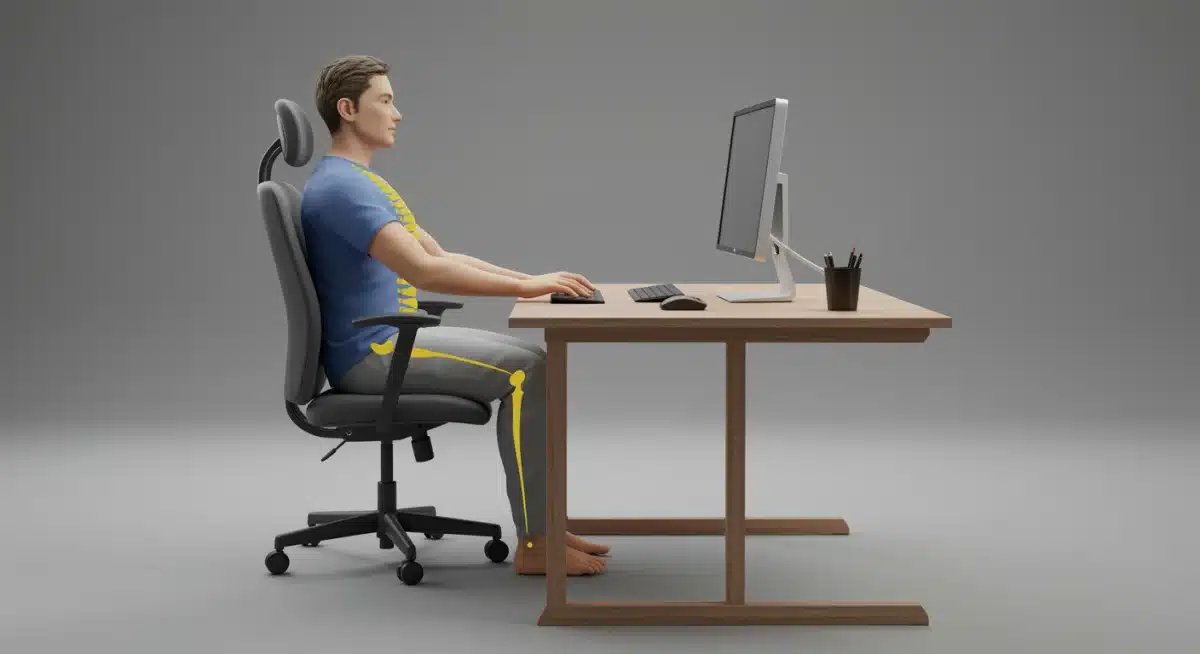
For those who spend many hours at a desk, an ergonomic workspace is non-negotiable. Proper setup can prevent many common postural issues.
Your computer monitor should be at eye level, your chair should support the natural curve of your lower back, and your feet should be flat on the floor or a footrest. Your keyboard and mouse should be positioned so that your elbows are at a 90-degree angle, keeping your shoulders relaxed.
Monitor Height: Top of the screen at eye level.
Chair Support: Lumbar support, armrests at elbow height.
Foot Position: Feet flat on the floor or on a footrest.
Mindful Movement and Breaks
Even with the best ergonomic setup, prolonged static positions are detrimental. Incorporate regular breaks throughout your day to stand up, stretch, and move.
Set a timer to remind yourself to take a short walk, perform a few gentle stretches, or simply change your sitting position every 30-60 minutes. This helps prevent muscle stiffness and encourages circulation.
Being mindful of your posture during everyday activities, such as standing, walking, and even lifting objects, is equally important.
When standing, distribute your weight evenly on both feet, keep your shoulders back and down, and engage your core. When lifting, bend at your knees, not your waist, to protect your back. These small adjustments can significantly reduce strain on your spine over time.
Advanced Tips and Long-Term Maintenance
Once you’ve established a foundation of good posture and consistent exercise, you can explore more advanced strategies for long-term maintenance and further enhancement.
This includes considering specialized tools, professional guidance, and making posture a permanent part of your wellness journey. Continuous effort yields lasting results when it comes to spinal health.
Professional Guidance
If you experience persistent pain or difficulty correcting your posture on your own, consulting with a physical therapist, chiropractor, or certified posture specialist can be incredibly beneficial.
These professionals can provide a detailed assessment of your specific postural deviations, identify muscle imbalances, and create a personalized exercise and stretching program tailored to your needs. They can also offer hands-on treatments and ergonomic advice.
A professional opinion can help you avoid common pitfalls and ensure you are performing exercises correctly, maximizing their effectiveness and minimizing the risk of injury.
They can also recommend assistive devices, if necessary, such as specialized cushions or braces, although these are typically used as temporary aids rather than long-term solutions.
Incorporating Yoga and Pilates
For a more holistic approach to posture and core strength, consider incorporating practices like yoga and Pilates into your routine. Both disciplines emphasize core engagement, flexibility, balance, and body awareness, all of which are critical for optimal posture. Yoga poses often focus on lengthening the spine and opening the chest, while Pilates specifically targets deep core muscles.
Yoga Benefits: Improved flexibility, balance, stress reduction, and spinal mobility.
Pilates Benefits: Enhanced core strength, body control, precise movements, and postural alignment.
These practices not only build physical strength but also cultivate a deeper connection between mind and body, making you more attuned to your postural habits throughout the day. Regular participation can lead to significant and lasting improvements in your overall spinal health and well-being.
| Key Aspect | Brief Description |
|---|---|
| Spinal Health Importance | Good posture prevents pain, enhances breathing, and supports overall well-being. |
| Core Strength | A strong core is essential for spinal support and maintaining upright posture. |
| Daily Habits | Ergonomic setups and regular movement breaks are crucial for lasting improvement. |
| Professional Help | Consulting specialists can provide personalized plans for complex posture issues. |
Frequently Asked Questions About Posture
How long does it take to significantly improve posture?
Improving posture is a gradual process that depends on factors such as age, muscle strength, flexibility, daily habits, and the severity of misalignment.
Some people begin to notice reduced discomfort and better alignment within 2 to 4 weeks of consistent practice. However, more significant and lasting improvements may take 8 to 12 weeks or longer, especially if poor posture has been present for years.
Consistency is the key factor. Performing strengthening and mobility exercises daily, maintaining ergonomic awareness, and correcting sitting and standing habits throughout the day help retrain muscle memory.
Posture is not corrected by occasional effort — it improves through small, repeated adjustments that become permanent habits over time.
Can poor posture cause headaches?
Yes, poor posture — particularly forward head posture — is a common contributor to tension headaches. When the head shifts forward beyond its natural alignment, it increases strain on the neck, shoulders, and upper back muscles.
Over time, this muscular tension can irritate nerves and restrict blood flow, triggering headaches that often start at the base of the skull and radiate toward the temples or forehead.
In addition to headaches, poor alignment may cause:
Neck stiffness
Shoulder tightness
Jaw discomfort
Upper back pain
Improving spinal alignment, strengthening deep neck flexors, and stretching tight chest muscles can significantly reduce posture-related headaches.
Are posture correctors effective for long-term improvement?
Posture correctors can be helpful as a short-term awareness tool, especially for individuals who are just beginning to focus on alignment. They gently pull the shoulders back, reminding the body of proper positioning.
However, relying solely on posture correctors is not recommended for long-term results. Overuse may:
Reduce natural muscle activation
Weaken core and stabilizing muscles
Create dependency
The most effective approach combines occasional use (if needed) with:
Core strengthening exercises
Upper back strengthening
Chest and hip flexor stretching
Ergonomic improvements
True, lasting posture improvement comes from building strength and balance — not external bracing.
What are the best sleeping positions for a healthy spine?
Sleep posture plays a major role in spinal health and recovery. The most recommended positions are:
Sleeping on your back:
Place a pillow under your knees to maintain natural spinal curves.
Use a supportive pillow that keeps your neck aligned with your spine.
Sleeping on your side:
Place a pillow between your knees to prevent hip rotation.
Keep your neck neutral with a properly sized pillow.
Avoid sleeping on your stomach, as it forces the neck into rotation and increases strain on the lower back.
Maintaining neutral alignment during sleep reduces morning stiffness and supports long-term spinal health.
How can I improve my posture while sitting at a desk?
Desk work is one of the biggest contributors to poor posture. Creating an ergonomic workstation is essential for protecting your spine.
Here are practical adjustments:
Use a chair with good lumbar support.
Keep feet flat on the floor or on a footrest.
Position your monitor at eye level to avoid leaning forward.
Keep elbows at about a 90-degree angle.
Avoid crossing legs for extended periods.
In addition, follow the 30–60 rule: every 30 to 60 minutes, stand up, stretch, or walk briefly. Even short movement breaks help reset alignment and reduce muscle fatigue.
Consciously engaging your core muscles while sitting — without stiffening — helps maintain upright posture naturally.
Improving posture is not about rigidly holding your body in place. It is about developing balanced strength, flexibility, and awareness so your body can support itself efficiently.
With consistent effort and mindful daily habits, better posture becomes automatic — leading to reduced pain, improved confidence, and a healthier spine overall.
Conclusion
Improving your posture: simple exercises for a healthier spine is a journey that requires commitment and awareness, but the rewards are profound. By consistently incorporating foundational exercises like cat-cow stretches and planks, strengthening your core, and addressing upper back issues with movements like wall angels, you can significantly enhance your spinal health.
Beyond exercises, integrating ergonomic principles into your workspace and practicing mindful movement throughout your day are crucial for long-term success. Remember, a healthier spine leads to a more comfortable, energetic, and confident you, proving that small, consistent efforts can yield remarkable transformations in your overall well-being.