DIY Fire Safety: Install & Maintain Smoke Detectors 2026

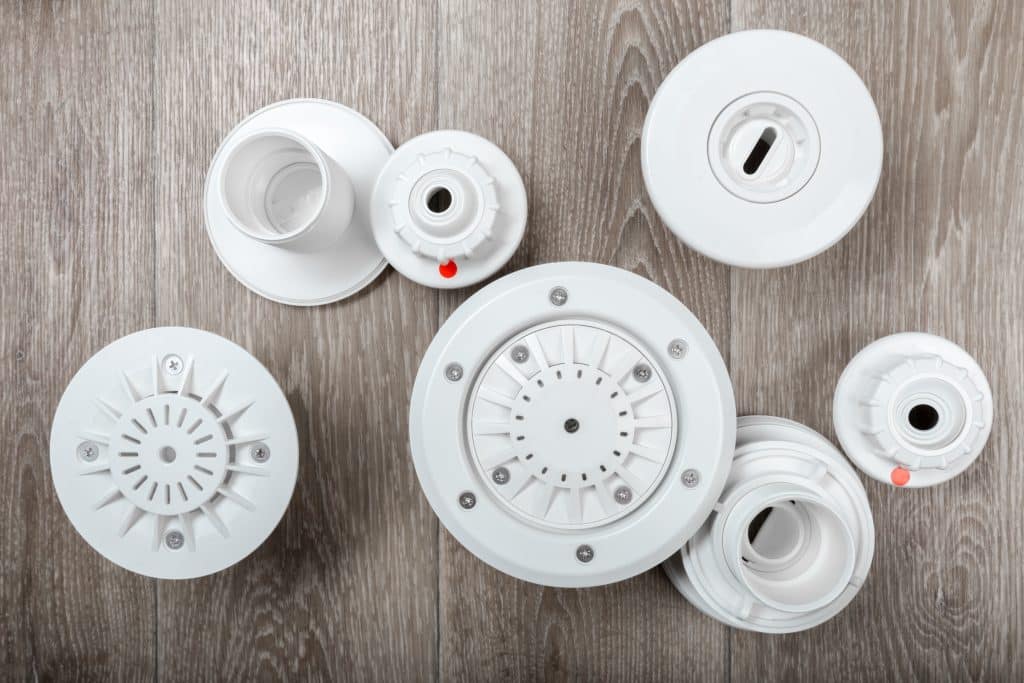 Protecting your family from fire hazards requires proactive measures, with proper smoke detector installation and maintenance being critical components of any effective DIY Fire Safety 2026 plan.
Ensuring your home is safe from fire is not just a recommendation; it’s a critical responsibility for every homeowner. In 2026, embracing DIY Fire Safety 2026 by properly installing and maintaining smoke detectors is one of the most effective ways to protect your loved ones and your property.
This guide will walk you through everything you need to know to establish a robust fire safety plan in your home, providing peace of mind through preparedness.
Understanding the Importance of Smoke Detectors
Smoke detectors are the frontline defense against fire, providing crucial early warning that can literally save lives.
Their importance cannot be overstated, as they offer precious minutes for occupants to escape a burning building or for firefighters to respond before a small fire escalates into a catastrophic event.
Many people underestimate the speed at which fires can spread, especially in modern homes with synthetic materials that burn faster and produce more toxic smoke.
Beyond the immediate danger, smoke detectors also play a vital role in minimizing property damage. Early detection means a quicker response, which can contain the fire to a smaller area, reducing the overall impact.
This often translates into lower repair costs and a faster return to normalcy after an incident. It’s not just about survival; it’s about mitigating loss on all fronts.
The silent killer: smoke inhalation
It’s a common misconception that flames are the primary cause of fire-related deaths. In reality, smoke and toxic gases are far more dangerous, often incapacitating victims before flames even reach them.
Smoke detectors are specifically designed to detect these insidious threats, alerting residents even while they sleep, when their sense of smell is significantly diminished.
Early warning for escape routes.
Detection of invisible, toxic gases.
Crucial during nighttime hours.
Statistics that speak volumes
According to the National Fire Protection Association (NFPA), almost three out of five home fire deaths result from fires in homes with no smoke alarms or no working smoke alarms. These statistics underscore the critical need for functional detectors in every home.
Investing a small amount of time and money into proper installation and maintenance can drastically alter these grim figures, turning potential tragedies into near misses.
Understanding the sheer power of these small devices is the first step towards a truly safe home. They are not merely gadgets; they are essential life-saving tools that operate continuously, silently guarding your family against unforeseen dangers.
Making sure they are installed correctly and maintained regularly is a simple yet profound act of care.
Choosing the Right Smoke Detectors for Your Home
Selecting the appropriate smoke detectors is a pivotal step in your DIY Fire Safety 2026 plan. Not all smoke detectors are created equal, and understanding the different types available can help you make an informed decision tailored to your home’s specific needs.
The two primary types are ionization and photoelectric, each designed to detect different kinds of fires more effectively.
Ionization smoke detectors are generally more responsive to fast-flaming fires that produce small, invisible combustion particles.
These fires often originate from highly combustible materials like paper or cooking grease. Photoelectric smoke detectors, on the other hand, are typically more responsive to slow, smoldering fires that produce large, visible smoke particles, such as those caused by cigarettes smoldering in upholstery or electrical faults.
Ionization vs. photoelectric: which is best?
Ideally, homes should have a combination of both types, often referred to as dual-sensor alarms, to ensure comprehensive coverage against all fire types.
Alternatively, installing both ionization and photoelectric detectors in different areas of your home can achieve similar results. Some advanced models even incorporate carbon monoxide detection, offering an additional layer of safety.
Ionization: Best for fast, flaming fires.
Photoelectric: Best for slow, smoldering fires.
Dual-sensor: Offers comprehensive protection.
Consider models with carbon monoxide detection.
Power sources and connectivity
Smoke detectors come with various power options. Battery-powered units are easy to install but require regular battery replacement.
Hardwired units are connected to your home’s electrical system, offering continuous power, and often include a battery backup in case of a power outage.
For optimal safety, interconnected alarms are highly recommended. When one alarm sounds, all interconnected alarms throughout the house will sound, ensuring everyone is alerted regardless of where the fire originates.
When making your selection, consider the size of your home, the types of potential fire hazards present, and your budget.
Modern smart smoke detectors can also integrate with home automation systems, sending alerts to your phone, which can be invaluable when you’re away from home.
Always check for certifications from recognized safety organizations like Underwriters Laboratories (UL) to ensure the detectors meet rigorous safety standards.
Strategic Placement: Where to Install Smoke Detectors
Proper placement is just as crucial as choosing the right detectors for your DIY Fire Safety 2026 strategy. Incorrectly placed smoke detectors can delay detection or even fail to activate, rendering them useless in an emergency.
The goal is to maximize coverage and ensure that smoke can reach the detector as quickly as possible, regardless of the fire’s origin.
The general rule of thumb is to install smoke detectors on every level of your home, including the basement. More specifically, they should be located inside every bedroom and in the hallway outside each sleeping area. For homes with multiple sleeping areas or large layouts, additional detectors might be necessary to ensure complete coverage.
Optimal locations for maximum protection
Avoid placing smoke detectors near windows, doors, or ducts where drafts might interfere with their operation. Similarly, steer clear of areas prone to false alarms, such as kitchens (due to cooking fumes) and bathrooms (due to steam).
If a smoke detector must be near a kitchen, consider a photoelectric type which is less prone to false alarms from cooking, or install it at least 10 feet away from cooking appliances.
Inside every bedroom.
In hallways outside sleeping areas.
On every level of the home, including the basement.
Ceiling vs. wall placement
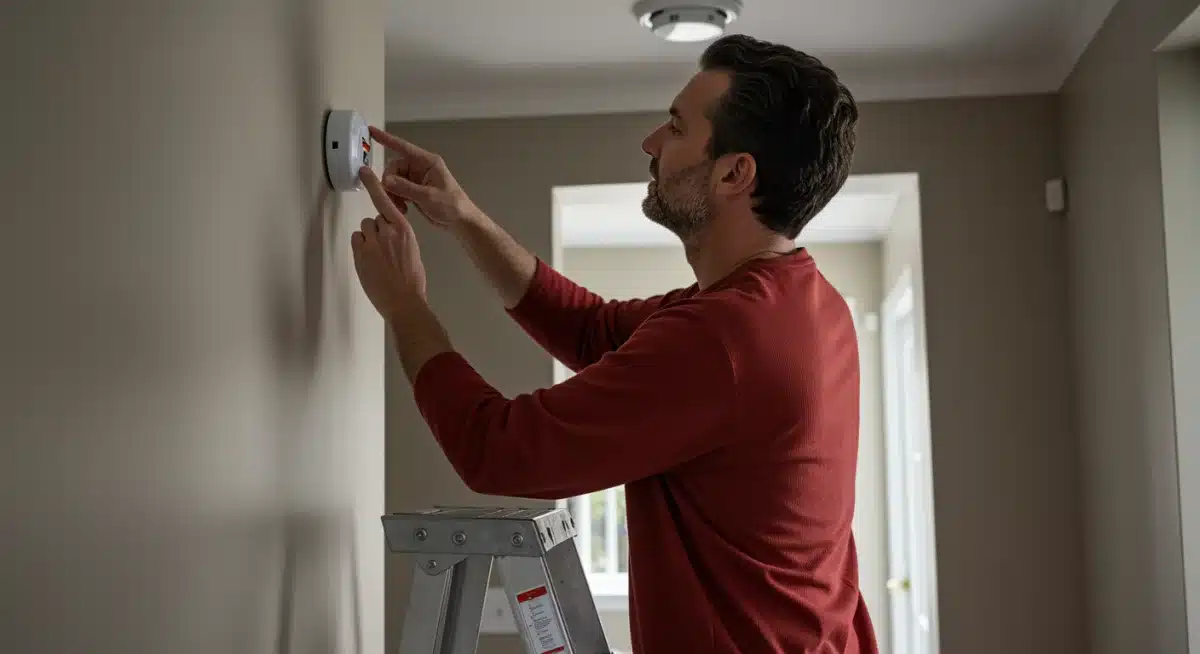
For optimal performance, smoke detectors should ideally be mounted on the ceiling, at least four inches from any wall. If ceiling mounting isn’t feasible, they can be placed high on a wall, typically four to twelve inches from the ceiling.
Avoid placing them in corners, as dead air spaces can prevent smoke from reaching the detector efficiently. Always refer to the manufacturer’s instructions for specific placement guidelines, as these can vary slightly by model.
Thinking strategically about placement ensures that your detectors are positioned to detect smoke effectively and provide the earliest possible warning.
A well-planned installation pattern creates a network of safety, offering comprehensive protection throughout your entire home. This careful consideration is a cornerstone of effective DIY fire safety.
Step-by-Step Installation Guide for DIY Enthusiasts
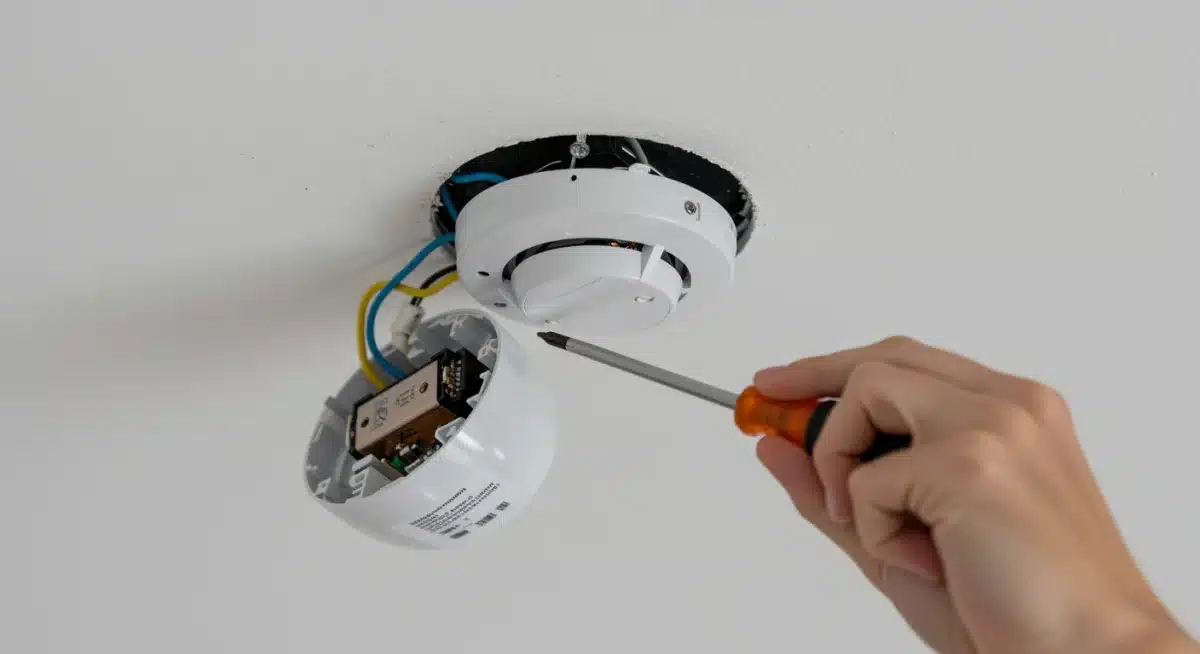
Installing smoke detectors yourself is a straightforward process that most homeowners can accomplish with basic tools and a little patience. This DIY guide will help you confidently undertake this essential task as part of your DIY Fire Safety 2026 regimen.
Always read the manufacturer’s instructions thoroughly before beginning, as specific models may have unique requirements.
Before you start, gather all necessary tools and materials. You’ll typically need a drill, screwdriver, pencil, measuring tape, and, of course, your chosen smoke detectors.
If you’re installing hardwired units, ensure the power to the circuit you’ll be working on is turned off at the breaker box for safety. For battery-powered units, simply ensure you have fresh batteries ready for installation.
Installation process for battery-powered detectors
Battery-powered detectors are the easiest to install. First, select your desired location, keeping in mind the strategic placement guidelines discussed earlier. Mark the screw holes on the ceiling or wall using the detector’s mounting bracket as a template.
Drill pilot holes if necessary, then attach the mounting bracket securely with screws. Insert the batteries into the detector, ensuring correct polarity, and then twist the detector onto the mounting bracket until it clicks into place. Finally, test the alarm by pressing the test button.
Installation process for hardwired detectors
For hardwired detectors, the process is slightly more involved and may require basic electrical knowledge. After ensuring the power is off, strip the ends of the electrical wires according to the manufacturer’s instructions.
Connect the wires from the detector to the corresponding wires in the junction box (usually black to black, white to white, and red to red for interconnectivity) using wire nuts. Secure the mounting bracket to the junction box. Insert the battery backup, then attach the detector to the mounting bracket. Restore power and test the alarm.
Turn off power for hardwired units.
Mark and drill pilot holes.
Secure mounting bracket.
Connect wires (hardwired) or insert batteries (battery-powered).
Attach detector to bracket.
Test the alarm.
Once installed, take a moment to double-check all connections and ensure the detector is firmly in place.
Testing the alarm immediately after installation confirms it’s functioning correctly. This hands-on approach not only saves on installation costs but also gives you a deeper understanding of your home’s safety systems.
Routine Maintenance: Ensuring Your Detectors Stay Functional
Installation is only half the battle; consistent maintenance is paramount to ensuring your smoke detectors remain fully functional and ready to alert you in an emergency. Neglecting maintenance can render even the best detectors useless, undermining your entire DIY Fire Safety 2026 effort.
A simple routine can make all the difference, providing continuous protection for your household.
The most basic maintenance task is regular testing. You should test all smoke detectors monthly by pressing the test button.
This verifies that the battery and alarm sounder are working. If the alarm doesn’t sound or sounds weakly, it’s an immediate indicator that something is wrong and needs attention. Make this a habit, perhaps by setting a recurring reminder on your phone or marking it on a calendar.
Battery replacement schedule
For battery-powered units, change the batteries at least once a year, even if they haven’t started chirping. A good practice is to replace them when you change your clocks for daylight saving time.
For hardwired units with battery backups, replace the backup battery annually as well. Most detectors will chirp when their battery is low, but proactive replacement ensures uninterrupted operation.
Test monthly by pressing the test button.
Replace batteries annually (or when chirping).
Clean detectors every six months.
Cleaning and detector lifespan
Smoke detectors can accumulate dust and debris, which can interfere with their sensors and lead to false alarms or, worse, prevent them from detecting smoke.
Use a vacuum cleaner with a soft brush attachment or a can of compressed air to gently clean the vents and exterior of your detectors every six months. Avoid using water or cleaning solvents directly on the unit.
Finally, remember that smoke detectors don’t last forever. Most manufacturers recommend replacing the entire unit every 10 years.
Check the manufacture date on the back of your detectors; if they are older than a decade, it’s time for new ones. Modern detectors come with an expiration date, making it easier to track when a replacement is due.
Adhering to these maintenance practices guarantees that your fire safety system is always in top condition.
Developing a Family Fire Escape Plan
While smoke detectors provide the critical early warning, a well-rehearsed fire escape plan is what will guide your family to safety. Creating and practicing this plan is an integral part of your comprehensive DIY Fire Safety 2026 strategy.
Every second counts during a fire, and knowing exactly what to do can prevent panic and ensure a swift, organized evacuation.
Start by drawing a floor plan of your home, marking all possible exits, including windows and doors. Identify at least two escape routes from every room.
This is crucial because one exit might be blocked by fire or smoke. Discuss these routes with every member of your household, ensuring even young children understand them. Consider purchasing escape ladders for upper-story windows if they are not easily accessible.
Designating a safe meeting point
Establish a designated outdoor meeting point a safe distance from your home. This could be a neighbor’s house, a specific tree, or a lamppost. The purpose of a meeting point is to ensure everyone is accounted for after evacuating.
Emphasize that once outside, no one should ever go back into a burning house, even for pets or belongings. Firefighters are trained to handle such situations.
Identify two escape routes from each room.
Designate a safe outdoor meeting point.
Practice the plan at least twice a year.
Teach children how to open windows and doors.
Emphasize ‘get out, stay out!’
Practicing your escape plan
Practice your fire escape plan at least twice a year, both during the day and at night. Simulate real conditions by having everyone crawl low under imaginary smoke. During practice, time how long it takes for everyone to reach the meeting point.
This will highlight any areas that need improvement. Discuss what to do if an escape route is blocked, such as using an alternative or calling for help from a window.
Teach children how to call 911 (or your local emergency number) once they are safely outside. Make sure they know their home address.
Review the plan periodically, especially if you rearrange furniture, add new family members, or if children grow older and can take on more responsibility. A practiced plan instills confidence and significantly increases the chances of a safe evacuation for everyone.
Beyond Smoke Detectors: Comprehensive Fire Prevention Tips
While smoke detectors are indispensable, a truly effective DIY Fire Safety 2026 plan extends beyond detection to include proactive prevention measures.
Reducing fire hazards in your home can significantly decrease the likelihood of a fire starting in the first place. A multi-faceted approach to fire safety offers the best protection for your family and property.
One of the most common causes of home fires is cooking equipment. Never leave cooking unattended, especially when frying or broiling.
Keep flammable materials like oven mitts, paper towels, and curtains away from the stovetop. If a grease fire starts, never use water; instead, smother it with a lid or baking soda. Keep a fire extinguisher specifically designed for kitchen fires (Class K or ABC) readily accessible.
Electrical safety and heating equipment
Faulty electrical wiring and overloaded circuits are another major fire risk. Avoid running extension cords under rugs or furniture, and never overload electrical outlets.
If you notice flickering lights, frequently tripped breakers, or warm outlets, have a qualified electrician inspect your wiring. Ensure all electrical appliances are in good condition and used according to manufacturer instructions.
Never leave cooking unattended.
Check electrical cords and outlets regularly.
Keep flammable items away from heat sources.
Store matches and lighters out of reach of children.
Have a working fire extinguisher.
Heating and smoking safety
Portable space heaters should be kept at least three feet away from anything combustible, including bedding, curtains, and furniture.
Always turn them off when leaving a room or going to sleep. If you smoke, do so outdoors, and always extinguish cigarettes completely in a sturdy, non-combustible ashtray. Never smoke in bed, as this is a leading cause of fatal fires.
Regularly inspect your fireplace and chimney for creosote buildup and have them professionally cleaned annually if you use them frequently.
Store flammable liquids and gases in approved containers away from heat sources and out of reach of children. By combining vigilant prevention with reliable detection and a clear escape plan, you create a comprehensive shield against the devastating impact of fire.
| Key Aspect | Brief Description |
|---|---|
| Detector Types | Ionization for flaming fires, photoelectric for smoldering fires. Dual-sensor recommended for best coverage. |
| Strategic Placement | Install inside bedrooms, hallways, and on every home level. Avoid drafts and false alarm zones. |
| Routine Maintenance | Test monthly, change batteries annually, clean every six months, and replace units every 10 years. |
| Escape Plan | Develop and practice a family fire escape plan with two exits per room and a designated outdoor meeting point. |
Frequently Asked Questions About Home Fire Safety
You should test all smoke detectors in your home at least once a month. Simply press the test button on each unit to ensure it’s functioning correctly and emitting a loud alarm sound. This quick check confirms the battery and alarm mechanism are operational.
Ionization detectors are better at detecting fast-flaming fires, while photoelectric detectors are more sensitive to slow, smoldering fires. For comprehensive protection, it’s recommended to install both types, either as separate units or as dual-sensor alarms, in your home.
Install smoke detectors inside every bedroom, in the hallway outside each sleeping area, and on every level of your home, including the basement. Place them on the ceiling or high on a wall, away from windows, doors, and potential sources of false alarms like kitchens.
Batteries in smoke detectors should be replaced at least once a year, regardless of whether the low-battery chirp has sounded. A good practice is to change them when you adjust your clocks for daylight saving time. Hardwired units with battery backups also need annual battery replacement.
Smoke detectors have a lifespan and typically need to be replaced every 10 years from their manufacture date. Check the date on the back of your units; older detectors may become less reliable over time, compromising your home’s fire safety.
Conclusion
As we move further into 2026, the imperative for robust home fire safety remains as critical as ever. Embracing DIY Fire Safety 2026 through the proper installation and diligent maintenance of smoke detectors is a fundamental step towards safeguarding your family and your most valuable assets.
This comprehensive guide has provided you with the knowledge to select the right detectors, strategically place them, install them effectively, and maintain them consistently.
Beyond detection, developing and practicing a family fire escape plan, coupled with proactive fire prevention measures, creates a layered defense against potential tragedies.
By taking these steps, you are not just installing devices; you are investing in peace of mind and creating a safer environment for everyone under your roof, ensuring that your home remains a sanctuary.