How to Read Food Labels: Make Healthier Choices in 2026
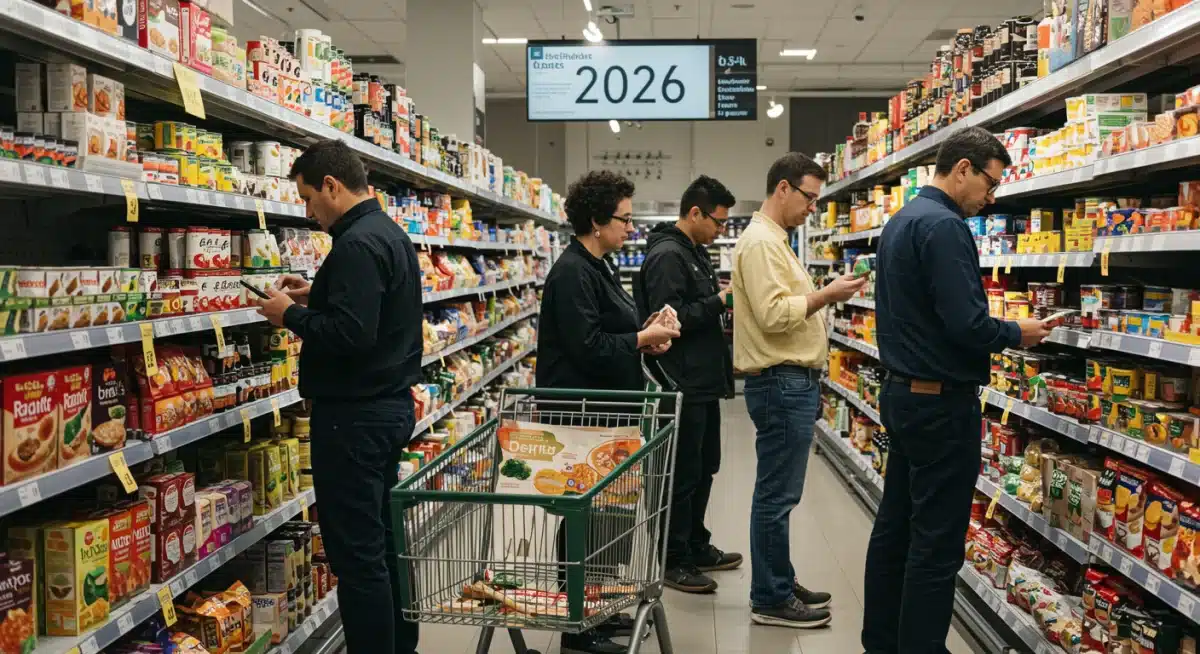
 Are you ready to take control of your health and make genuinely informed decisions about what you eat? Understanding how to read food labels is not just a skill; it’s a superpower in the modern American diet.
In 2026, with an ever-growing array of products on shelves, deciphering these labels efficiently can transform your grocery shopping into a strategic mission for wellness.
The evolving landscape of food labeling in 2026
The world of food labeling is constantly evolving, with new regulations and consumer demands shaping what we see on our product packaging.
In 2026, understanding these changes is more important than ever to navigate the supermarket aisles effectively. From updated serving sizes to clearer allergen declarations, staying informed helps you make choices aligned with your health goals.
Key regulatory updates you need to know
Government agencies frequently revise guidelines to improve public health. These updates often focus on making information more accessible and meaningful for the average consumer. Being aware of these changes ensures you’re always looking at the most current and relevant data.
Standardized Serving Sizes: Many products now feature serving sizes that more accurately reflect typical consumption, making it easier to compare similar items.
Added Sugars Declaration: A dedicated line for ‘Added Sugars’ helps distinguish naturally occurring sugars from those intentionally incorporated during processing.
Updated Daily Values: Recommended daily values for various nutrients are periodically adjusted based on the latest scientific research, offering a more precise benchmark for healthy intake.
Beyond regulations, consumer trends also play a significant role. The demand for transparency, sustainability, and specific dietary information has pushed manufacturers to provide more detailed insights into their products.
This means you might find more certifications, origin stories, and detailed ingredient breakdowns than ever before.
Ultimately, a proactive approach to understanding these shifts empowers you. It allows you to quickly identify products that meet your specific dietary needs, whether you’re managing a chronic condition, pursuing fitness goals, or simply aiming for a healthier lifestyle.
Keep an eye out for news from the FDA and USDA, as they are the primary sources for label changes.
Decoding the nutrition facts panel: beyond calories
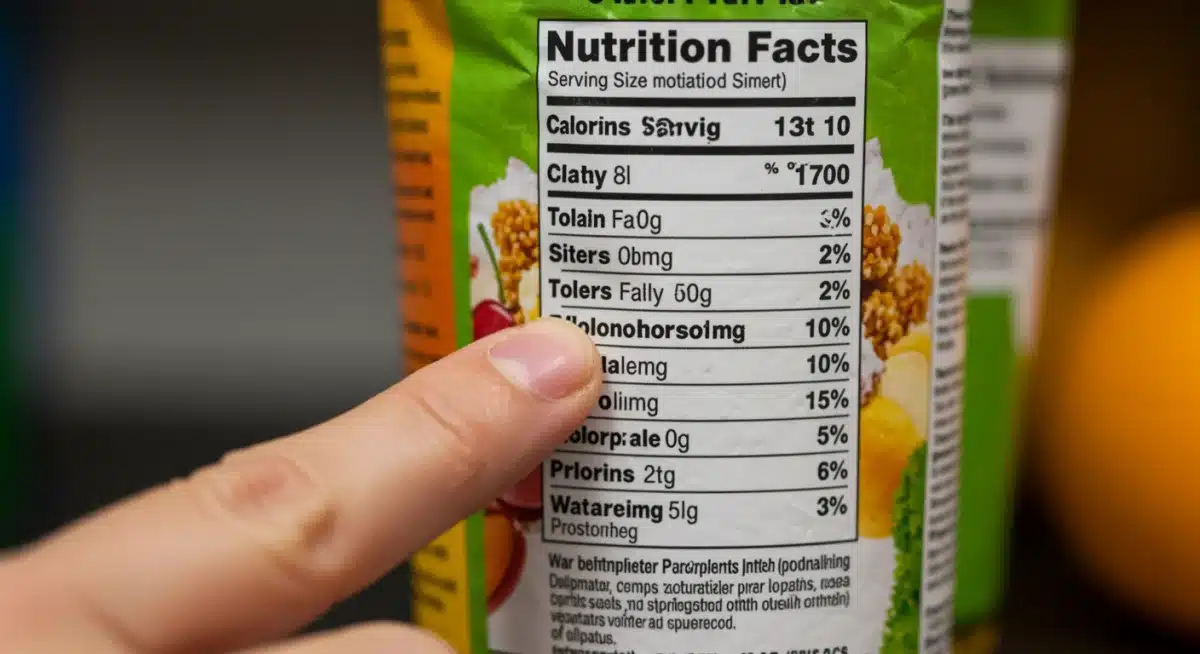
The nutrition facts panel is the cornerstone of any food label, offering a snapshot of a product’s nutritional content.
While calories often grab immediate attention, a truly informed choice requires looking beyond this single number to understand the broader nutritional profile.
In 2026, a comprehensive understanding of this panel is your best defense against misleading claims.
Start by examining the serving size and servings per container. These figures dictate the true nutritional impact of what you’re eating. Often, a single package contains multiple servings, and consuming the entire item means multiplying all listed values accordingly. This seemingly small detail can dramatically alter your perception of a product’s healthfulness.
Understanding macronutrients and their significance
Macronutrients—fats, carbohydrates, and protein—are essential for energy and bodily functions. The nutrition facts panel provides a detailed breakdown of each, allowing you to tailor your intake to your dietary needs.
Total Fat: Pay attention to saturated and trans fats, which can negatively impact heart health. Opt for products lower in these and higher in unsaturated fats.
Total Carbohydrates: This includes sugars, starches, and fiber. Prioritize fiber-rich options and be mindful of ‘added sugars,’ which contribute empty calories.
Protein: Essential for muscle repair and satiety, aim for products that offer a good source of protein, especially if you’re active or follow a vegetarian/vegan diet.
Beyond macronutrients, micronutrients like vitamins and minerals also deserve your attention. The panel lists key vitamins and minerals, often expressed as a percentage of the Daily Value (DV).
A high DV percentage (20% or more) indicates a good source of that nutrient, while a low percentage (5% or less) suggests it’s not a significant contributor. Look for products that offer a diverse range of these essential compounds.
Remember, the nutrition facts panel is a tool for comparison. Use it to evaluate different brands of similar products or to track your intake of specific nutrients.
It’s not about perfectly adhering to every number, but rather about making conscious, balanced choices that support your overall well-being. This careful analysis empowers you to make smarter decisions about your diet.
The ingredient list: uncovering what’s really inside
While the nutrition facts panel tells you ‘how much,’ the ingredient list reveals ‘what’s in it.’ This often-overlooked section is crucial for anyone striving to make healthier choices, especially those with allergies, sensitivities, or specific dietary preferences.
In 2026, understanding this list is paramount to avoiding unwanted additives and ensuring product integrity.
Ingredients are listed in descending order by weight, meaning the first few items constitute the largest proportion of the product.
This simple rule is a powerful indicator: if sugar, unhealthy oils, or highly processed ingredients are among the first three, it’s likely not the healthiest option. Prioritize products with whole, recognizable ingredients at the top of the list.
Common culprits and confusing terms to watch for
Manufacturers sometimes use multiple names for the same ingredient or employ terms that sound scientific but hide less desirable components. Being aware of these can significantly improve your ability to identify truly wholesome foods.
Hidden Sugars: Beyond ‘sugar,’ look for corn syrup, high-fructose corn syrup, dextrose, maltose, sucrose, and fruit juice concentrate.
Unhealthy Fats: ‘Partially hydrogenated oil’ indicates trans fats, while ‘interesterified fat’ and ‘palm oil’ can also be concerns.
Artificial Additives: Artificial colors (e.g., Red 40, Yellow 5), artificial flavors, and certain preservatives (e.g., BHA, BHT) are best limited.
The length of the ingredient list can also be a helpful cue. Generally, shorter lists with fewer unpronounceable chemicals indicate a less processed and potentially healthier product.
Think about it: a fresh apple has one ingredient, ‘apple.’ While not all packaged foods can be that simple, aiming for minimal processing is a good rule of thumb.
Furthermore, pay close attention to allergen declarations, typically found immediately after or within the ingredient list. Common allergens like milk, eggs, peanuts, tree nuts, soy, wheat, fish, and shellfish must be clearly stated.
For those with severe allergies, this information is life-saving. Even if you don’t have allergies, understanding the ingredient list empowers you to choose foods that truly nourish your body and align with your values.
Understanding claims and certifications: navigating the marketing maze
Food packaging is often adorned with various claims and certifications designed to attract consumers. While some are legitimate and beneficial, others can be misleading or simply marketing fluff. In 2026, developing a critical eye for these labels is essential to distinguish genuine health benefits from clever advertising.
Claims like ‘natural,’ ‘healthy,’ or ‘light’ are often loosely regulated and can be subjective. ‘Natural,’ for instance, typically means the product contains no artificial ingredients or added colors, but it doesn’t necessarily imply it’s nutritious or free from highly processed components. Always cross-reference these claims with the nutrition facts panel and ingredient list.
Distinguishing credible certifications from marketing buzz
Certain certifications, however, are backed by rigorous standards and independent verification, offering a higher level of trustworthiness. Recognizing these can help you quickly identify products that meet specific criteria.
USDA Organic: Products bearing this seal are produced without synthetic pesticides, fertilizers, GMOs, or growth hormones.
Non-GMO Project Verified: This label ensures products are made without genetically modified organisms.
Certified Gluten-Free: Guarantees the product meets strict standards for gluten content, vital for individuals with celiac disease or gluten sensitivity.
Other reputable certifications might include ‘Fair Trade,’ indicating ethical sourcing, or specific dietary labels like ‘Vegan’ or ‘Kosher,’ which adhere to particular religious or lifestyle standards.
When you see these, it means a third party has verified the product’s compliance, adding a layer of assurance that a simple marketing claim cannot provide.
Be wary of claims that sound too good to be true or are overly vague. A product labeled ‘sugar-free’ might contain artificial sweeteners, while ‘fat-free’ often means higher sugar content to compensate for flavor.
The key is to look beyond the front of the package and delve into the specifics provided on the back and side panels. A healthy skepticism, combined with knowledge of what to look for, will serve you well in making truly healthier choices.
The role of serving size and daily values in meal planning
The serving size and daily values (DVs) on food labels are more than just numbers; they are critical tools for effective meal planning and managing your overall nutrient intake.
In 2026, leveraging this information can help you portion correctly, track your diet, and ensure you’re meeting your nutritional needs without overconsumption.
Serving size is the standardized amount of food, typically expressed in common household measures (e.g., cups, pieces, grams), for which the nutrition information is provided.
It’s important to remember that this isn’t necessarily the recommended portion for everyone, but rather a reference point for comparison. If you eat more or less than the stated serving, you need to adjust the nutritional values proportionally.
Using daily values to balance your diet
Daily Values are reference amounts for nutrients to consume or not to exceed each day. They are based on a 2,000-calorie daily diet and help you determine if a serving of food contributes a little or a lot to your daily intake.
High vs. Low: 5% DV or less is considered low, while 20% DV or more is considered high. Aim for low DVs in saturated fat, sodium, and added sugars, and high DVs in fiber, vitamins, and minerals.
Nutrient Tracking: Use DVs to track your intake of specific nutrients. If you’re trying to increase fiber, look for products with high fiber DVs. If you’re monitoring sodium, choose items with low sodium DVs.
Integrating serving sizes and DVs into your meal planning involves a bit of mental math but becomes second nature with practice.
For example, if a product has 2 servings per container and you eat the whole thing, you’re consuming double the calories, fat, sugar, and other nutrients listed. This awareness helps prevent accidental overeating and ensures you’re allocating your nutritional budget wisely.
By consciously considering serving sizes and daily values, you gain a powerful advantage in maintaining a balanced diet.
This approach moves beyond simply avoiding ‘bad’ foods to actively choosing ‘good’ foods in appropriate amounts, leading to more consistent and sustainable healthier choices throughout the year.
Practical tips for quick label analysis at the grocery store
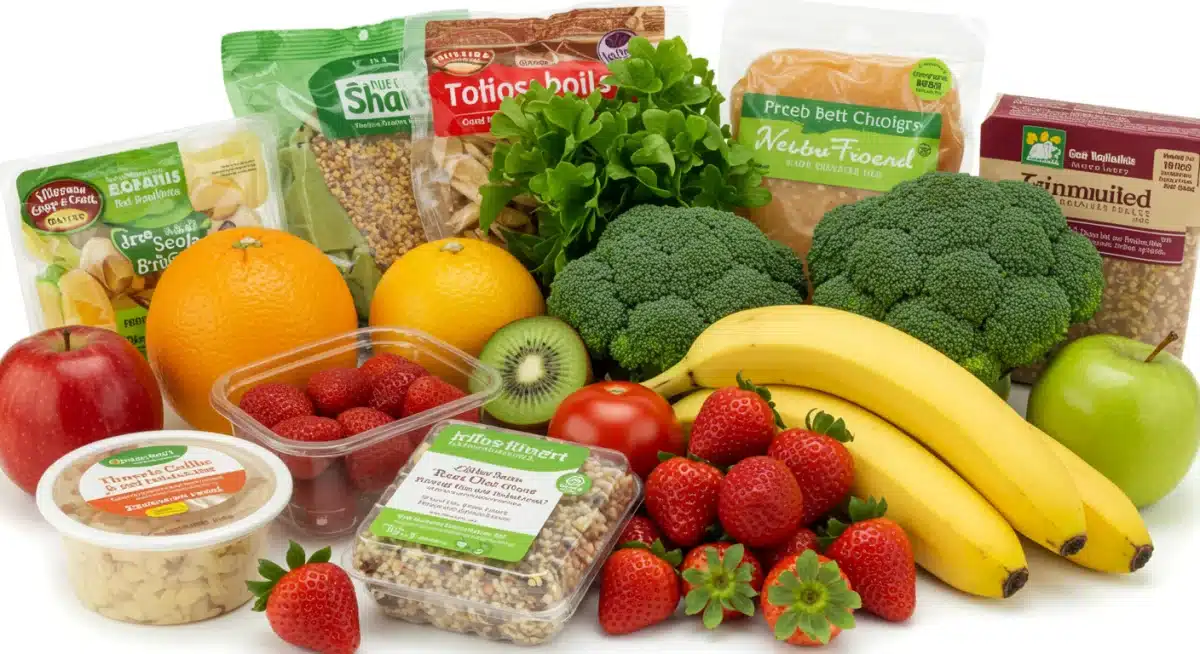
Grocery shopping can be overwhelming, especially when you’re trying to make healthy choices under time pressure. Developing a quick and efficient method for analyzing food labels is a skill that will serve you well in 2026 and beyond.
A streamlined approach allows you to make informed decisions without spending hours scrutinizing every package.
Start with a ‘quick scan’ strategy. First, look at the serving size and total calories. This gives you an immediate sense of the product’s caloric density.
Next, glance at the ‘Added Sugars’ and ‘Sodium’ lines. These are two common culprits in processed foods that many Americans consume in excess. If these numbers are high, consider putting the item back or looking for an alternative.
Streamlining your label reading process
Once you’ve done the quick scan, if the product still seems promising, move on to a more detailed look at the ingredient list. Here’s how to make it efficient:
Prioritize the Top 3 Ingredients: Focus on the first three ingredients. If they are whole foods (like oats, vegetables, or lean protein) and not sugars or unhealthy fats, it’s a good sign.
Look for Allergen Warnings: Quickly locate the allergen statement if you have sensitivities.
Check for Fiber and Protein: These nutrients contribute to satiety and overall health. Aim for products with a decent amount of both.
Another practical tip is to create a mental ‘blacklist’ of ingredients you want to avoid, such as high-fructose corn syrup, partially hydrogenated oils, or certain artificial colors.
When you see these on a label, you can quickly decide to skip that product without needing a full nutritional breakdown. This mental shortcut saves time and reduces decision fatigue.
Finally, don’t be afraid to utilize technology. Many apps can scan barcodes and provide immediate nutritional insights, compare products, and even highlight ingredients you’ve marked as undesirable.
By combining these strategies, you’ll become a more confident and efficient label reader, consistently making healthier choices for yourself and your family.
Beyond the label: integrating labels into a holistic health approach
While mastering how to read food labels is undeniably powerful, it’s crucial to remember that labels are just one piece of a larger health puzzle.
In 2026, a truly holistic approach to wellness integrates informed food choices with other vital aspects of a healthy lifestyle. Understanding the context of your diet is just as important as the details on the package.
Think about your overall dietary pattern. Are you primarily consuming whole, unprocessed foods, or do packaged items make up the bulk of your intake?
Labels are most useful for packaged goods; for fresh fruits, vegetables, and lean proteins, the ‘label’ is often their natural form. Aim for a balanced diet that prioritizes these whole foods, using packaged items as complements rather than staples.
The bigger picture: lifestyle and well-being
Your food choices don’t exist in a vacuum. They interact with other lifestyle factors to shape your health. Consider these elements alongside your label-reading efforts:
Physical Activity: Regular exercise complements healthy eating by burning calories, building muscle, and improving cardiovascular health.
Hydration: Drinking enough water is fundamental for digestion, nutrient absorption, and overall bodily function.
Sleep Quality: Adequate, restful sleep impacts hormone regulation, appetite, and energy levels, all of which influence food choices.
Stress Management: Chronic stress can lead to unhealthy eating patterns and increased inflammation. Finding healthy coping mechanisms is key.
Furthermore, remember that food is not just fuel; it’s also a source of pleasure, culture, and social connection.
While making healthier choices is important, an overly restrictive or obsessive approach can be detrimental to mental well-being. Strive for balance, allowing for occasional treats and enjoying meals in good company.
By viewing food labels as a valuable tool within a broader framework of self-care and mindful living, you can cultivate sustainable habits that contribute to long-term health and vitality.
It’s about empowering yourself with knowledge, but also fostering a positive and balanced relationship with food and your body.
| Key Point | Brief Description |
|---|---|
| Nutrition Facts Panel | Go beyond calories; check serving size, macronutrients, and daily values for a complete picture. |
| Ingredient List | Ingredients are listed by weight; identify hidden sugars, unhealthy fats, and artificial additives. |
| Claims & Certifications | Distinguish credible, verified seals (e.g., USDA Organic) from vague marketing claims. |
| Holistic Health | Integrate label knowledge with physical activity, hydration, sleep, and stress management for overall well-being. |
Frequently asked questions about food labels
The most crucial elements are serving size, total calories, added sugars, sodium, and the first few ingredients on the list. These provide a quick, comprehensive overview of a product’s nutritional impact and help identify highly processed items. Always check for allergen information if you have sensitivities.
Beyond ‘sugar,’ look for terms like high-fructose corn syrup, dextrose, maltose, sucrose, corn syrup, fruit juice concentrate, and anything ending in ‘-ose.’ Manufacturers often use multiple types of sugar to keep ‘sugar’ from being the top ingredient.
Not necessarily. ‘Natural’ generally means no artificial ingredients or added colors, but it doesn’t guarantee the product is nutritious or low in sugar, fat, or sodium. Always check the nutrition facts panel and ingredient list to verify actual health benefits.
Daily Values are nutrient reference amounts based on a 2,000-calorie diet. A 5% DV or less is low, while 20% DV or more is high. Use them to choose foods low in saturated fat, sodium, and added sugars, and high in fiber, vitamins, and minerals.
Start with a quick scan: check serving size, calories, added sugars, and sodium. Then, glance at the first three ingredients. If these align with your goals, a deeper dive into fiber, protein, and specific nutrients can follow. Prioritize speed and key indicators.
Conclusion
In 2026, the ability to effectively read food labels is an indispensable skill for anyone committed to making healthier choices. This guide has equipped you with the knowledge to navigate the complexities of nutrition facts, decipher ingredient lists, and evaluate marketing claims with a critical eye.
By integrating these practices into your daily routine, you empower yourself to select foods that truly nourish your body and support your wellness goals. Remember, informed decisions at the grocery store translate into a healthier you, building a foundation for long-term vitality and well-being.